
What does a therapist do in mental health care?

A therapist is a licensed mental health professional who uses talk therapy to help you identify and change troubling emotions, thoughts, and behaviors. The goal is straightforward: improve your daily functioning and quality of life. Sessions can take place one on one, with a partner, as a family, or in a group setting, depending on what you need.
Here is a quick picture of the core functions:
- Listens without judgment to understand your experience fully
- Identifies patterns in thinking or behavior that are causing harm
- Teaches coping skills for stress, anxiety, grief, and relationship strain
- Sets collaborative goals with you and tracks progress over time
- Applies evidence-based techniques such as cognitive behavioral therapy (CBT) or mindfulness practices
- Maintains confidentiality to create a safe space for honest conversation
Think of a therapist less as someone who gives you answers and more as a skilled guide who helps you find your own.
What problems can a therapist help you with?
Therapists work with a wide range of mental health challenges and everyday struggles. Depression, anxiety, trauma, and relationship problems are among the most common reasons people seek therapy, but the list extends well beyond those.
- Mental health conditions: depression, anxiety disorders, PTSD, OCD, bipolar disorder
- Relationship and family issues: communication breakdowns, conflict, grief after loss
- Life transitions: divorce, job loss, becoming a parent, adjusting to illness
- Self-defeating thought patterns: perfectionism, low self-worth, chronic self-criticism
- Behavioral concerns: substance use, disordered eating, anger management
- Children and adolescents: school stress, social difficulties, emotional regulation
Therapists tailor their approach to each person. What works for someone processing childhood trauma looks very different from what helps a couple rebuild trust after a betrayal.
What actually happens during a therapy session?
Typical sessions last about 50 minutes and center on guided conversation. Your therapist listens carefully, reflects back what they hear, and asks questions that help you see your situation from a new angle.
- Opening check-in: How have you been since the last session? Any significant events?
- Focused discussion: Exploring a specific issue, emotion, or pattern in depth
- Skill building: Practicing coping strategies, communication techniques, or relaxation exercises
- Homework assignments: Small tasks between sessions to reinforce what you worked on
- Confidentiality: What you share stays private, with narrow legal exceptions your therapist will explain upfront
According to Mayo Clinic, therapists genuinely value raw honesty, including tears, silence, or emotional discomfort. Feeling emotionally drained after a session is normal, not a sign something went wrong. That vulnerability is part of the process.
What types of therapy do therapists provide?
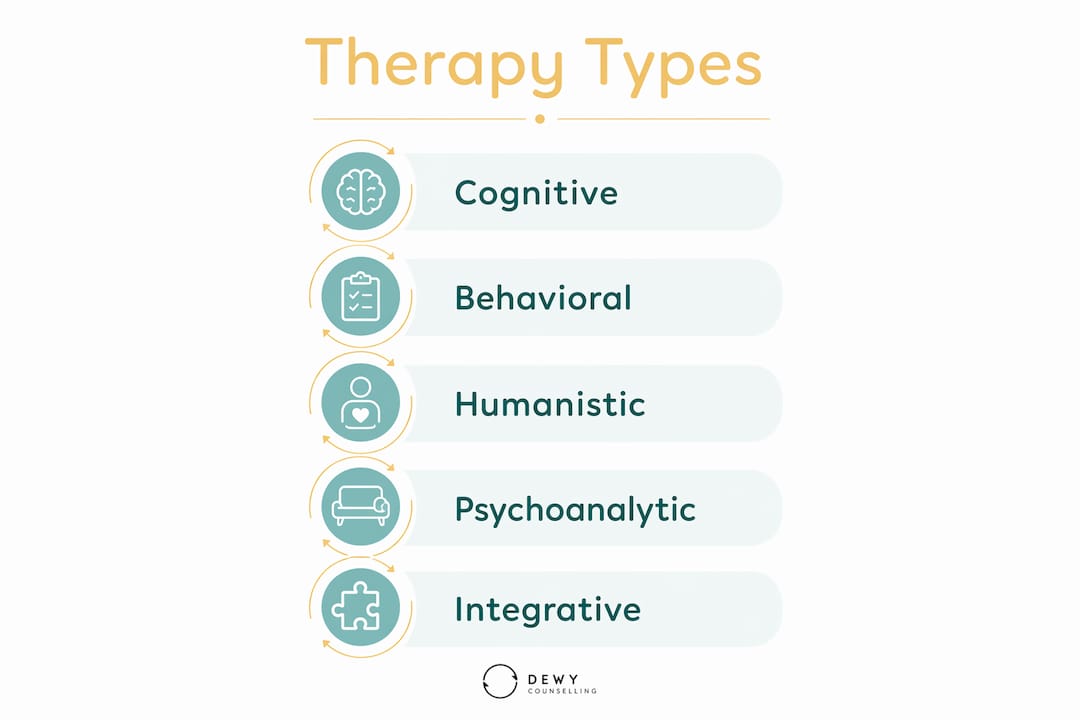
Therapists draw from several well-researched modalities, selecting the approach that fits your specific needs and their training. Common therapy types include:
- Cognitive behavioral therapy (CBT): Identifies and restructures harmful thought patterns; widely used for anxiety and depression. Learn more about how CBT works from a specialist perspective.
- Acceptance and commitment therapy (ACT): Builds psychological flexibility by accepting difficult emotions rather than fighting them
- Exposure therapy: Gradually reduces fear responses by facing avoided situations in a safe, controlled way
- Mindfulness-based approaches: Use meditation and breathing techniques to regulate emotion and reduce stress
- Supportive counseling: Focuses on emotional validation and practical problem solving without a rigid structure
You can explore the full range of psychotherapy types in more depth if you want to go into a session with a clearer sense of what might suit you.
How long does therapy typically last?

Short-term therapy often involves a limited number of sessions, while more complex issues may call for months or even years of ongoing work. There is no universal timeline.
Several factors shape how long therapy lasts:
- Severity of the issue: A specific phobia may resolve quickly; chronic depression or trauma often requires extended care
- Your goals: Targeted skill building wraps up faster than deep personal exploration
- Therapist approach: Structured therapies like CBT tend to be time-limited; psychodynamic work is often open-ended
- Session frequency: Weekly sessions build momentum; biweekly or monthly check-ins extend the overall timeline
The honest answer is that therapy ends when you and your therapist agree you have reached your goals, not on a fixed schedule.
Why the relationship between you and your therapist matters most
Therapeutic rapport is the strongest predictor of successful therapy outcomes. Technique matters, but the quality of the relationship between you and your therapist matters more.
You do not need to arrive with perfectly formed goals. Skilled therapists help you shape them during the first few sessions. Therapy is a collaborative process, not a prescription your therapist fills for you. Clients who actively participate in setting goals and measuring progress consistently see better results.
Pro Tip: If you do not feel a genuine sense of comfort and trust after three or four sessions, it is completely appropriate to look for a different therapist. A poor fit is not a failure on your part or theirs.
Rapport over technique: Research consistently shows that the warmth, trust, and collaboration in the therapist-client relationship outweigh any specific method used.
What skills and roles does a therapist bring to sessions?
A therapist's work requires a layered set of skills that go well beyond simply listening. Active listening, empathy, and the ability to hold space for difficult emotions are foundational. Beyond that, therapists assess mental health presentations, track behavioral patterns across sessions, and adjust their approach as your needs evolve.
They also play a psychoeducational role, explaining how anxiety, depression, or trauma affect the brain and body in plain language. That knowledge often reduces shame and helps you engage more fully in the work.
What qualifications does a therapist need?
Therapists in the United States hold at minimum a master's degree in counseling, social work, marriage and family therapy, or a related field. Many hold doctoral degrees. All must complete supervised clinical hours and pass licensing exams before practicing independently.
Licenses vary by specialty: Licensed Professional Counselor (LPC), Licensed Clinical Social Worker (LCSW), Licensed Marriage and Family Therapist (LMFT), and Licensed Psychologist are the most common. Harvard Health recommends confirming that any therapist you consider holds formal certification and is licensed in your state.
How do you find and choose the right therapist?
Start by identifying what you want to work on, then look for a therapist with relevant training and experience. Practical steps:
- Check credentials: Verify licensure through your state's licensing board
- Ask about their approach: A good therapist can explain their methods clearly and discuss alternatives
- Consider logistics: Location, session format (in-person or virtual), cost, and insurance coverage all affect whether you can sustain the work
- Ask direct questions: Harvard Health suggests asking things like "How will we measure my progress?" and "What should I do if I don't feel better?"
- Trust your gut: Comfort and trust in the first few sessions are strong signals
Knowing what to expect from therapy sessions before your first appointment can make the whole process feel far less daunting.
Common techniques therapists use in sessions
Beyond the broad therapy types, therapists draw on specific techniques moment to moment:
- Cognitive restructuring: Challenging and reframing distorted thoughts
- Behavioral activation: Scheduling meaningful activities to counter depression's pull toward withdrawal
- Grounding exercises: Sensory techniques that interrupt anxiety or dissociation in real time
- Emotion tracking: Journaling or worksheets that map how feelings and behaviors connect
- Communication skills training: Role-playing difficult conversations to build confidence
- Relaxation training: Diaphragmatic breathing, progressive muscle relaxation, and guided imagery
Understanding how therapy improves daily life can help you recognize these techniques when your therapist introduces them.
Dewycounselling offers therapy that meets you where you are
Real progress in therapy starts with finding a therapist who genuinely fits your life, not just your diagnosis.

Dewycounselling provides individual, couples, and family therapy with a focus on better communication and lasting change. Whether you are navigating anxiety, working through a relational wound, or simply trying to build stronger coping skills, Dewycounselling offers both in-person and online therapy options that fit your schedule and comfort level. The approach is warm, collaborative, and grounded in evidence-based practice. Ready to take the next step? Book a session and start building the life you want.
Key Takeaways
Therapeutic rapport, not technique alone, is the most reliable predictor of therapy success, making the right therapist fit as important as the right treatment method.
| Point | Details |
|---|---|
| Core therapist role | Therapists use talk therapy to help you change harmful emotions, thoughts, and behaviors. |
| Session length | Most therapy sessions run about 50 minutes, with goals set collaboratively. |
| Therapy duration | Short-term therapy typically spans 6–12 sessions; complex issues often require longer care. |
| Rapport is primary | The quality of the therapist-client relationship outweighs any specific technique used. |
| Dewycounselling | Offers individual, couples, and family therapy in-person and online to help you thrive. |