
Therapy improves daily life by equipping you with concrete tools for emotional regulation, behavioral change, and stronger relationships. Psychotherapy, the clinical term for structured talk-based treatment, works through evidence-based approaches that reshape how you think, feel, and act every day. Techniques like Cognitive Behavioral Therapy (CBT) and behavioral activation are not abstract concepts. They produce real shifts in your morning routine, your conversations, and your ability to handle stress. The change is gradual and meaningful, not overnight. That realistic expectation is itself one of therapy's most important gifts.
How therapy improves daily life through behavioral activation
Behavioral activation is one of the most well-researched tools in psychotherapy. It works on a simple but counterintuitive principle: mood follows action, not the other way around. Most people wait to feel motivated before doing something. Behavioral activation flips that sequence entirely.
Depression and anxiety thrive on withdrawal. When you feel low, you pull back from activities, relationships, and responsibilities. That withdrawal deepens the low mood, which leads to more withdrawal. Therapy interrupts this cycle by scheduling valued activities before you feel ready for them. The act of doing something, even imperfectly, generates the emotional shift that waiting never produces.

Graded task assignments are a practical example of this in action. A therapist might ask you to start with a five-minute walk rather than a full workout, or to send one email instead of clearing your inbox. Each small completion builds evidence that you are capable, which gradually rebuilds confidence and motivation. This approach makes the overwhelming feel manageable by breaking it into steps your nervous system can actually handle.
Behavioral activation also relies on what researchers call behavioral anchors. These are fixed daily habits, like a consistent wake-up time, a regular meal schedule, or a short movement break, that create physiological stability. That stability forms the foundation for psychological growth. Without it, emotional regulation has no reliable ground to stand on.
Key activities that behavioral activation typically schedules include:
- Physical movement, even brief walks or stretching
- Social contact, such as a short phone call with a trusted person
- Creative or meaningful tasks that connect to personal values
- Rest that is intentional rather than avoidant
- Small accomplishments that build a sense of daily progress
Pro Tip: If motivation feels completely absent, commit to two minutes of the activity rather than the full version. Starting is the hardest part. The rest often follows naturally once you begin.
How does therapy help with emotional regulation and stress?
Therapy teaches you to recognize emotional triggers before they control your behavior. That recognition is the foundation of better stress management and daily functioning. Without it, reactions happen automatically, and the aftermath, regret, conflict, exhaustion, compounds the original stress.
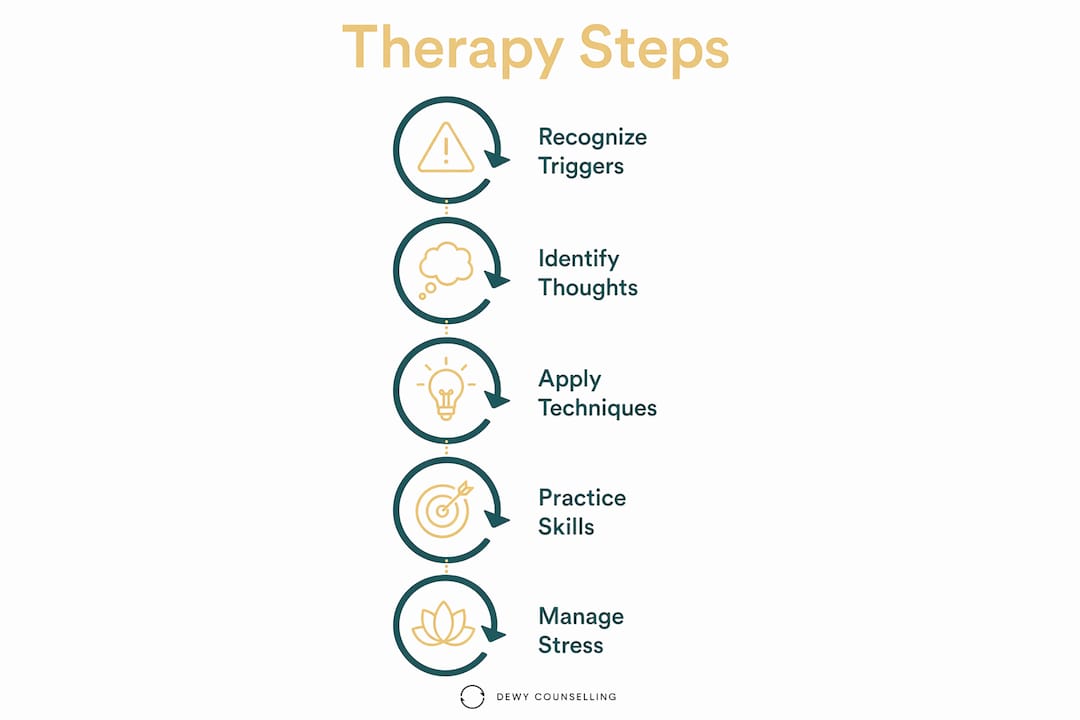
CBT techniques are particularly effective here. They help you identify distorted thinking patterns, like catastrophizing or all-or-nothing thinking, and replace them with balanced perspectives. Over time, this reduces the mental noise that makes ordinary challenges feel unbearable. Quieter mental noise leads to clearer decisions and steadier emotions throughout the day.
Emotional regulation also improves your relationships. When you can pause between a trigger and a response, you stop saying things you regret. You stop shutting down when conversations get hard. That pause, small as it sounds, changes the entire quality of your interactions. Therapy builds that pause deliberately, through practice and self-awareness.
The benefits of therapy in this area include:
- Reduced reactivity to everyday frustrations and conflicts
- Greater ability to name and communicate what you are feeling
- Improved capacity to sit with discomfort without acting impulsively
- Stronger sense of personal agency over your emotional state
- Clearer thinking under pressure, which supports better decisions
Therapy does not promise that stress disappears. It promises that your relationship with stress changes. That shift, from being controlled by emotion to choosing a response, is what makes daily life feel more manageable and less exhausting.
Does therapy improve relationships and communication?
Therapy gives you a language for your emotions and practical strategies for expressing them clearly. That alone changes the quality of your relationships. Many relational wounds come not from a lack of care, but from a lack of words. When you cannot name what you feel, you express it through behavior, often in ways that push people away.
Therapy improves communication by teaching you to verbalize emotions directly rather than through avoidance or reactivity. Clients consistently report stronger, more honest connections after developing this skill. The ability to say "I feel hurt when this happens" rather than shutting down or escalating is a learned skill, and therapy is where most people learn it.
Boundary-setting is another area where therapy produces concrete daily change. Boundaries are not walls. They are clear agreements about what you need to feel safe and respected. Therapy helps you identify where your boundaries are, why they matter, and how to communicate them without guilt or aggression.
The relational improvements that therapy supports include:
- Clearer expression of needs and feelings without blame
- Healthier responses to conflict rather than avoidance or escalation
- Recognition of unhealthy patterns in relationships and how to shift them
- Stronger trust built through consistent honesty and follow-through
- Collaborative problem-solving that replaces power struggles with shared goals
Couples and families benefit from these skills as much as individuals do. At Dewycounselling, individual therapy often produces ripple effects across the whole family system, because one person changing how they communicate shifts the entire dynamic.
Can lifestyle changes make therapy more effective?
Therapy works best when it is supported by daily lifestyle choices that reinforce the work done in sessions. NICE clinical guidelines identify structured physical activity as the single strongest lifestyle factor for improving mood alongside therapy. That is not a soft recommendation. It is a clinical one, backed by consistent evidence across mild-to-moderate depression and anxiety.
Sleep is equally significant. Poor sleep disrupts emotional regulation, increases reactivity, and undermines the cognitive clarity that therapy requires. Reducing alcohol use matters too. Alcohol is a depressant that interferes with the neurological processes therapy is trying to support. Addressing both sleep and alcohol alongside therapy produces better outcomes than therapy alone.
Pro Tip: Treat your post-session routine as part of the therapy itself. A short walk, a healthy meal, or ten minutes of journaling after a session helps consolidate what you processed. The brain retains emotional learning better when it is followed by calm, grounding activity.
The table below shows how lifestyle factors interact with therapeutic goals:
| Lifestyle factor | How it supports therapy |
|---|---|
| Regular physical activity | Boosts mood, reduces anxiety, and reinforces behavioral activation |
| Consistent sleep schedule | Stabilizes emotional regulation and cognitive function |
| Reduced alcohol use | Removes a depressant that undermines therapy's neurological work |
| Nutritious eating habits | Supports energy and mood stability between sessions |
| Mindful rest and recovery | Prevents burnout and sustains motivation for continued growth |
Small, realistic adjustments matter more than dramatic overhauls. Therapy teaches you to apply the same graded approach to lifestyle change that behavioral activation applies to mood. Start with one change. Build from there. The self-care practices that support recovery are not luxuries. They are the scaffolding that holds your therapeutic progress in place between sessions.
Key Takeaways
Therapy improves daily life most reliably when evidence-based techniques, consistent behavioral practice, and supportive lifestyle habits work together over time.
| Point | Details |
|---|---|
| Action precedes motivation | Behavioral activation works by scheduling valued activities before mood improves, not after. |
| Emotional regulation is a skill | Therapy teaches you to pause between trigger and response, reducing daily reactivity. |
| Communication shapes relationships | Naming emotions clearly and setting boundaries reduces relational tension and builds trust. |
| Lifestyle reinforces therapy | Sleep, physical activity, and reduced alcohol use strengthen therapy outcomes significantly. |
| Change is gradual and cumulative | Therapy builds coping skills over time. Small, consistent steps produce lasting results. |
What I have learned from watching therapy change daily life
By Wayne Dewhurst
After years of working with individuals, couples, and families, the pattern I see most often surprises people when I describe it. The clients who make the most lasting changes are rarely the ones who arrive most motivated. They are the ones who show up anyway, especially on the days they least want to.
Motivation is overrated as a starting point. Commitment is what actually moves people forward. I have watched clients rebuild their mornings, their marriages, and their sense of self not through sudden insight, but through the quiet discipline of doing the next small thing. Behavioral activation captures this truth better than almost any other framework I have encountered. You act your way into a new feeling far more reliably than you feel your way into a new action.
The other thing I want people to understand is that therapy is not about perfection. It is about developing tools to pause and make thoughtful choices in real time. A client who learns to take three breaths before responding to their partner has changed something fundamental. That pause is not dramatic. It does not look like transformation from the outside. But it changes the entire texture of a relationship over months and years.
The clients who thrive are also the ones who bring therapy into their daily lives between sessions. They use their emotional awareness skills at work, at home, and in difficult conversations. Therapy is not a weekly appointment. It is a practice that lives in the ordinary moments of your day.
— Wayne Dewhurst
Dewycounselling: professional therapy for a better daily life
Real change in daily life starts with the right support. Dewycounselling offers individual, couples, and family psychotherapy services grounded in evidence-based approaches, including CBT and behavioral activation, delivered both online and in person.

Whether you are managing anxiety, working through relationship patterns, or simply wanting to function better day to day, Dewycounselling provides a structured, compassionate space to build the skills that matter. Sessions are tailored to your specific needs and goals, not a generic program. If you are ready to experience the benefits of professional therapy, Dewycounselling is here to help you take that first step with confidence.
FAQ
How quickly does therapy improve daily life?
Therapy produces gradual improvements rather than immediate change. Most people notice meaningful shifts in coping skills and emotional regulation within several weeks of consistent sessions.
What type of therapy is best for daily functioning?
Cognitive Behavioral Therapy and behavioral activation are among the most evidence-based approaches for improving daily habits, mood, and stress management. A qualified therapist will match the approach to your specific needs.
Can therapy help with daily anxiety and overthinking?
Yes. Therapy teaches cognitive restructuring techniques that replace distorted thinking with balanced perspectives, reducing the mental noise that drives overthinking and anxiety in everyday situations.
Does lifestyle change really affect therapy outcomes?
Physical activity, sleep, and reduced alcohol use all strengthen therapy outcomes. NICE guidelines identify structured physical activity as the strongest lifestyle factor for improving mood alongside treatment.
How does therapy improve relationships in daily life?
Therapy builds communication skills, emotional vocabulary, and boundary-setting capacity. These skills reduce relational tension and create stronger, more honest connections in everyday interactions.