
Short answer: psychiatrists are medical doctors who diagnose mental illness and can prescribe medication; psychologists are doctoral-level clinicians trained in psychotherapy and psychological testing who generally cannot prescribe. Choose a psychologist when talk therapy and assessment are the priority. Choose a psychiatrist when medication, complex diagnosis, or severe symptoms are involved. Many people benefit from seeing both, working as a coordinated team.
TL;DR:
- Psychologists focus on psychotherapy and psychological testing, often diagnosing issues like learning disorders or trauma without prescribing medication.
- Psychiatrists are medical doctors who diagnose severe mental illnesses, prescribe medication, and manage biological treatment aspects.
- Training for psychologists typically lasts 5 to 7 years after undergrad, while psychiatrists spend 8 to 10 years post-undergraduate in medical school and residency.
- Combining therapy with medication management often yields the best results for moderate to severe cases, with coordination between professionals being essential.
- Starting with either a psychologist or psychiatrist is advised based on symptom severity, with referral and collaboration usually happening if treatment complexity increases.
Psychologist vs Psychiatrist: What a Psychologist Actually Does
A psychologist's day centers on two things: talking with clients and measuring how their minds work. Neither task involves a prescription pad, and that distinction shapes everything else about the role.
Psychologists hold a PhD or PsyD, and their training pushes them deep into psychotherapy techniques and psychological assessment. That's why a psychologist is often the right first call for someone dealing with anxiety, relationship strain, grief, or a pattern of self-defeating behavior they can't quite name. Standardized testing, including neuropsychological and psychometric testing, is a core skill few other providers offer, and it's often the tool that separates a learning disability from an attention disorder, or trauma from early-stage cognitive decline.
Common tools in a psychologist's practice include:
- Cognitive behavioral therapy (CBT) for anxiety, depression, and intrusive thought patterns
- Dialectical behavior therapy (DBT) for emotional regulation and self-harm risk
- EMDR for trauma processing
- Couples and family therapy for relational conflict
- Standardized psychological and neuropsychological testing
Sessions typically run weekly or biweekly, with treatment lasting anywhere from a few months to over a year depending on the issue. Psychologists work in private practice, hospitals, schools, and community clinics, and most people access them directly or through a referral from a family doctor.
Psychologist vs Psychiatrist: What a Psychiatrist Actually Does
A psychiatrist is a medical doctor first, a mental health specialist second, and that ordering matters. They diagnose mental illness the way any physician diagnoses disease: through medical history, symptom review, and sometimes lab work or imaging to rule out physical causes like thyroid dysfunction or a neurological condition masquerading as depression.

Psychiatric care becomes the right call when symptoms are severe, when psychosis or mania is present, or when a condition hasn't responded to therapy alone. A psychiatrist can prescribe medication and perform the kind of medical assessment that talk therapy alone can't cover.
What psychiatrists typically handle:
- Diagnosing complex or severe psychiatric conditions, including bipolar disorder and schizophrenia
- Prescribing and adjusting psychiatric medication
- Ordering and interpreting medical tests relevant to mental health symptoms
- Coordinating care with other physicians when medical and psychiatric issues overlap
- Managing hospitalization or crisis-level care when needed
Psychiatrists practice in hospitals, outpatient clinics, and private offices, often collaborating closely with primary care doctors. Once a medication plan stabilizes, follow-up visits for medication management usually happen every one to three months rather than weekly, a much lighter cadence than psychotherapy.
Education and Training: How Long Does Each Path Take?
The training gap between these two professions is the single biggest reason their scopes differ so sharply.
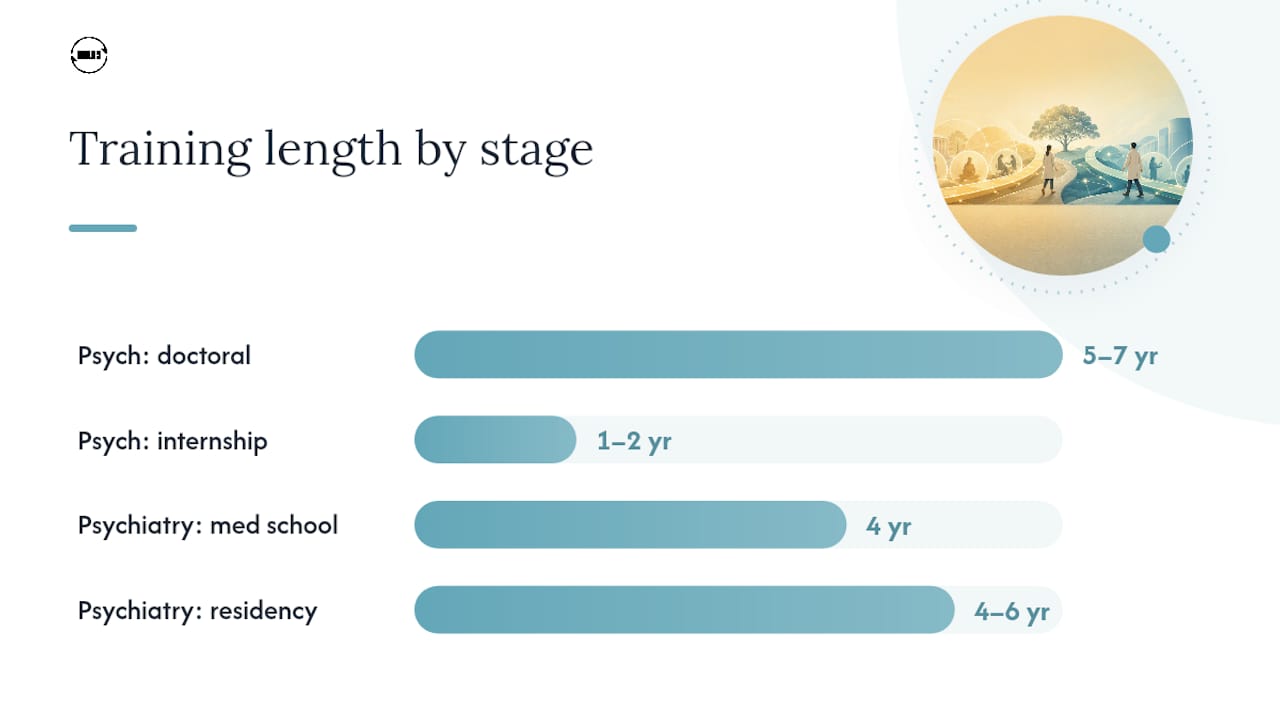
A psychologist typically spends 5 to 7 years in doctoral study after their undergraduate degree, followed by 1 to 2 years of supervised clinical internship before earning full licensure. That path is built almost entirely around psychotherapy technique, research methods, and assessment.
A psychiatrist's path runs longer and takes a different shape entirely: four years of medical school, then a 4 to 6 year psychiatry residency, putting total post-undergraduate training at roughly 8 to 10 years. That residency includes rotations through general medicine before specializing, which is exactly why psychiatrists carry the clinical training to prescribe safely.
Quick comparison:
- Psychologist: doctoral degree (PhD/PsyD) + supervised internship, about 5 to 7 years post-undergrad
- Psychiatrist: MD/DO + psychiatry residency, about 8 to 10 years post-undergrad
Medical organizations point out that this gap in clinical training hours is exactly why prescribing authority sits with physicians rather than psychologists in most jurisdictions.
Pro Tip: Before booking with anyone, check their registration with your provincial regulatory college (such as a College of Psychologists or College of Physicians and Surgeons). Licensing status is public information, and a legitimate clinician will never hesitate to have it verified.
Treatment Options: Therapy, Medication, and Testing Compared
The tools each professional reaches for reflect their training, and knowing which tool fits your situation saves months of trial and error.
Psychologists lean on structured talk therapies. CBT reshapes thought patterns driving anxiety or depression. DBT builds emotional regulation skills for people prone to intense mood swings or self-harm urges. EMDR targets trauma memories directly. When the question isn't "what therapy helps" but "what's actually going on cognitively," psychologists administer the standardized testing that identifies ADHD, learning disorders, or early dementia.

Psychiatrists work primarily with pharmacology: antidepressants, mood stabilizers, antipsychotics, and stimulant medications for ADHD, adjusted based on response and side effects. For conditions with a strong biological component, medication management is often the difference between a treatment plan that works and one that stalls.
Common combined-care examples:
- Major depression: psychiatrist manages an antidepressant while a psychologist runs weekly CBT
- Bipolar disorder: psychiatrist stabilizes mood with medication while therapy addresses lifestyle and relationship patterns
- ADHD in adults: psychologist provides diagnostic testing, psychiatrist manages stimulant medication
Neither model works in isolation for moderate to severe cases. The pairing is common precisely because psychiatry and psychology are complementary, not competing, disciplines.
How Do You Choose Between a Psychologist and a Psychiatrist?
Start with what your primary complaint actually is, not what label sounds more serious.
- Identify the primary need. If you want to talk through a problem, change a pattern, or process an experience, a psychologist or psychotherapist is the natural starting point. If symptoms are severe, sudden, or involve psychosis, suicidal ideation, or a suspected medical cause, start with a psychiatrist or your family doctor immediately.
- Consider severity and history. Mild to moderate anxiety or depression often responds well to therapy alone. Symptoms that haven't budged after several months of therapy are a signal to discuss medication with a psychiatrist.
- Ask direct questions before booking. What's your training and license number? What therapy approach do you use? Will you coordinate with a psychiatrist or physician if medication becomes relevant?
- Watch for red flags. Avoid anyone promising a guaranteed cure, refusing to disclose credentials, or dismissing the value of coordinating with other providers.
- Use the right entry point. A family doctor referral, a multidisciplinary clinic intake, or direct private booking are all valid starting points depending on urgency and access.
Pro Tip: If you genuinely don't know which provider fits your situation, ask your family doctor or an intake coordinator to triage first — that single conversation often saves weeks of guessing.
How Psychiatrists and Psychologists Coordinate Care
The strongest outcomes tend to come from a shared-care model where each provider stays in their lane. The psychiatrist manages diagnosis and medication; the psychologist or therapist runs regular psychotherapy sessions. Neither replaces the other.

A typical referral sequence starts with a family doctor or a psychologist noticing that symptoms exceed what therapy alone can address, then referring to a psychiatrist for a medication evaluation. From there, the psychiatrist and therapist ideally stay in periodic contact, sometimes through shared notes, sometimes through a brief call, so medication changes and therapy progress inform each other. Collaborative care structures built this way tend to catch problems faster than either provider working alone. Expect the process to take a few weeks from referral to first psychiatric appointment in most systems, longer in areas with provider shortages.
How Dewycounselling Applies These Distinctions in Practice
Dewycounselling provides individual, couples, and family psychotherapy, both online and in person, covering anxiety, depression, addiction, relationship conflict, and sex-related concerns. Clinicians assess presenting concerns during intake and flag cases where medication evaluation looks necessary, at which point they coordinate a referral to a psychiatrist rather than attempting to manage a medical issue themselves.
That handoff protects clients from falling through the cracks between disciplines. Intake typically asks about current symptoms, prior treatment history, and any medications already in place, so come prepared with that information. Booking starts with a straightforward intake through Dewycounselling's services page.
The Real Problem Isn't Choosing Wrong. It's Waiting Too Long
Most people don't struggle with the psychologist versus psychiatrist decision itself. The categories are fairly clean once explained: one treats through conversation and testing, the other through medicine. What actually delays people is the assumption that they need to have this sorted out perfectly before reaching out to anyone at all.
That's backwards. The clinicians on both sides of this divide are trained to redirect you if you land in the wrong office. A psychologist who suspects a medical cause behind your symptoms will say so and refer you onward. A psychiatrist who thinks therapy alone would serve you better will tell you that too. The system has built-in correction points precisely because nobody expects patients to self-diagnose their own treatment pathway.
If there's a genuine gap in how this topic gets discussed, it's the underselling of combined care. Therapy plus medication isn't a fallback for people who "couldn't get better with just one." For many moderate to severe presentations, it's simply the treatment that matches the problem's actual shape, biological and behavioral at once.
Start with whichever door is open to you first. Redirection is normal, not a failure.
— Wayne Dewhurst
Ready to Talk to Someone? Here's Where to Start
Dewycounselling offers individual, couples, and family psychotherapy both online and in person, giving you flexibility that a psychiatrist's medically-focused practice typically doesn't provide, without the wait times common at hospital-based psychiatry clinics. When a client's symptoms suggest medication might help, Dewycounselling's clinicians coordinate directly with psychiatrists and family doctors rather than leaving that gap for you to manage alone.

If relationship conflict, anxiety, or depression is the primary concern, therapy is often the right entry point, and it's one you can book without waiting on a referral. Explore couples counselling if relational strain is part of the picture, or start directly through Dewycounselling's main services page to schedule an intake and describe what's going on. The sooner you book that first session, the sooner a clinician can tell you whether therapy alone fits or whether a psychiatric referral should run alongside it.
Where to Verify Credentials and Learn More
For a deeper look at training and scope differences, review the UCLA comparison of psychologists and psychiatrists and the Cleveland Clinic's breakdown of both roles. To understand referral pathways and who to contact first, see Concordia University's guide to health practitioners. For therapy modality details, Dewycounselling's guide on types of psychotherapy is a useful next read.
This article is general information, not a substitute for advice from a qualified doctor. Consult a qualified healthcare professional about your own circumstances before acting on anything here.
Sources
- Psychologist vs Psychiatrist - What Is the Difference? (UCLA)
- Psychiatrist vs. Psychologist: Key Differences (Cleveland Clinic)
- Health practitioners: who does what? (Concordia University)
- What's the difference between psychiatrists and psychologists? (AMA)