
Knowing how to support a friend seeking therapy is one of the most meaningful things you can do for someone you care about. Effective support means recognizing signs of genuine distress, approaching the conversation with empathy, and offering steady encouragement without pressure. Psychologist Melissa Gluck identifies consistent mood shifts and struggles with daily tasks as key signals that a friend may need more than a listening ear. Your role is not to replace professional care. It is to be a compassionate presence that makes professional help feel safer and more reachable.
How do you recognize when a friend needs therapy?
Knowing when to encourage therapy starts with understanding the difference between a rough patch and a deeper struggle. Professional guidance suggests suggesting help when there is a consistent mood shift or difficulty managing daily tasks, not just a bad day. That distinction matters because well-meaning friends often wait too long, hoping things will improve on their own.
Watch for these signs that a friend may benefit from professional support:
- Persistent low mood or anxiety that lasts for weeks rather than days, with no clear improvement.
- Difficulty with daily tasks like maintaining work performance, personal hygiene, or basic routines.
- Rumination and hopelessness where your friend repeatedly returns to the same painful thoughts without resolution.
- Withdrawal from relationships or activities they previously enjoyed.
- Expressions of feeling stuck or unable to cope, even when circumstances improve.
One or two of these signs on a single bad day does not signal crisis. A pattern across several weeks does. Think of it like a physical symptom: a headache is common, but a headache that persists for a month warrants a doctor's visit. The same logic applies to emotional pain.
Pro Tip: Before raising the topic of therapy, spend time simply listening. Showing up consistently before the conversation builds the trust that makes the conversation possible.
How to start the conversation
Timing and environment shape whether a therapy conversation lands well or creates distance. Choose a calm, private moment when your friend is not already overwhelmed. Avoid bringing it up during an argument or immediately after a crisis.
Experts advise a three-stage approach: validate your friend's feelings first, share your observations without blame, then suggest therapy as an additional layer of support rather than a last resort. This sequence preserves trust and avoids defensiveness. For example, you might say, "I've noticed you seem really exhausted lately, and I care about you. Have you ever thought about talking to someone professionally?"
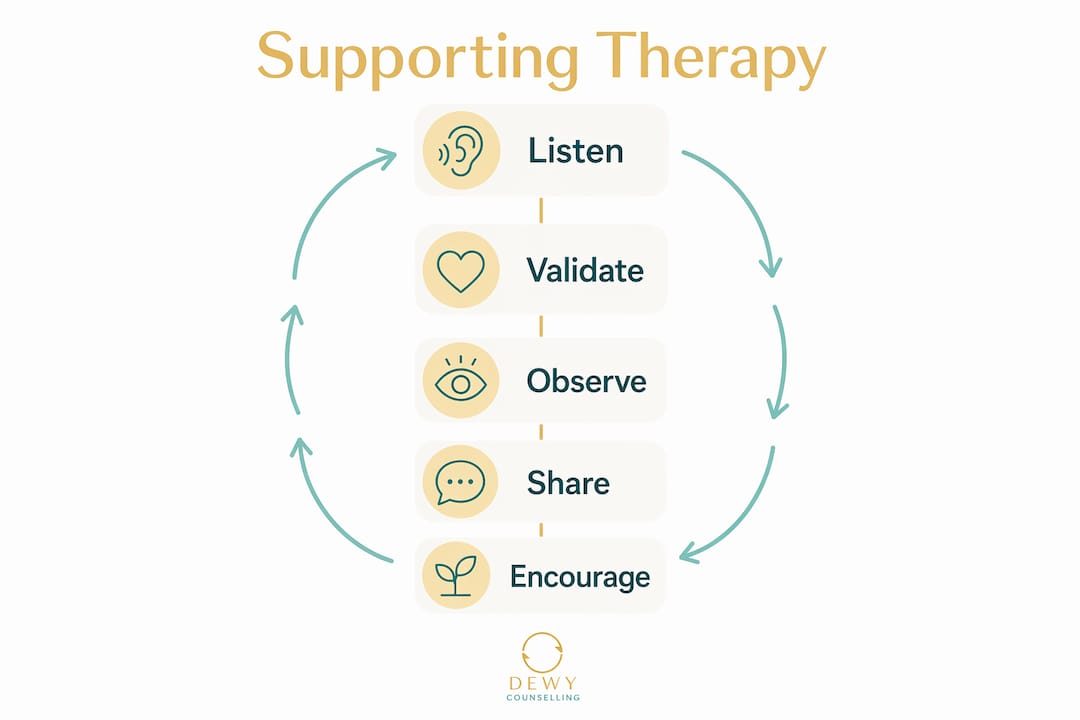
Using "I" statements and sharing your own experience with therapy normalizes the process and reduces stigma. Psychologist Melissa Gluck recommends vulnerability as one of the most powerful tools a supporter can use. If you have been to therapy yourself, saying so openly can shift the entire tone of the conversation.
What are practical ways to support someone in therapy?
Once your friend decides to pursue therapy, your role shifts from encourager to steady companion. Listening without judgment and resisting the urge to offer immediate advice creates psychological safety. That safety encourages your friend to stay open, both with you and with their therapist.

Practical support matters just as much as emotional presence. Offering appointment reminders, transportation, or help with daily tasks reduces the logistical barriers that quietly undermine consistent therapy attendance. These small acts signal that you are invested in their progress without overstepping into their therapeutic process.
Here are specific ways to offer meaningful support:
- Celebrate small wins. Acknowledge when your friend keeps an appointment or shares something difficult. Progress in therapy is rarely dramatic.
- Respect their privacy. Do not press for details about what happens in sessions. Let your friend share what they choose, when they choose.
- Help with routine. Maintaining stable daily routines reduces household stress and supports the recovery environment their therapist is working to build.
- Stay consistent. Show up for regular plans, check in with a simple text, and avoid disappearing between crises.
- Avoid fixing mode. Your job is not to solve the problem. It is to make your friend feel less alone while they work through it.
Understanding what therapy sessions involve can help you ask better questions and offer more informed encouragement. You do not need to become an expert. You just need to be genuinely curious and supportive.
Pro Tip: Replace "Have you tried just thinking positively?" with "That sounds really hard. I'm here." The second phrase does more for your friend's willingness to continue therapy than any advice ever could.
How do you maintain boundaries while supporting a friend?
You are not your friend's therapist, and trying to act like one will exhaust you both. Setting clear boundaries protects you from burnout and protects your friend from becoming dependent on you in ways that slow their therapeutic progress.
Supporter burnout is real. Watch for these signs in yourself:
- Feeling drained after every interaction with your friend.
- Losing sleep or focus because of worry about their wellbeing.
- Canceling your own plans repeatedly to manage their emotional needs.
- Feeling resentful, even when you genuinely want to help.
- Neglecting your own mental health or relationships.
If you recognize these patterns, it is time to reset your limits. Communicating a boundary does not mean abandoning your friend. It means being honest: "I care about you deeply, and I also need to protect my own energy so I can keep showing up for you."
"Managing your own stress as a supporter is not selfish. It is the foundation of being effective and sustaining care over time. You cannot pour from an empty cup, and your friend needs you to still be there six months from now."
Seeking your own support, whether through counseling, a support group, or trusted relationships, is not a sign of weakness. Self-care practices that actively protect your mental health make you a more present and effective supporter. Therapy for supporters is more common than most people realize, and it works.
What should you do if your friend refuses therapy?
Resistance to therapy is common, and pushing too hard almost always backfires. Issuing ultimatums or applying pressure damages the relationship and rarely motivates genuine change. Readiness is a prerequisite for therapy to be effective, and you cannot manufacture it for someone else.
When your friend is hesitant, these steps help you stay connected without forcing the issue:
- Accept their timeline. Acknowledge that they are not ready right now, and make clear the door stays open.
- Keep the relationship warm. Continue showing up as a friend, not as someone with an agenda.
- Revisit the conversation gently. After some time has passed, you can return to the topic with fresh empathy: "I know we talked about this before. I just want you to know I still think it could help, and I'm here if you ever want to explore it."
- Suggest lower-barrier options. Self-help resources, support groups, or online modules can serve as a bridge for someone not yet ready for formal therapy.
- Know your limits. If your friend is in immediate danger, contact a crisis line or emergency services. Supporting a friend does not mean managing a crisis alone.
The goal is to keep the relationship intact so that when your friend is ready, you are still someone they trust. Patience here is not passive. It is one of the most active forms of care you can offer.
Key Takeaways
Effective support for a friend seeking therapy combines empathetic communication, practical assistance, and clear personal boundaries that protect both you and your friend over the long term.
| Point | Details |
|---|---|
| Recognize the right signs | Look for persistent mood shifts and daily task struggles, not just a single bad day. |
| Use a staged conversation approach | Validate feelings first, then share concern, then suggest therapy as added support. |
| Offer practical and emotional help | Appointment reminders, transport, and consistent presence all increase therapy engagement. |
| Set and maintain boundaries | Protecting your own wellbeing makes you a more effective and sustainable supporter. |
| Respect your friend's readiness | Avoid pressure or ultimatums; keep the relationship warm and revisit the topic gently over time. |
What I've learned from watching people support each other through therapy
Wayne Dewhurst here. After years of working with individuals, couples, and families at Dewycounselling, the pattern I see most often is not a lack of care. It is a lack of confidence. Friends who want to help genuinely do not know what to say, so they either say too much or go silent entirely. Both responses leave the person struggling feeling more alone.
The insight that changed how I think about this: vulnerability from the supporter is more powerful than any carefully chosen script. When you tell a friend, "I went to therapy and it helped me more than I expected," you do not just normalize the idea. You give them permission to want the same thing for themselves. That moment of shared humanity does more than a dozen well-researched arguments for why therapy works.
The other thing I have seen consistently is that supporters underestimate how much the steady, undramatic presence matters. You do not need to say the perfect thing. You need to keep showing up. The friend who texts every week, who still invites their struggling friend to coffee even when they cancel, who does not disappear when things get hard: that person is doing something profound. They are proving that the relationship is not contingent on the other person being okay.
Helping a friend find therapy is not a one-time conversation. It is a long-term commitment to someone's wellbeing, and that commitment requires you to take care of yourself too. The readers who do this well are the ones who treat their own mental health with the same seriousness they bring to their friend's.
— Wayne Dewhurst
Dewycounselling is here when you and your loved ones are ready
Sometimes the most helpful thing you can do for a friend is show them what professional support actually looks like.

Dewycounselling offers individual, couples, and family therapy in both online and in-person formats, making it easier to find an option that fits your friend's life and schedule. For those not yet ready for full sessions, self-help modules offer a lower-pressure starting point with high-quality video content designed to build self-awareness and coping skills. Whether you are looking for support for yourself as a caregiver, or helping someone you love take their first step, Dewycounselling provides confidential, personalized care focused on helping people thrive.
FAQ
What are the signs a friend needs therapy?
Watch for persistent mood changes, difficulty with daily tasks, hopelessness, or withdrawal from relationships lasting several weeks. A single bad day is not a signal; a consistent pattern is.
What do you say to a friend who is hesitant about therapy?
Use "I" statements and share your own experience with therapy if you have one. Validate their feelings first, then gently suggest therapy as an option rather than a requirement.
How do you support someone in therapy without overstepping?
Listen without judgment, respect their privacy about session content, and offer practical help like reminders or transportation. Avoid giving advice or trying to interpret their therapeutic process.
What should you do if encouraging a friend to seek help damages the relationship?
Step back, keep the relationship warm, and revisit the conversation later with patience. Pushing too hard or issuing ultimatums typically backfires and erodes trust.
How do you protect your own wellbeing while helping a friend?
Set clear limits on your emotional availability, watch for signs of burnout, and seek your own support through counseling or trusted relationships. Your mental health directly affects your ability to help.