
Self-care practices for mental health are deliberate, evidence-based activities that improve your emotional and physical well-being by building healthy daily habits. The term "self-care" is sometimes dismissed as a buzzword, but in lifestyle medicine, it refers to a recognized set of behaviors that reduce stress, support brain function, and lower the risk of chronic illness. 6 in 10 Americans live with at least one chronic disease, and self-care is one of the most accessible tools for changing that trajectory. The practices covered here are grounded in public health research and designed to fit real life, not an idealized version of it.
1. What are the most effective self-care practices for mental health through physical activity?
Regular physical activity is one of the most powerful actions you can take for your mental health. Exercise reduces cortisol, the body's primary stress hormone, while increasing dopamine and serotonin. That chemical shift is why even a short walk can lift your mood within minutes.
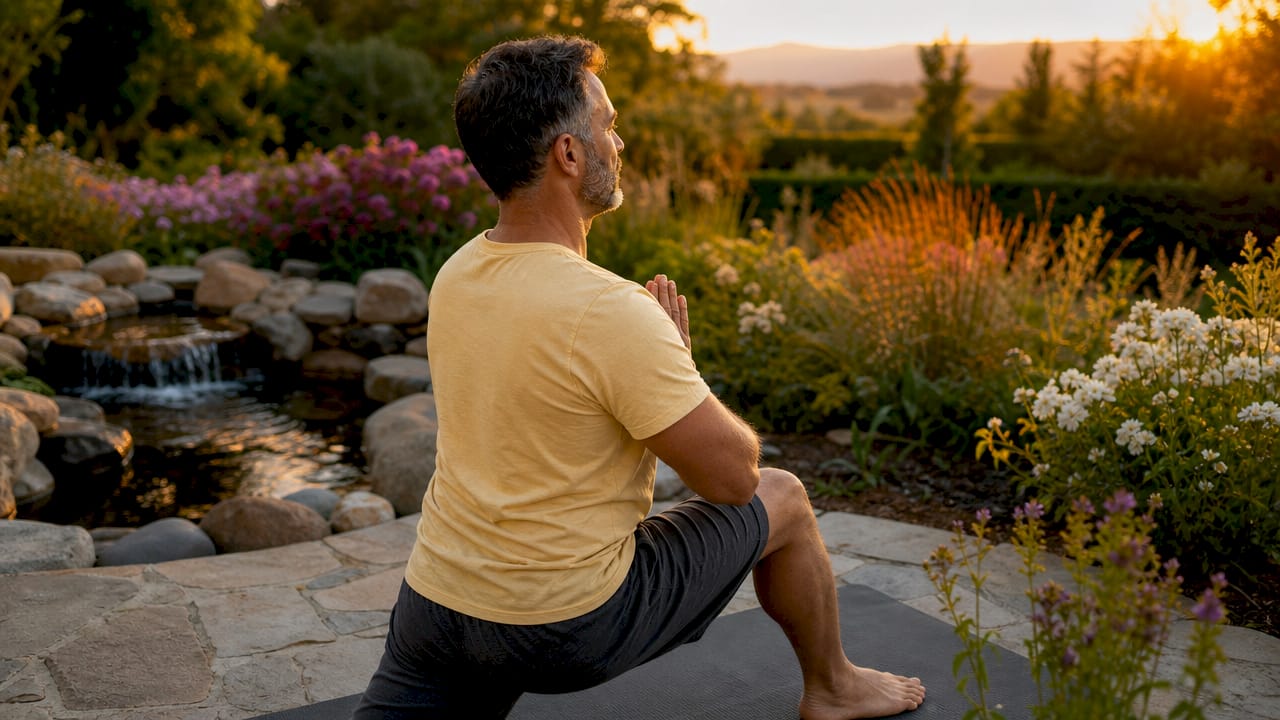
Public health guidelines recommend at least 20 minutes of moderate movement daily, or roughly 2.5 hours per week. Moderate activity includes brisk walking, cycling, swimming, or dancing. You do not need a gym membership or a structured program to meet this threshold.
Consistency matters more than intensity. A 15-minute walk every morning builds more lasting benefit than one intense workout per week. The goal is to make movement a non-negotiable part of your day, not a performance.
- Brisk walking outdoors (bonus: sunlight exposure supports vitamin D and circadian rhythm)
- Yoga or stretching for combined physical and mindfulness benefits
- Dancing, gardening, or household chores that raise your heart rate
- Short bodyweight circuits at home when time is limited
Pro Tip: Start with a five-minute walk after breakfast. Attach it to something you already do every morning so the habit builds itself.
2. How can mindfulness practices for mental health calm your nervous system?
Mindfulness meditation directly calms the brain regions responsible for the fight-or-flight response. When you practice mindfulness consistently, you train your nervous system to pause before reacting. That pause is where emotional regulation lives.
You do not need to meditate for 30 minutes to feel the benefit. Even five minutes of focused breathing, body scanning, or guided visualization can interrupt a stress spiral. Apps like Calm and Insight Timer offer free guided sessions for beginners.
Sensory techniques add another layer of support. Scents like lavender and frankincense activate the limbic system, the brain's emotional processing center, and can reduce anxiety quickly. Keeping a small bottle of lavender essential oil at your desk or bedside is a low-effort way to access this effect.
"Mindfulness is not about emptying your mind. It is about noticing what is there without letting it run the show." This distinction matters because many people abandon mindfulness after one session, believing they are doing it wrong.
Grounding techniques like the 5-4-3-2-1 method (naming five things you see, four you hear, three you can touch, two you smell, one you taste) work especially well for acute anxiety. They redirect attention from internal catastrophizing to present-moment sensory experience.
- Five-minute morning breathing exercise before checking your phone
- Body scan meditation before sleep to release physical tension
- Aromatherapy with lavender or frankincense during stressful work periods
- Gratitude journaling, which the CDC links to reduced stress and improved well-being
3. What role does sleep play in mental health self-care?
Sleep is the foundation every other self-care strategy rests on. Without adequate rest, emotional regulation deteriorates, stress tolerance drops, and cognitive function suffers. You cannot meditate, exercise, or connect meaningfully with others when you are chronically sleep-deprived.
Sleep hygiene is the clinical term for habits that support consistent, restorative sleep. The most effective practices are straightforward.
- Set a consistent bedtime and wake time, even on weekends.
- Avoid screens for at least 30 minutes before bed. Blue light suppresses melatonin production.
- Keep your bedroom cool, dark, and quiet. These conditions signal the brain that it is time to sleep.
- Avoid caffeine after 2 p.m. Its half-life in the body is roughly five to six hours.
- Use your bed only for sleep and rest. Working or watching TV in bed weakens the mental association between bed and sleep.
Nutrition works alongside sleep to support brain chemistry. Foods rich in omega-3 fatty acids, like salmon and walnuts, support serotonin production. Complex carbohydrates, leafy greens, and fermented foods support gut health, which research increasingly links to mood regulation.
Pro Tip: Prepare tomorrow's breakfast the night before. Removing one morning decision reduces cortisol before your day even starts.
4. How do social connections and boundary-setting contribute to mental well-being?
Positive social connection is a biological need, not a luxury. Meaningful relationships reduce stress hormones, lower blood pressure, and improve mood in ways that no solo practice can fully replicate. Even brief, genuine interactions, like a real conversation with a friend or a kind exchange with a neighbor, register as protective for mental health.
Saying no and setting boundaries is one of the most underrated mental health self-care acts. Chronic overcommitment depletes emotional reserves and accelerates burnout. Boundaries are not walls. They are the conditions under which you can show up fully for the people and responsibilities that matter most.
Building social self-care does not require a packed social calendar. Quality outweighs quantity.
- Schedule one meaningful conversation per week, by phone, video, or in person.
- Join a community group, class, or volunteer organization that aligns with your values.
- Practice saying "I can't commit to that right now" without over-explaining.
- Identify one relationship that drains you and reduce your exposure to it intentionally.
Self-care builds confidence and resilience by increasing your awareness of personal needs and stress triggers. When you know what depletes you, you can protect it more deliberately.
5. What strategies help make self-care routines for wellness last long-term?
Sustainable self-care is built on consistency, not perfection. Habit formation averages 66 days, which means the first two months of any new routine will feel effortful. That discomfort is normal. It is not a sign that the practice is wrong for you.
The most durable self-care routines are built in layers. Start with one or two anchor habits, like a morning walk and a consistent bedtime. Once those feel automatic, add a third. Micro-wins from small, consistent actions drive long-term habit formation far more reliably than ambitious overhauls that collapse under pressure.
A "bare-minimum day" plan is one of the most practical tools in any mental health toolkit. On days when executive function is low, grief is heavy, or energy is depleted, a tiered plan tells you exactly what the floor looks like. For many people, that floor is: drink water, eat something, go outside for five minutes, and sleep at a reasonable hour. That is enough on a hard day.
Pro Tip: Write your bare-minimum plan when you feel well, not when you are struggling. Crisis is the wrong time to make decisions about what you need.
Knowing when self-care is not enough is equally important. If symptoms do not improve after a few weeks of consistent effort, professional support is the appropriate next step. Self-care is a valid first-line response to mild stress. It is not a substitute for therapy when anxiety, depression, or trauma are present.
| Situation | Recommended approach |
|---|---|
| Mild daily stress | Self-care practices: movement, sleep, mindfulness |
| Persistent low mood (2+ weeks) | Add professional counseling alongside self-care |
| Acute anxiety or panic | Seek psychotherapy; self-care supports but does not replace treatment |
| Crisis or safety concerns | Contact a mental health professional or crisis line immediately |
Key Takeaways
Consistent, small self-care habits grounded in physical activity, mindfulness, sleep, and social connection produce the most durable improvements in mental health over time.
| Point | Details |
|---|---|
| Physical activity is foundational | Even 20 minutes of daily movement reduces cortisol and lifts mood measurably. |
| Mindfulness rewires stress responses | Regular breathing exercises and grounding techniques calm the fight-or-flight brain response. |
| Sleep hygiene supports everything else | Consistent sleep and wake times protect emotional regulation and cognitive function. |
| Boundaries protect mental energy | Saying no to overcommitment prevents burnout and preserves capacity for meaningful connection. |
| Know when to seek professional help | If self-care does not improve symptoms within a few weeks, psychotherapy is the right next step. |
What I have learned from watching small habits change lives
Working with people through Dewycounselling, I have seen one pattern repeat itself more than any other. The people who make the most meaningful progress are rarely the ones who overhaul everything at once. They are the ones who pick one small thing and do it consistently, even when it feels pointless.
A client once told me she started by simply making her bed every morning. That was it. Within three weeks, she had added a short walk. Within two months, she was sleeping better and managing conflict at work differently. The bed was not the magic. The consistency was.
What I find most encouraging is that self-care does not require you to feel motivated first. You act, and the motivation follows. That is the opposite of what most people believe, and it is one of the most liberating realizations in mental health work.
Be compassionate with yourself when routines fall apart. They will. A missed week is not a failed habit. It is just a gap. The practice is picking it back up without drama or self-judgment. That skill, returning without shame, is itself a form of mental health self-care.
— Wayne
Mental wellness support from Dewycounselling
Self-care practices build a strong foundation, and sometimes that foundation needs professional reinforcement. Dewycounselling offers individual and couples therapy both online and in person, designed to help you develop the communication skills and coping strategies that make daily wellness sustainable.

For those who prefer to learn at their own pace, Dewycounselling's self-help video modules guide you through evidence-based mental wellness skills you can practice at home. Whether you are managing everyday stress or working through something deeper, there is a level of support that fits where you are right now. Reaching out is not a sign that self-care has failed. It is self-care in its most courageous form.
FAQ
What are the most important self-care practices for mental health?
Physical activity, consistent sleep, mindfulness, and meaningful social connection are the four most evidence-supported pillars of mental health self-care. Starting with even one of these and building consistency over time produces measurable improvements in mood and stress tolerance.
How long does it take for self-care habits to work?
Habit formation averages 66 days, so expect the first two months to feel effortful before new routines feel automatic. Small, consistent actions produce more lasting change than intense but irregular efforts.
Can self-care replace therapy for anxiety or depression?
Self-care is an effective first-line response to mild stress, but it does not replace professional treatment for clinical anxiety or depression. If symptoms persist after a few weeks of consistent self-care, psychotherapy is the appropriate next step.
What is a bare-minimum self-care plan?
A bare-minimum plan is a short list of the simplest actions you can take on your hardest days, such as drinking water, eating something, going outside briefly, and sleeping at a consistent time. Write it when you feel well so it is ready when you need it most.
How does mindfulness help with anxiety?
Mindfulness meditation calms the brain regions responsible for the fight-or-flight stress response, reducing the intensity and duration of anxious episodes. Even five minutes of focused breathing daily can shift your nervous system toward a calmer baseline over time.
Recommended
- Professional Counselling Services | Online & In-Person Therapy
- Self-help Modules with High-Quality Video Classes - Self-Discovery Journey — DEWY COUNSELLING
- Mobile Psychotherapy Services - Counselling Burlington Ontario — DEWY COUNSELLING
- Counselling & Therapy Services | Dewy Counselling Burlington — DEWY COUNSELLING