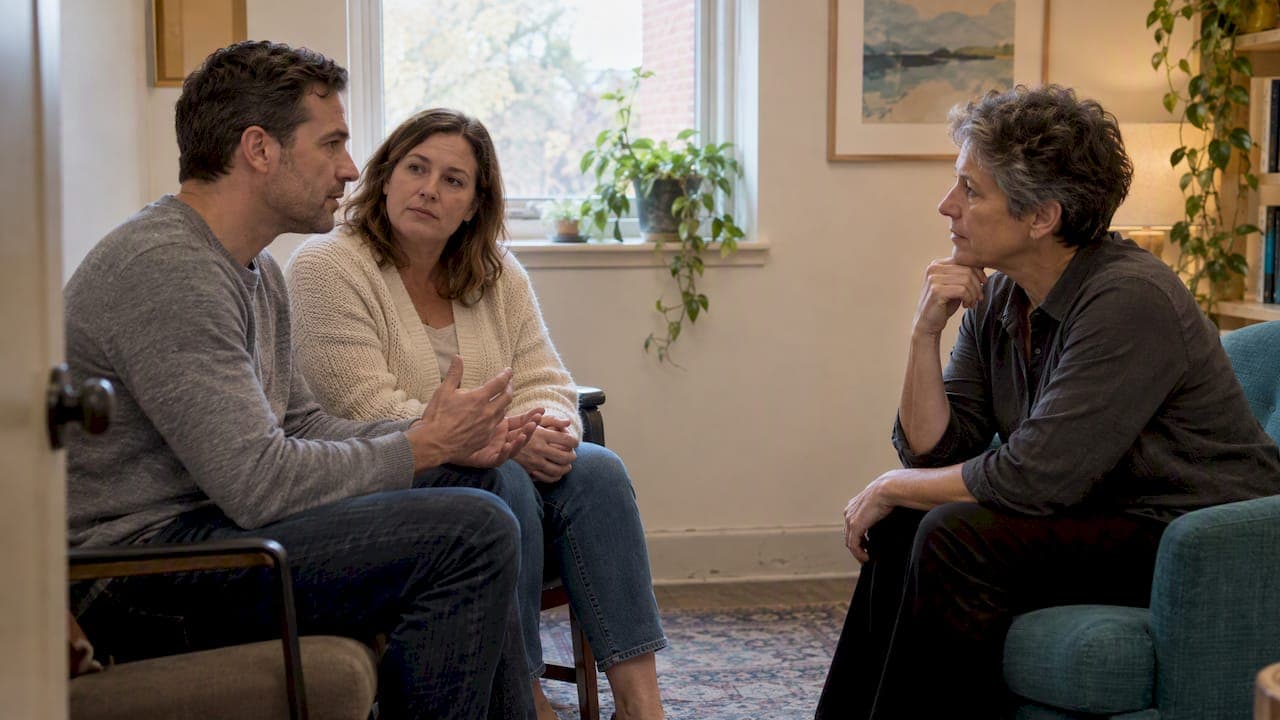
Erectile dysfunction (ED) counseling is talk-based therapy that treats the anxiety, shame, stress and relationship strain that surround erection difficulties. It works best alongside a medical check-up, not instead of one. If you are in Ontario and wondering whether to see a therapist, a doctor or both, the short answer is usually both, in that order or at the same time. This guide explains why, what sessions look like, what to expect on cost, and how to involve a partner without turning your bedroom into a courtroom.
We write this with compassion for a subject that many men carry in silence. Struggling with erections does not mean you are broken, and it does not mean your relationship is failing. It means something is asking for attention.
TL;DR
- ED is rarely just physical or just psychological. Even when the cause is medical, anxiety and shame tend to build up around it and keep the problem going.
- See a physician first or alongside therapy. ED can be an early sign of diabetes, hypertension, heart disease or depression, and a medical assessment rules out the things that should not be missed.
- Counseling is especially useful for performance anxiety, relationship tension, and when medication helps but confidence does not return.
- You do not need a referral to see a private psychotherapist in Ontario. At Dewycounselling, individual sessions are $175 per hour, in person or online.
- Including your partner, when you both feel ready, often lowers the pressure and speeds up progress.
What erectile dysfunction counseling actually is
Counseling for ED is a form of sex therapy or psychotherapy focused on sexual confidence, communication and the thought patterns that interfere with arousal. It does not involve any sexual contact in the room, and it does not involve undressing or being observed. It is conversation, education and practical homework you try at home, at your own pace.
Most approaches draw on a few familiar ideas:
- Education. Understanding how arousal works, and why worry can switch it off. Erections depend on a coordination of psychological, hormonal, vascular and neurological factors, which is why researchers describe sexual function as a biopsychosocial process.
- Cognitive work. Spotting the catastrophic thoughts ("it will happen again," "she will leave") that fuel anxiety before and during intimacy.
- Reducing pressure. Shifting attention from performance to sensation and connection, often through gradual exercises that take intercourse off the table for a while.
- Communication. Learning to talk about what is happening without blame, silence or avoidance.
If you want a closer look at the anxiety piece, our article on reducing performance anxiety during sex goes through therapist-backed tools you can use right away.
Why a pill alone often leaves something unfinished
Many men are surprised to hear that ED treatment is not simply a matter of fixing a part. The Canadian Urological Association guideline describes a stepwise approach: lifestyle changes such as exercise, quitting smoking and cutting back on alcohol or cannabis, then first-line medications called PDE5 inhibitors, with early referral for sexual counseling when a psychological component is suspected. The same guideline notes that combining medication with psychosocial support tends to produce better outcomes than medication alone.
There is a human reason for this. Imagine a knee that has been injured. Even after the joint heals, you may keep protecting it, tensing up, avoiding stairs. The body has recovered, but the fear has not. ED works much the same way. After one or two difficult experiences, a man begins to watch himself during sex, a habit sometimes called spectatoring. That self-monitoring creates the very tension that makes erections harder, and a tablet cannot tell you to stop watching.
The research summary behind the guideline also points out that ED, even when it begins with a physical cause such as diabetes or cardiovascular disease, usually picks up psychological layers: performance anxiety, shame and catastrophic thinking. Treating only one layer leaves the others quietly running.
A note on products sold online
If you search for solutions late at night, you will meet a lot of marketing. Some sellers offer compounds such as PT-141, which are listed for research use only. They are not a substitute for a medical assessment, and no product can tell you whether your erection difficulty is a sign of an underlying health condition. That conversation belongs with a physician, ideally before you spend money or take anything new.
Start with a medical check, and why it matters
ED can be an early signal that something else needs care. The Therapeutics Letter on ED management recommends asking about ED in all adult men as a potential early indicator of modifiable factors. The CUA guideline places a detailed history and physical exam at the cornerstone of assessment, with laboratory tests considered to rule out associated conditions.
In practice, a family doctor or nurse practitioner may ask about:
- How and when the difficulty began (suddenly or gradually).
- Whether you still have morning or nighttime erections, which can hint at a psychological rather than purely physical cause.
- Medications, alcohol, cannabis and smoking.
- Mood, sleep, stress and relationship satisfaction.
- Blood pressure, blood sugar, cholesterol and sometimes hormone levels.
We are psychotherapists, not physicians, and we will not diagnose or prescribe. What we can do is encourage you to see a doctor if you have not, and work in step with whatever medical plan you and your doctor choose.
Signs counseling may be a good fit
You do not need to wait for a doctor to say the word "psychogenic." Counseling can help if any of these sound familiar:
- The difficulty started during a stressful period, after a loss, a job change, a new baby or a conflict with your partner.
- You can get erections alone or in the morning, but not with a partner.
- You feel dread or avoidance as intimacy approaches.
- Medication helped the physical response, yet you still feel anxious or disconnected.
- Your partner has pulled back, or the two of you have stopped touching altogether to avoid the topic.
- You are living with depression, anxiety, trauma or problematic substance use, all of which can affect sexual function and are things we work with directly.
Counseling is also a reasonable choice if you simply want a confidential place to say aloud what you have not said to anyone.
What sessions look like
Every therapist works a little differently, but a course of ED counseling often follows a shape like this.
The first sessions: understanding the story
We start by listening. When did you first notice a change? What went through your mind? How did your partner respond, and how did you interpret that response? We also ask about health, mood, history and what you hope for. Nothing is rushed, and you decide what to share and when.
The middle: changing the cycle
Here we map the loop of worry, avoidance and withdrawal, and begin to interrupt it. You may be given gentle at-home exercises, often done with a partner, that rebuild comfort with touch without any demand for performance. We also challenge the beliefs that keep shame alive, such as the idea that an erection is the measure of your masculinity or your love.

The later stage: consolidating confidence
As pressure drops, most people find that lapses lose their power. The goal is not a flawless record. It is the ability to have a difficult moment, stay calm, and carry on with connection rather than retreat.
How long does it take?
There is no universal number. Providers describe courses ranging from a handful of sessions to several months of weekly work, depending on how long the problem has lasted, how much is medical, and whether a partner is involved. We would rather give you an honest, personal estimate after meeting you than quote a figure that does not fit your situation.
The partner's role: a relational wound that heals together
ED rarely stays inside one person. A partner may feel rejected, unattractive or worried, and may not say so. The man, meanwhile, may read silence as disappointment. Both are trying to protect each other, and the result is distance.
Clinical literature supports involving partners where possible. A 2025 paper on a treatment model for psychogenic ED notes that conventional management often overlooks psychosocial factors and the couple's involvement, which can lead to weaker results. The CUA guideline similarly describes how including a partner can reduce pressure, open communication and surface other barriers, such as the partner's own sexual difficulty or distress.
If you are wondering how a wife or partner can help, these are good places to begin:
- Choose a calm moment away from the bedroom to talk, not right after a difficult attempt.
- Start with feelings, not fault. "I miss feeling close to you" lands very differently than "you never initiate."
- Take pressure off intercourse for a time, and explore affection, massage and closeness that have no required ending.
- Encourage the medical visit without turning it into an ultimatum.
- Look after yourself. Partners can feel anxious, hurt or lonely, and their feelings count too.
Our couples counselling service includes specific therapy for sexual issues, and our guides on communication exercises for couples and improving communication with your partner give you practical ways to start the conversation. If intimacy has faded more broadly, see our article on low-pressure strategies for sexless marriages in Canada.
Our perspective at Dewycounselling
We have been working with diverse clients and multiple therapy modalities for over 20 years, and one pattern comes up again and again: men arrive after months, sometimes years, of private worry. By then the erection difficulty is the smallest part of the story. The larger part is the silence, the avoided hugs, the assumptions each partner has made about the other.
We do not treat ED as a problem of willpower or technique. We see it as a signal from the body, the mind and the relationship together. That is why we encourage a medical review, why we use evidence-based approaches, and why we like to bring partners in when both people want that. Our work with addiction, depression and anxiety matters here too, because these so often travel alongside sexual difficulties and can be addressed in the same therapeutic relationship.
One principle guides us: a wound in a relationship, like a wound on the body, does better with prompt, gentle care than with a long wait and a dramatic fix later. You do not have to be sure about what is causing the problem before you reach out. You only have to be willing to talk about it.
— Wayne Dewhurst
Costs, coverage and finding the right professional in Ontario
In Ontario, physician-delivered psychotherapy and counseling can be covered by OHIP when medically necessary, and the Schedule of Benefits sets out the billing rules, including strict time documentation for counseling codes. Many independent psychotherapists, however, work privately and set their own fees. You generally do not need a referral to see one for sexual or relationship concerns.
At Dewycounselling, the published rates are:
| Option | Price |
|---|---|
| In-person or online session | $175 per hour |
| Mobile session | $225 per hour |
| Prepaid annual membership | $1,750 per year |
Couples therapy and specific therapy for sexual issues are priced on request, and we offer sliding scale pricing. Check our services page for the latest details. If you want to plan a realistic budget, our guide to budgeting two to three months of therapy in Ontario covers HST, extended health benefits and clinician advice, and our overview of mental health funding routes lists other ways to reduce the cost.
When you choose any therapist, check their registration and ask about their experience with sexual concerns. Our step-by-step piece on finding a therapist in Ontario explains the credentials to look for and the questions worth asking.
Working with us
If you want to talk through ED with a therapist who will not judge or hurry you, we offer individual psychotherapy in person at two locations or online from anywhere in Ontario. Couples can book through our couples counselling page. Your first step can be as small as sending a message to ask whether we are the right fit.
A realistic picture of progress
We want to be honest about what to expect. Counseling is not a quick fix, and it will not reverse a medical cause by itself. Where the cause is mainly psychological, or where anxiety has built up around a physical cause, therapy can reduce the pressure and restore trust in your body. A review of the evidence on couple therapy discusses how psychosocial treatment for male ED has developed alongside medication, which reflects the same integrated thinking.
Progress is rarely a straight line. Many people notice small shifts first: a conversation that did not end in silence, a touch that felt safe, a night without a mental scoreboard. Those shifts matter. They are the ground that lasting change grows from.
FAQ
Which therapy is best for erectile dysfunction?
There is no single best therapy. Cognitive-behavioral approaches and sex therapy are commonly used to address performance anxiety and avoidance, and couple-based work helps when relationship strain is part of the picture. The strongest results are generally described when counseling is combined with a medical assessment and, where appropriate, medication.
Is there a permanent cure for erectile dysfunction?
It depends on the cause. When ED stems from stress, anxiety or relationship tension, many men see lasting improvement as those factors ease. When it is linked to conditions such as diabetes or heart disease, treating the underlying condition and managing ED with your doctor is the safer path, and we cannot promise a particular outcome.
What is the main cause of erectile dysfunction?
There is rarely one cause. Vascular, hormonal, neurological and psychological factors all play a part, and medications, alcohol, smoking and cannabis can contribute. That is why a physician should assess you, and why counseling often runs alongside medical care.
Do I need a doctor's referral to see a therapist in Ontario?
No. You can book directly with a private psychotherapist for sexual or relationship concerns. We still encourage you to see your family doctor, because ED can be an early sign of other health conditions.
How can a partner help a man with erectile dysfunction?
A partner can help most by staying calm, avoiding blame, and taking the pressure off intercourse while you both rebuild closeness. Talking openly about feelings, encouraging a medical visit and attending a few sessions together can make a real difference.
Sources
- Canadian Urological Association guideline: Erectile dysfunction (PMC)
- Canadian Urological Association guideline: Erectile dysfunction (CUAJ)
- Management of Erectile Dysfunction, Therapeutics Letter (NCBI Bookshelf)
- Psychosocial interventions for erectile dysfunction (PMC)
- Treatment Model for Young Patients with Psychogenic Erectile Dysfunction and Resultant Infertility
- Couple therapy and systemic interventions for adult-focused problems: The evidence base (Journal of Family Therapy)
- Ontario Schedule of Benefits (March 2025)