
Starting therapy for the first time is a straightforward process when you know what to expect and how to prepare. Psychotherapy is defined as a structured, evidence-based conversation between you and a licensed mental health professional, aimed at improving symptoms of anxiety, depression, or relationship conflict. Many people in Ontario put off beginning therapy because they fear the unknown, not because they doubt its value. Psychotherapy produces meaningful improvements in symptoms and quality of life across a wide range of mental health conditions. The first session is almost never about solving your problems on the spot. It is an intake appointment, a chance for your therapist to understand your background and for you to decide whether this feels right.
How to prepare when you start therapy for the first time
Preparation reduces anxiety and helps you get more from your first session. You do not need to arrive with a perfectly organized life story. You need only a general sense of why you are there and what you hope to gain.
Start by reflecting on your reasons for seeking support. Are you dealing with persistent worry, low mood, communication problems in a relationship, or something harder to name? Writing down two or three concerns before your appointment gives you a starting point and prevents the blank-mind feeling that many people experience when they sit down with a therapist for the first time.
Here are the practical steps to take before your first appointment:
- Clarify your goals. Write down what you want to feel or do differently. Goals do not need to be precise. "I want to feel less anxious at work" is enough.
- Prepare a few questions. Ask about the therapist's approach, session length, and what a typical session looks like. You are evaluating them as much as they are learning about you.
- Gather your insurance information. Many Ontario therapists bill directly to extended health benefits. Know your plan details before you book.
- Expect some paperwork. Most practices send intake forms covering your health history, consent to treatment, and confidentiality policies. Complete these before your session if possible.
- Bring a notebook. Jotting down thoughts or reactions after a session helps you track your progress over time.
Therapists expect nervousness and uncertainty from new clients. You do not need to have everything figured out before you walk in. Vulnerability grows gradually, and a skilled therapist will guide that process at your pace.
Pro Tip: Write down three specific concerns or goals the night before your first session. Even a rough list gives you something concrete to refer to if your mind goes blank.

What happens during your first few therapy sessions
The first session is an intake appointment, not a therapy session in the traditional sense. Your therapist will ask about your background, current challenges, mental health history, and what brought you in. Think of it as a structured conversation designed to give both of you a clear picture of where you are starting from. You can learn more about how therapy sessions work before your appointment to feel more grounded going in.
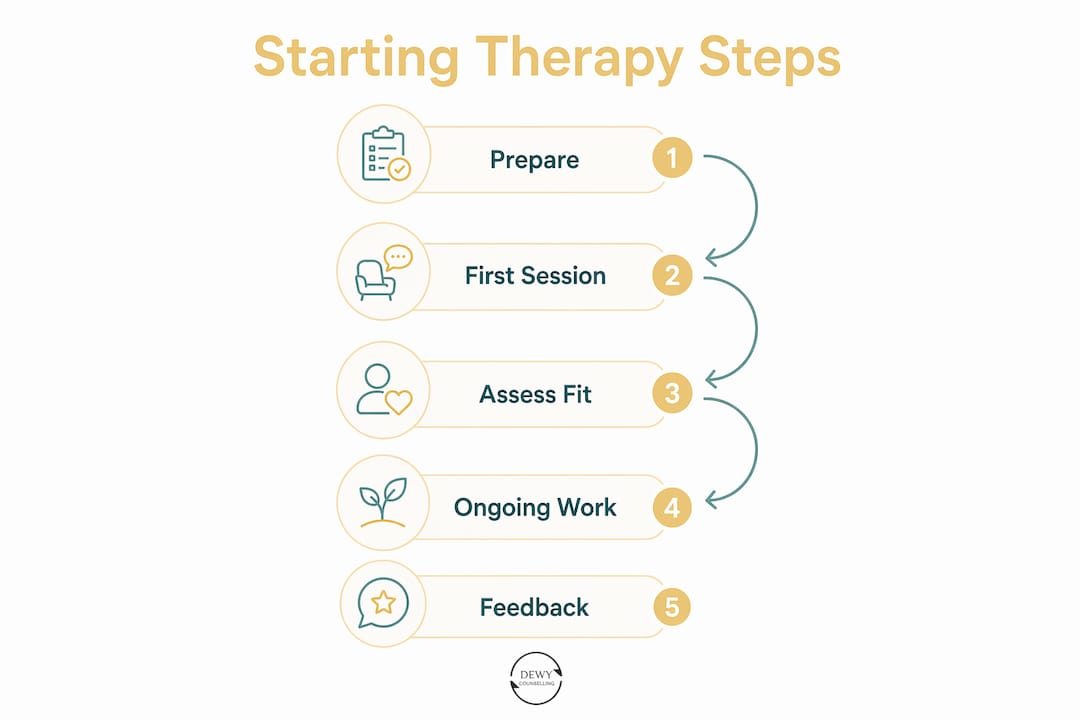
Here is what typically happens across the first few sessions:
- Session one: intake and background. Your therapist gathers information about your life history, current symptoms, and goals. This session sets the foundation for everything that follows.
- Sessions two and three: building trust. The focus shifts to establishing rapport and beginning to identify patterns in your thoughts, feelings, or behaviors. Active therapeutic work starts here.
- Session three or four: goal setting. You and your therapist agree on a direction. This might involve choosing a therapeutic approach such as cognitive behavioral therapy or person-centered therapy.
- Ongoing sessions: therapeutic work. You begin working through the issues that brought you in, using techniques suited to your goals and your therapist's training.
The first 3–4 sessions serve as orientation rather than active therapy. That timeline gives you enough experience to assess whether the relationship feels right before committing further. It also means you should not judge the entire process based on how the first session feels.
Therapists create a non-judgmental space by design. You are not expected to perform emotional openness or arrive with polished insights. Clients do not need to be 'fixed' before starting. Emotional honesty emerges naturally when the environment feels safe, and your therapist's job is to build that environment with you.
Pro Tip: Use your second or third session to tell your therapist honestly how the process feels so far. Early feedback helps them adjust their approach to fit you better.
How do you find the right therapist?
Finding a therapist who fits your needs is as important as deciding to start therapy at all. The therapeutic alliance, the bond between you and your therapist, is one of the strongest predictors of whether therapy actually works. A technically skilled therapist who feels cold or dismissive will produce weaker outcomes than one with whom you feel genuinely heard.
Here are the most reliable ways to find a therapist in Ontario:
- Your extended health benefits provider. Many Ontario workplace plans cover registered psychotherapists or registered social workers. Your insurer's directory is a practical starting point.
- Referrals from your family doctor. A GP familiar with your history can often suggest therapists suited to your specific concerns.
- Online directories. Directories that filter by specialty, location, and insurance acceptance help you narrow options quickly.
- Free consultations. Many therapists offer introductory calls at no cost. Use these to assess whether the therapist's communication style feels comfortable before committing.
Signs of a good fit include feeling heard without being judged, sensing that the therapist understands your concerns, and leaving sessions with something useful to think about. Signs that the fit is poor include feeling dismissed, misunderstood, or consistently worse after sessions without any sense of progress.
You have every right to switch therapists without explanation. If no connection forms after 3–4 sessions, switching is appropriate and widely supported by mental health professionals. Trying a different therapist is not failure. It is good self-advocacy.
Pro Tip: During a free consultation, ask the therapist how they typically work with someone dealing with your specific concern. Their answer tells you a lot about their style and whether it matches what you need.
What are the most common concerns about starting counseling?
Feeling nervous before your first session is normal. Most people who start counseling for the first time worry about the same things: not knowing what to say, fearing judgment, doubting whether therapy will help, or feeling unsure about cost. These concerns are worth addressing directly, because they stop many people from getting support they genuinely need.
Therapy is not a quick fix. Progress is often nonlinear, meaning you may feel better for a few weeks and then hit a rough patch. That pattern does not mean therapy is failing. It means you are doing real work, and real work takes time.
Cost is a legitimate barrier for many Ontario residents. Extended health benefits often cover a portion of therapy fees, and some therapists offer sliding-scale pricing based on income. Community mental health centers and university training clinics also provide lower-cost options. If cost is a concern, ask directly when you contact a therapist. Most are willing to discuss options.
"Being open with your new therapist about skepticism or previous negative experiences is a vital opportunity to improve the therapeutic alliance and optimize outcomes. Transparency builds the trust that makes therapy work."
If you have tried therapy before and it did not help, that experience is worth sharing with a new therapist. Transparency about past concerns builds trust and helps your therapist avoid repeating what did not work. Skepticism is not an obstacle to therapy. Named openly, it becomes a tool. You can also explore why people seek therapy to better understand your own motivations before your first session.
Key Takeaways
Starting therapy for the first time works best when you prepare honestly, assess fit over the first 3–4 sessions, and stay open about what is and is not working.
| Point | Details |
|---|---|
| First session is an intake | Expect information gathering, not immediate problem-solving, in your first appointment. |
| Prepare before you go | Write down two or three concerns or goals the night before your first session. |
| Assess fit over 3–4 sessions | Use the orientation period to evaluate rapport before deciding whether to continue. |
| Therapeutic alliance matters | The bond between you and your therapist predicts outcomes more than any single technique. |
| Switching therapists is normal | If the fit is poor after several sessions, changing therapists is appropriate and supported. |
What I have learned from watching people begin therapy
Wayne Dewhurst here. After years of working with people at the start of their therapy experience, the pattern I see most often is this: the people who struggle most in early sessions are not the ones with the hardest problems. They are the ones who believe they need to arrive already knowing what is wrong with them.
Therapy does not require you to have the answers. It requires you to show up. The therapist's job is to help you find the words for things you have not been able to say yet. That process takes time, and the discomfort of early sessions is not a sign that something is wrong. It is a sign that something real is happening.
The clients I have seen make the most meaningful progress are the ones who treat the first few sessions as a trial period rather than a verdict. They ask questions. They give honest feedback. They do not catastrophize a session that felt awkward or unproductive. They understand that therapy best practices involve building a relationship over time, not achieving a breakthrough in 50 minutes.
My honest advice: be patient with yourself and be honest with your therapist. Those two things matter more than any technique or framework. Therapy is a collaboration, and you are an equal partner in it.
— Wayne Dewhurst
Dewycounselling supports first-time therapy clients in Ontario
Dewycounselling works with individuals, couples, and families across Ontario who are ready to take the first step toward better mental health. Whether you are dealing with anxiety, depression, or relationship challenges, Dewycounselling's licensed therapists offer both online and in-person sessions to fit your schedule and comfort level.

Starting counseling for the first time does not have to feel uncertain. Dewycounselling's intake process is designed to be welcoming, clear, and low-pressure, so you can focus on what matters: getting the support you deserve. Visit Dewycounselling to learn about available services or book your first session. If relationship concerns are part of what brought you here, couples counseling is also available for partners ready to work through challenges together.
FAQ
What happens in a first therapy session?
The first therapy session is an intake appointment where your therapist gathers background information about your history, current challenges, and goals. It is not typically focused on solving problems but on building a foundation for the work ahead.
How many sessions does it take to see progress?
Progress varies by person and concern, but the first 3–4 sessions are generally an orientation period. Meaningful change often becomes noticeable after several weeks of consistent sessions.
What if I do not know what to say in therapy?
Not knowing what to say is completely normal for first-time therapy clients. Therapists are trained to guide the conversation, and you are not expected to arrive with polished explanations or clear answers.
Can I switch therapists if the fit feels wrong?
Yes. Switching therapists is appropriate and supported if you do not feel a connection after several sessions. You do not need to justify the decision to anyone.
How do I find a therapist in Ontario who accepts my insurance?
Start with your extended health benefits provider's directory, ask your family doctor for a referral, or contact therapists directly to ask about insurance coverage and sliding-scale fees.