
Marijuana withdrawal symptoms typically include irritability, anxiety, sleep disturbances, decreased appetite, and cravings, starting typically within 24 to 48 hours of your last use and peaking generally between days two and six. Most symptoms usually ease within about one to three weeks, though sleep problems and vivid dreams can linger longer. Withdrawal is rarely life-threatening, but it can disrupt work, relationships, and daily function enough that professional support helps. Read on for the full timeline, the biology behind it, and specific coping strategies you can start today.
TL;DR:
- Symptoms tend to peak between days 2 and 6, with physical discomfort often improving before mood and sleep disturbances begin to resolve.
- Longer or heavier use increases withdrawal severity, especially in women and individuals with preexisting anxiety, depression, or nicotine co-use.
- Most symptoms diminish within two to three weeks, but sleep disturbances and cravings can persist for several more weeks, increasing relapse risk.
- Supportive behavioral strategies like sleep hygiene, exercise, and therapy are more effective than medication, which is rarely prescribed specifically for cannabis withdrawal.
- In severe cases with suicidal thoughts, psychosis, or inability to care for oneself, prompt professional help is essential.
What Are the Most Common Marijuana Withdrawal Symptoms?
Cannabis withdrawal has a recognizable pattern, and it looks less like a stomach flu and more like a rough patch of depression mixed with restlessness. The cannabis withdrawal syndrome is dominated by mood and behavioral changes rather than the dramatic physical symptoms people associate with opioid or alcohol withdrawal.
Psychological symptoms tend to hit first and hit hardest:
- Irritability and short temper, often the earliest sign people notice
- Anxiety that ranges from mild edginess to a persistent, gnawing worry
- Depressed mood, sometimes with a flat, joyless quality to ordinary activities
- Anger or aggression, particularly in the first week
- Cravings for cannabis that spike during stress or boredom
Sleep-related symptoms deserve their own category because they behave differently than everything else. Insomnia is common, but so are strange, unusually vivid dreams once sleep does arrive. Many people describe fragmented sleep: falling asleep fine, then waking repeatedly through the night. This pattern makes sense biologically, since cannabis suppresses REM sleep during regular use, and stopping triggers a rebound where the brain seems to catch up on dreaming all at once.
Physical symptoms show up less often and usually milder than the psychological ones:
- Decreased appetite, sometimes with noticeable weight loss over a week or two
- Headaches
- Sweating and chills, occasionally alternating
- Abdominal pain or nausea
- Mild tremors
Symptom severity is not uniform across every person who quits. Heavier, longer-term use tends to produce a rougher withdrawal, and women may report more intense physical symptoms, including nausea and stomach pain, compared to men. People with existing anxiety or depression often find those conditions temporarily sharpen during the withdrawal window. And if you smoke cigarettes or vape nicotine alongside cannabis, the two withdrawal syndromes can overlap and amplify each other, since nicotine withdrawal independently produces irritability and sleep trouble.
Statistic Callout: Clinical reviews identify anxiety, irritability, disturbed sleep, depressed mood, and appetite loss as the most frequently reported features of cannabis withdrawal, while physical symptoms like chills and headaches occur less consistently across studies.
None of this means you are broken or that quitting was a mistake. It means your nervous system built a routine around daily cannabinoid input, and it now has to relearn how to run without it.
How Long Does Marijuana Withdrawal Last?
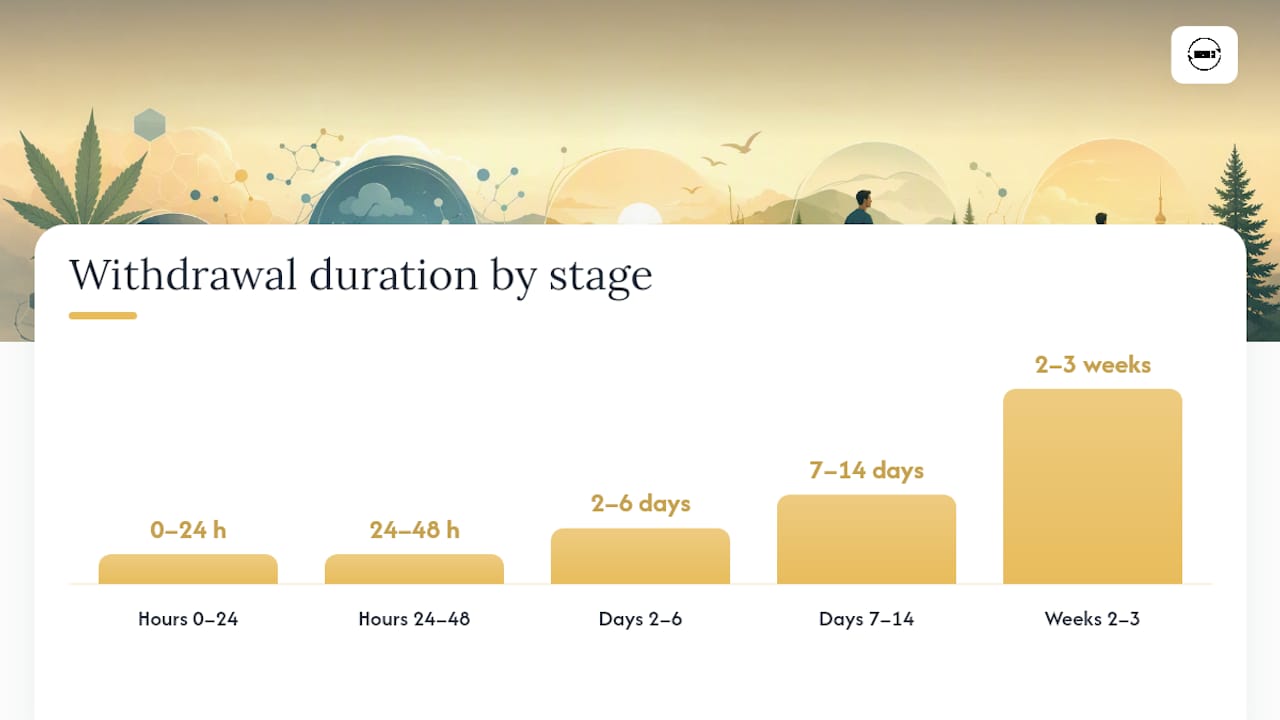
The weed withdrawal timeline follows a fairly predictable arc, even though the exact days shift a little person to person. Knowing the shape of it in advance makes the rough days easier to tolerate, because you can tell yourself "this is day three, not forever."
- Hours 0 to 24: Most people feel normal, or notice only mild restlessness. THC is still active in the system.
- Hours 24 to 48: Symptoms typically begin here, usually starting with irritability, anxiety, and trouble falling asleep.
- Days 2 to 6: This is the acute peak. Irritability, anxiety, appetite loss, and physical symptoms like headaches or sweating tend to be strongest during this window.
- Days 7 to 14: Most psychological and physical symptoms begin softening. Appetite usually returns first, mood and anxiety trail slightly behind.
- Weeks 2 to 3: For many people, the bulk of withdrawal has resolved by this point.
- Weeks 3 and beyond: Sleep disturbances and vivid, unsettling dreams can persist longer than everything else, sometimes for several more weeks in heavy, long-term users.
A useful pattern to expect: physical discomfort often fades before mood and sleep problems catch up, so don't assume you're backsliding if your body feels better while your head still feels foggy or your nights still feel restless. That staggered recovery is normal, not a warning sign.
The intensity and length of this timeline shift depending on how much and how long you used, and whether quitting was your choice or forced by circumstance (a drug test, a job requirement, a health scare). Involuntary cessation sometimes carries a rougher psychological edge simply because motivation and preparation matter for how the brain tolerates stress.
A simple self-monitoring checklist: track your sleep hours, appetite, mood on a 1 to 10 scale, and craving intensity each day for the first two weeks. Patterns on paper are far easier to trust than patterns in memory, especially when you're irritable and not thinking clearly.
Why Does Quitting Weed Cause Withdrawal?
Withdrawal happens because your endocannabinoid system adapted to a steady external supply of THC and now has to recalibrate without it. Chronic cannabis use floods CB1 receptors, the primary docking sites for THC in the brain, far more often than the body's own natural cannabinoids would. Over time, the brain responds by reducing CB1 receptor density and sensitivity, a process called downregulation. It's the brain's version of turning down the volume because the music has been too loud for too long.
When you stop using, that turned down volume stays turned down for a while, even though the external THC is gone. The mismatch between reduced receptor activity and the absence of cannabinoid input is a large part of why mood, sleep, and appetite all wobble during the first two weeks. CB1 receptors begin recovering within days and drift back toward baseline over the following weeks, which roughly tracks why symptoms fade on the same general timeline, though individual recovery speed varies.
Several factors reliably predict a harder withdrawal experience:
- Dose and duration. Heavier daily use over months or years produces more pronounced downregulation, and therefore a bumpier recovery, than occasional or short-term use.
- Gender. Women tend to report stronger physical symptoms during withdrawal, a pattern documented across multiple clinical reviews.
- Psychiatric comorbidity. Preexisting anxiety, depression, or trauma history tends to intensify the psychological symptoms of withdrawal, since the same neurochemical systems are already under strain.
- Tobacco co-use. Nicotine withdrawal shares symptoms with cannabis withdrawal, including irritability and sleep disruption, so people who smoke or vape nicotine often experience a longer, harder stretch.
- Social stress. Job pressure, relationship conflict, or unstable housing during the withdrawal window can make normal symptoms feel far more overwhelming.
This is exactly why a thorough history matters when someone seeks professional help. A clinician who knows how long and how heavily someone used, whether nicotine is in the picture, and what mental health conditions exist beforehand can set realistic expectations and build a plan that actually fits the person in front of them, not a generic withdrawal script.
When Should You See a Doctor for Withdrawal Symptoms?
Clinicians diagnose cannabis withdrawal syndrome using DSM-5 criteria, which in plain terms means someone develops at least three of the recognized symptoms, things like irritability, anxiety, sleep problems, appetite changes, restlessness, and physical discomfort, within roughly a week of stopping or sharply cutting back. The diagnosis isn't about having one bad night. It's about a cluster of symptoms showing up together and interfering with daily life.
When assessing severity, a clinician typically looks at how many symptoms are present, how much they're disrupting work, relationships, or basic functioning, and whether other conditions like depression or a broader substance use disorder are also in play.
Most withdrawal does not require emergency care, but certain signs mean it's time to reach out to a professional promptly:
- Suicidal thoughts or a sense that life isn't worth living
- Symptoms of psychosis, such as confusion, paranoia, or hallucinations
- Severe physical symptoms, including persistent vomiting or intense abdominal pain
- Inability to care for basic needs like eating, hygiene, or safety
- Use of other substances alongside cannabis, especially alcohol or opioids
Pro Tip: Before your first appointment, write down when you last used, roughly how much and how often you used before quitting, any medications or supplements you're taking, and a short daily log of your symptoms. That five-minute prep saves a clinician a lot of guesswork and gets you a more precise plan faster.
Cleveland Clinic's guidance is reassuring on this point: withdrawal symptoms usually aren't dangerous, even though they can feel disabling in the moment, and they often respond well to supportive, non-emergency care.
How Do You Manage Marijuana Withdrawal Symptoms?
The best evidence points toward behavioral strategies first, with medication playing a narrow, secondary role. That order matters, because a lot of people assume there's a pill for this, and there mostly isn't.
Self-care fundamentals come first, and they matter more than they sound like they should:
- Keep a consistent sleep and wake schedule, even on nights when sleep won't come easily
- Get regular exercise, which helps regulate mood and can ease some of the restlessness
- Stay hydrated and eat balanced meals, since appetite loss can snowball into low energy and worse mood
- Limit caffeine and alcohol, both of which can worsen anxiety and disrupt the sleep you're already fighting for
Medical News Today's practical guidance echoes this same short list, and it's worth taking seriously precisely because it's unglamorous. There's no shortcut here, just consistent basics repeated daily.
Behavioral therapies offer the strongest structured support for withdrawal-related distress. Cognitive behavioral therapy (CBT) helps identify and interrupt the thought patterns that fuel cravings and anxiety. Motivational interviewing helps clarify why you want to quit in the first place, which matters most on the days motivation feels thin. Relapse prevention planning identifies your specific triggers, boredom, stress, certain social settings, and builds a concrete response for each one. CBT for insomnia specifically targets the sleep disturbances that tend to outlast everything else.
Medication has a limited, targeted role, as detailed in El Cannabis Medicinal No Cura Todo: Realidades y Evidencia. No drug is currently approved specifically for cannabis withdrawal, and clinicians sometimes use off-label options, short-term sleep aids, gabapentin, or in select cases dronabinol or nabilone, but the supporting evidence is inconsistent and limited. These are tools a doctor might reach for in specific situations, not a default first step.
Statistic Callout: Peer-reviewed clinical guidance is explicit that supportive counseling and psychoeducation remain the first-line approach for cannabis withdrawal, with medication reserved for select cases where symptoms are severe enough to interfere with daily functioning.
If nicotine is part of your routine, don't ignore it. Nicotine replacement therapy is sometimes recommended during cannabis withdrawal specifically because tobacco withdrawal shares so many overlapping symptoms, tackling both at once, or at least acknowledging both are happening, prevents you from misreading nicotine withdrawal as a cannabis relapse trigger.
A stepwise plan for the first two weeks:
In the first 24 to 48 hours, focus purely on hydration, food, and rest, even if sleep is broken. Days two through six, lean hardest on your support system and any relaxation or grounding techniques you've practiced, since this is the peak window. By the second week, start layering in structured behavioral strategies like CBT techniques or a support group, since motivation and clarity usually return around this point. If symptoms are still severe or worsening past two weeks, or if red flag symptoms appear at any point, escalate to a licensed therapist or physician rather than waiting it out.
Reading up on self-care practices during recovery can help turn these ideas into a daily routine rather than a vague intention.
What Happens After Withdrawal Ends?
Most acute symptoms resolve within a few weeks, but two things often stick around longer: sleep disturbances and cravings. Vivid dreams and fragmented sleep can persist for a month or more in people who used heavily for years, and cravings can resurface unexpectedly, often triggered by stress, social situations, or simply encountering cannabis again.
This lingering discomfort is exactly why withdrawal is one of the most common relapse triggers. The relief is immediate and reliable, using again makes the irritability, anxiety, and sleeplessness disappear within minutes, which makes it a powerful, if short-lived, solution. Understanding relapse warning signs in advance helps you recognize the moment you're most vulnerable, rather than realizing it only in hindsight.
Continued support meaningfully changes outcomes. Short-term therapy, outpatient programs, and peer support groups all help people ride out the lingering symptoms without returning to use. The evidence base for exactly which approach works best for which person is still developing, but the consistent thread across the literature is that ongoing support and therapeutic engagement improve retention and long-term outcomes far more reliably than willpower alone.
How Dewy Counselling Supports People Through Withdrawal
Withdrawal is as much an emotional event as a physical one, and that's the piece psychotherapy addresses directly. At Dewy Counselling, sessions focus on the parts of withdrawal that self-care alone can't fully resolve: emotion regulation when irritability spikes, identifying and defusing relapse triggers before they take hold, and rebuilding sleep and mood stability over time.
Dewy Counselling offers individual, couples, and family psychotherapy, available both online and in person, which matters because withdrawal rarely affects just one person. A partner or family member often feels the ripple effects of someone's irritability or withdrawal from social life, and couples counselling can address that strain directly rather than letting it compound the original problem.
A first session typically covers history of use, current symptoms, and what support is already in place, then builds a plan that complements any medical care being received. Therapy doesn't replace a physician when physical symptoms are severe, but it can provide support in managing discomfort during recovery.
Why Most Advice on Weed Withdrawal Undersells the Timeline
The biggest gap between what people expect and what actually happens is the tail end of withdrawal, not the beginning. Most advice fixates on the acute peak, days two through six, because that's the dramatic part. What it underplays is how long sleep disruption and cravings can linger after everything else feels fine, which is precisely when people relapse, mistakenly believing they're "past it" and can handle one use without consequence.
The conventional wisdom also treats medication as more central than the evidence supports. There's no approved drug for this condition, and the honest clinical picture favors structured behavioral support over a prescription pad. That's not a knock on medicine, it's a reflection of where the research actually stands.
If I had to name one priority for someone reading this mid-withdrawal, it's this: build your support plan around week three, not just week one. The first few days get all the attention and preparation. The quieter stretch afterward, when motivation dips and old triggers resurface, is where real relapse risk lives, and where professional support earns its value most.
— Wayne Dewhurst
This article is general information, not a substitute for advice from a qualified doctor. Consult a qualified healthcare professional about your own circumstances before acting on anything here.
Sources
- The cannabis withdrawal syndrome: current insights - PMC
- Marijuana (Weed) Withdrawal: Symptoms & Treatment — Cleveland Clinic
- Weed withdrawal: Symptoms, timeline, and tips for coping — Medical News Today