
Self-care in recovery is defined as the ongoing practice of nurturing your physical, mental, and emotional health to support lasting healing and prevent relapse. SAMHSA defines recovery as a process of improving health and wellness, living a self-directed life, and striving for your full potential. That definition matters because it frames self-care not as a luxury but as the active work of recovery itself. The strategies in this guide are grounded in clinical research and designed for people navigating addiction or mental health recovery who want practical, sustainable tools they can use today.
What are the foundational self-care practices in recovery?
The most important self-care behavior in early recovery is full engagement with your chosen treatment program. Active participation in treatment means attending appointments, completing therapy homework, taking prescribed medications consistently, and showing up to support group meetings. These are not optional add-ons. They are the infrastructure that holds everything else together.
Beyond treatment adherence, early recovery self-care rests on a few basic daily behaviors that are easy to overlook when you are focused on bigger challenges. Sleep, hygiene, nutrition, and rest each send a signal to your nervous system that you are safe and cared for. Skipping them does not just affect your body. It erodes the emotional stability that recovery depends on.
Early recovery self-care priorities include the following core areas:
- Social connection: Spend time with people who support your recovery, whether that is a sponsor, a therapist, or a peer in a support group. Isolation is one of the most common relapse triggers.
- Rest and sleep: Aim for 7–8 hours of sleep each night at consistent times. Your brain heals during sleep, and fatigue weakens your ability to manage cravings.
- Hygiene and basic care: Showering, eating regular meals, and keeping your living space tidy are acts of self-respect that reinforce your commitment to recovery.
- Meaningful activities: Hobbies, creative outlets, and physical movement give your mind something healthy to focus on and rebuild your sense of identity beyond addiction.
- Coping tools: Build a recovery toolkit of healthy strategies, such as deep breathing, calling a support person, or using a grounding technique when stress peaks.
Pro Tip: Anchor your self-care behaviors to existing daily cues. For example, take your medication right after brushing your teeth each morning. Linking new habits to established ones dramatically increases the chance they will stick.
How can you build a sustainable daily self-care routine?
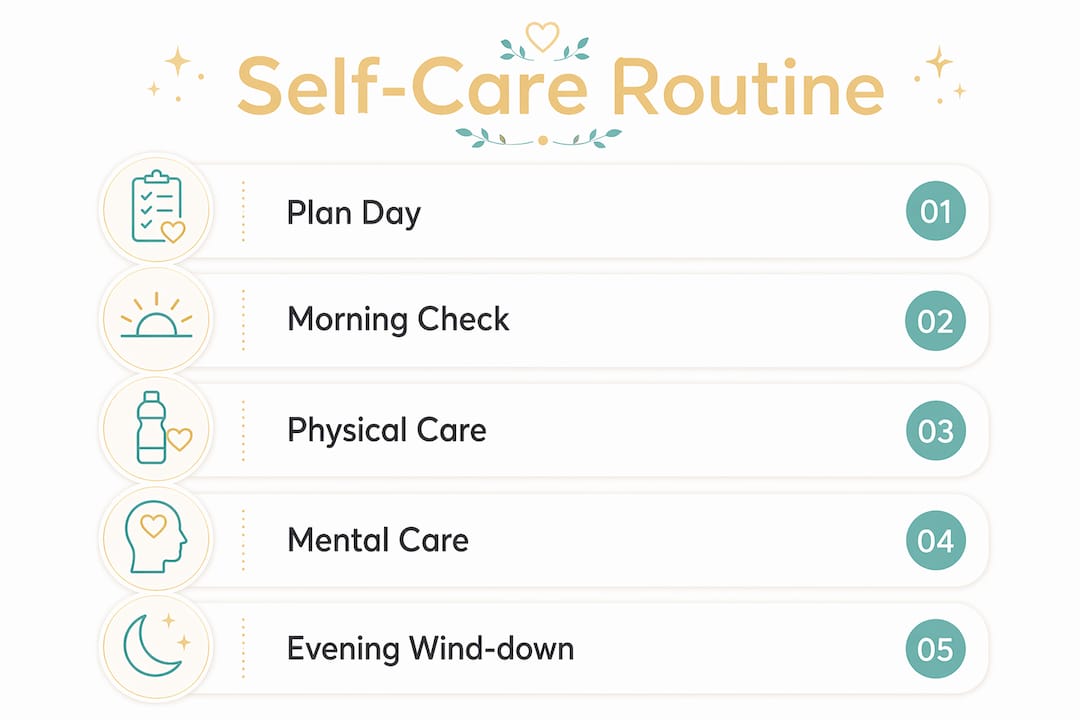
A structured day is one of the most underrated tools in recovery. Predictable daily rhythms including consistent wake times, regular meals, and planned activities help settle the nervous system and reduce the mental load of decision-making. When your day has shape, you spend less energy figuring out what to do next and more energy actually doing it.

Monitoring your mental and emotional state each day is equally important. Brief journaling or a simple morning check-in, where you rate your mood, energy, and stress level, gives you early warning data before a difficult feeling becomes a crisis. Think of it as checking the weather before you leave the house.
Tailoring self-care to your specific needs and starting small prevents the all-or-nothing thinking that derails so many people. A sustainable routine is one you can actually do on your worst days, not just your best ones. That is where tiered planning becomes a practical tool.
| Routine tier | When to use it | Example activities |
|---|---|---|
| Full routine | High energy, stable mood | Exercise, journaling, therapy session, cooking a healthy meal, meditation |
| Medium routine | Moderate fatigue or stress | Short walk, brief check-in journal, one support call, basic hygiene |
| Minimum routine | Low energy, crisis day | Shower, eat one meal, text a support person, take prescribed medication |
Pro Tip: Create a written self-care menu with 8–10 activities across different categories, such as physical, social, and creative. On low-motivation days, pick one item from the menu instead of deciding from scratch. This removes the decision fatigue that often leads to doing nothing.
What self-care activities support physical and mental health?
Physical and mental health self-care are not separate tracks. They reinforce each other, and neglecting one consistently weakens the other. Consistent sleep of 7–8 hours anchors both physical recovery and emotional regulation. A stable sleep schedule is one of the single most effective tools you have, and it costs nothing.
Physical fitness and nutrition deserve the same attention you give to therapy. Regular movement, even a 20-minute walk, reduces anxiety, improves mood, and supports the neurological repair that recovery requires. Eating regular, balanced meals stabilizes blood sugar, which directly affects mood and impulse control.
Mental health self-care goes beyond managing symptoms. Emotional self-care functions as data collection, helping you catch early warning signs like irritability, exhaustion, or social withdrawal before they escalate. Journaling, mindfulness practices, and therapy assignments all serve this function.
Physical and mental self-care activities to build into your routine include:
- Physical: Daily walks or light exercise, preparing nutritious meals, maintaining a consistent sleep schedule, attending regular medical and dental check-ups
- Mental and emotional: Journaling for 5–10 minutes each morning, practicing mindfulness in recovery through breath-focused meditation, completing therapy homework between sessions
- Social: Attending support group meetings, scheduling regular calls with a trusted friend or sponsor, participating in community activities that align with your values
- Restorative: Reading, spending time in nature, listening to music, engaging in a creative hobby that brings you genuine pleasure
Regular medical and dental care also belong on this list. Aftercare engagement and health check-ups are foundational self-care behaviors that many people in recovery delay out of shame or avoidance. Addressing physical health proactively removes one more source of stress from your life.
How do you overcome common self-care challenges in recovery?
The most common reason people abandon self-care is guilt. They feel they have not earned it, or that taking time for themselves is selfish when there are other demands on their attention. Psychology Today is direct on this point: you do not have to earn self-care. Waiting until you deserve it means waiting indefinitely.
"Self-care is not a reward for good behavior. It is the condition that makes good behavior possible."
Decision fatigue is another real barrier. When you are already depleted, choosing what to do for yourself feels like one more task. A rotating self-care menu, as described earlier, solves this directly. So does have a tiered routine that tells you exactly what to do when your energy is low.
Here are practical strategies for staying consistent when motivation drops:
- Reduce the barrier to entry. Keep your journal on your pillow. Set out your walking shoes the night before. Make the healthy choice the easy choice.
- Use accountability. Tell a therapist, sponsor, or trusted friend what self-care you plan to do this week. External accountability bridges the gap when internal motivation fails.
- Reframe failure days. A day when you only completed your minimum routine is not a failure. It is evidence that your tiered system worked. You stayed in the practice.
- Treat self-care as relapse prevention. Treatment adherence routines reduce relapse risk by reducing decision fatigue. The same logic applies to all self-care. Consistency protects you.
- Address guilt directly in therapy. If guilt about self-care is persistent, bring it into your sessions. It is often connected to deeper beliefs that therapy is well-positioned to address.
How does professional treatment strengthen your self-care practice?
Self-care and professional treatment are not two separate things. They are the same system working at different levels. Therapy appointments and homework function as relapse-prevention infrastructure, and completing them is one of the most powerful self-care behaviors available to you. Skipping a session is not a neutral act. It removes a key support from your week.
Counseling provides the structure and insight that make self-care more effective. A therapist helps you identify which self-care strategies fit your specific needs, catch patterns you cannot see yourself, and adjust your approach when life circumstances change. Aftercare programs and support groups extend that support into daily life.
| Self-care strategy | How professional support strengthens it |
|---|---|
| Journaling and check-ins | Therapist reviews patterns and helps interpret warning signs |
| Sleep and physical health | Medical provider monitors and addresses underlying issues |
| Social connection | Support groups provide structured, recovery-focused community |
| Coping skills practice | Therapy sessions teach and reinforce specific techniques |
| Routine building | Counselor helps design and adjust tiered plans to your life |
Self-help modules and guided programs offer another layer of support between sessions, giving you structured tools to practice on your own schedule. The combination of professional guidance and personal practice creates a self-care system that is far more durable than either approach alone.
Pro Tip: Treat your therapy homework as a non-negotiable appointment with yourself. Block time for it in your calendar the same way you would a medical appointment. Completing it between sessions doubles the value of each session.
Key Takeaways
Practicing self-care in recovery requires consistent daily action across physical, mental, and emotional domains, anchored by full engagement with professional treatment.
| Point | Details |
|---|---|
| Treatment adherence is self-care | Attending therapy and taking medication consistently reduces relapse risk and decision fatigue. |
| Tiered routines sustain consistency | Define full, medium, and minimum activity levels so you stay in practice even on hard days. |
| Emotional check-ins catch warning signs | Daily journaling or mood check-ins identify irritability or exhaustion before they escalate. |
| You do not have to earn self-care | Guilt-driven delays are common; self-care is the condition that makes recovery possible, not a reward for it. |
| Professional support amplifies self-care | Therapy, aftercare, and self-help tools work together to create a durable, personalized recovery system. |
What I have learned about self-care and recovery
After working with people in recovery for years, the pattern I see most often is this: people treat self-care as the thing they will get to once everything else is handled. The laundry, the job, the relationship, the guilt. Self-care sits at the bottom of the list, and the list never ends.
What I have come to believe is that this ordering is exactly backwards. Self-care is not the reward at the end of a productive day. It is the foundation that makes a productive day possible. When someone skips sleep, isolates, and stops journaling for two weeks, they are not just neglecting themselves. They are quietly dismantling the structure that keeps them well.
The tiered routine concept changed how I talk about this with clients. Giving yourself permission to have a minimum day, where you shower, eat, and send one text, removes the all-or-nothing thinking that causes people to abandon their practice entirely. A minimum day is not a failure. It is the floor that keeps you from falling further.
Emotional self-care is the piece most people undervalue. Journaling feels soft compared to going to the gym or attending a meeting. But catching the early signal, the creeping irritability, the two nights of poor sleep, the urge to cancel plans, is what gives you time to respond before a crisis arrives. That is not soft. That is skilled.
Recovery is a long road, and no one walks it perfectly. What matters is that you keep walking, and that you build the kind of ongoing support system that holds you when your own motivation runs thin.
— Wayne
Dewycounselling is here to support your recovery
Recovery is not something you have to figure out alone. At Dewycounselling, individual therapy sessions are designed to help you build the self-care strategies, coping tools, and emotional awareness that sustain long-term wellness.

Whether you are just starting out or looking to strengthen an existing routine, professional psychotherapy provides the personalized guidance that makes self-care more effective and recovery more durable. Dewycounselling also offers self-help video modules you can access between sessions, giving you structured tools on your own schedule. Reach out to Dewycounselling today to connect with a therapist who understands recovery and is ready to help you thrive.
FAQ
What does it mean to practice self-care in recovery?
Practicing self-care in recovery means actively maintaining your physical, mental, and emotional health as part of your daily routine. SAMHSA frames recovery as improving wellness and living a self-directed life, and self-care is the daily work that makes that possible.
How many hours of sleep do people in recovery need?
People in recovery benefit from 7–8 hours of consistent sleep each night at regular times. Stable sleep anchors emotional regulation and supports the neurological repair that recovery requires.
What is a tiered self-care routine?
A tiered self-care routine defines three activity levels, full, medium, and minimum, so you maintain your practice even on low-motivation days. Tiered routines prevent the all-or-nothing thinking that causes people to abandon self-care entirely when life gets hard.
How does journaling support recovery?
Journaling functions as emotional data collection, helping you spot early warning signs like irritability or exhaustion before they escalate. Brief daily check-ins give you time to reach out for support proactively rather than reactively.
Is attending therapy considered self-care?
Attending therapy and completing homework between sessions is one of the most effective self-care behaviors in recovery. Treatment adherence reduces relapse risk and decision fatigue, functioning as core relapse-prevention infrastructure.
Recommended
- Professional Counselling Services | Online & In-Person Therapy
- Self-help Modules with High-Quality Video Classes - Self-Discovery Journey — DEWY COUNSELLING
- Mobile Psychotherapy Services - Counselling Burlington Ontario — DEWY COUNSELLING
- Counselling & Therapy Services | Dewy Counselling Burlington — DEWY COUNSELLING