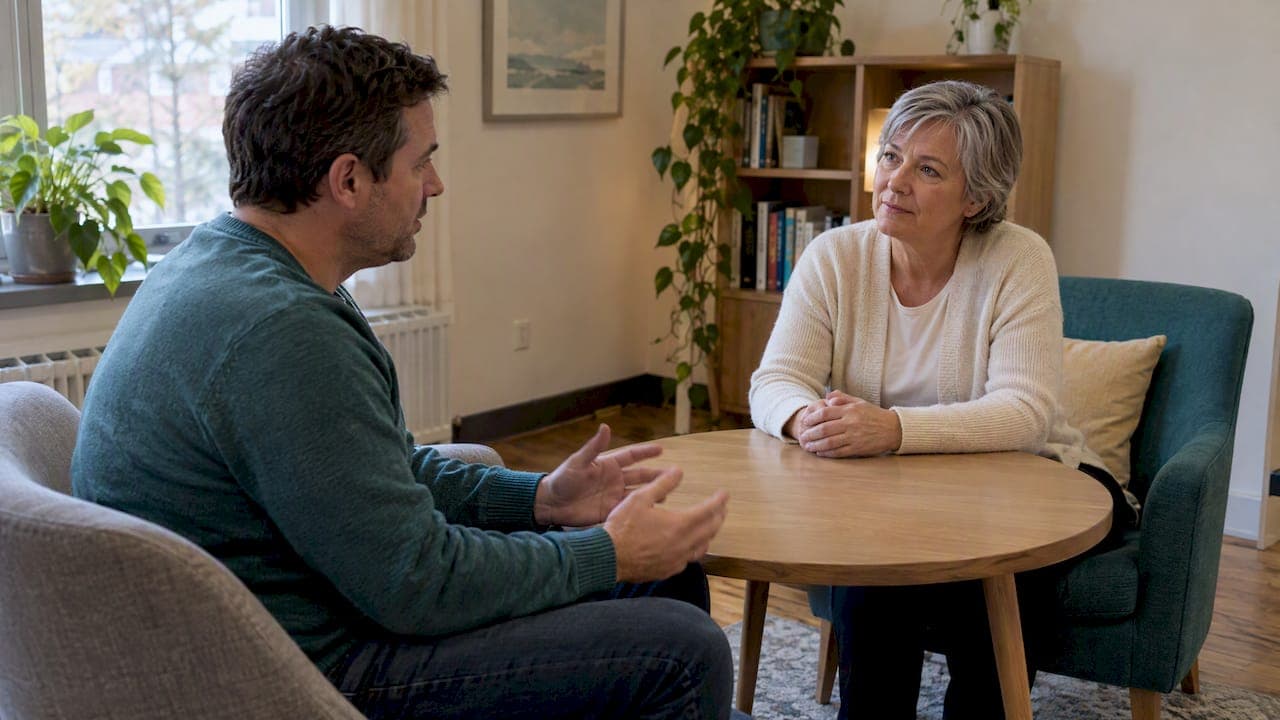
Cognitive behavioral therapy, delivered individually or in groups, paired with motivational interviewing to build engagement, forms the evidence-based foundation of gambling addiction therapy today. If you recognize these patterns in your own life or a loved one's, the most useful next step is contacting a trained clinician or a gambling helpline for an assessment. Coordinated care that also screens for depression, anxiety, or substance use tends to support steadier recovery and lowers the risk of relapse.
TL;DR:
- Group CBT is generally more cost-effective and effective for reducing gambling severity, but individual therapy may better address specific triggers or co-occurring conditions.
- Major reductions in gambling severity scores are observed immediately after therapy, though long-term follow-up data remains limited due to study dropout.
- Financial safety measures like spending limits, joint accounts, and self-exclusion tools are critical components of relapse prevention plans.
- Qualified therapists should have specific training in gambling disorder and experience with relapse prevention planning to ensure effective treatment.
- Addressing co-occurring mental health issues, such as depression, anxiety, or substance use, is vital for a comprehensive recovery approach.
Which therapy approaches effectively treat gambling disorder
Cognitive behavioral therapy, or CBT, is the backbone of most gambling addiction treatment plans, and for good reason. It helps you identify the distorted thinking that fuels compulsive betting, thoughts like "I'm due for a win" or "I can control this if I just adjust my strategy." A therapist trained in CBT will typically walk you through cognitive restructuring, trigger identification, and small behavioral experiments that test those beliefs against reality, then build a relapse prevention plan around what you learn. If distorted thinking is a new concept, it helps to see how cognitive distortion shows up in addiction more broadly before applying it to gambling specifically.

Motivational interviewing, or MI, works alongside CBT rather than replacing it. Many people arrive at their first session ambivalent, sometimes pressured by a partner or employer rather than fully ready to change, and MI is designed to meet that ambivalence without judgment, drawing out a person's own reasons for wanting something different.
Group and individual CBT each have a place. Group formats offer peer accountability and often cost less per session, while individual therapy allows more tailored pacing, which matters if shame or a co-occurring condition needs private attention first. Family and couples counseling becomes relevant when gambling has strained finances or trust, since the relational damage often needs its own repair process alongside the individual's recovery.
- Cognitive behavioral therapy targets the thinking patterns and triggers that sustain compulsive gambling.
- Motivational interviewing builds internal readiness to change, especially for reluctant or pressured clients.
- Digital and guided self-help programs offer a lower-barrier entry point for people not yet ready for in-person treatment.
- Naltrexone is sometimes used as an adjunct medication under specialist oversight, never as a standalone fix.
What the evidence says about effectiveness and its limits
The research on CBT for gambling disorder is encouraging but not unconditional. A meta-analysis pooling numerous studies and several thousand participants found significant reductions in gambling severity and behavior immediately after treatment, with a large effect size on severity measures. CBT produces meaningful short-term improvement in gambling severity, though long-term follow-up data remain limited because many trials lose track of participants months after treatment ends.
An evidence review modeled on NICE guidance recommends offering gambling-specific psychological therapy delivered by trained practitioners, suggesting group CBT as a first option where it is available, individual CBT when group formats are not suitable, and motivational interviewing throughout to keep people engaged. Peer support is recommended as a complement, not a substitute, for structured therapy.
- Pooled trial data show large reductions in gambling severity scores right after treatment ends.
- Heterogeneity across studies and high dropout rates mean individual results vary more than averages suggest.
- Group CBT often performs well on cost-effectiveness and severity outcomes, while individual CBT can better reduce the frequency of gambling episodes.
None of this means therapy fails people who relapse. It means the path is rarely a straight line, and a plan built around one clean arc from problem to resolution sets people up to feel like failures at the first setback.
What to expect: assessment, session structure, and relapse prevention
A first appointment usually starts with screening questions about gambling patterns, financial impact, and any co-occurring mental health or substance use concerns, followed by collaborative goal-setting rather than a prescribed outcome handed down from the clinician. From there, most stepped-care models in Canadian treatment systems move from lighter-touch options toward more intensive support as needed, rather than defaulting everyone to the highest level of care.
- Assessment: screening tools, a conversation about triggers and history, and a check for comorbid conditions.
- Active treatment: weekly individual or group sessions, typically running for a defined course rather than indefinitely.
- Relapse prevention: a written coping plan covering triggers, financial safeguards, and specific blocking tools.
- Follow-up: booster sessions and a clear, low-shame path back into care if a lapse happens.
Financial safeguards deserve as much attention as coping skills. Evidence-based relapse prevention plans commonly include joint account arrangements, spending limits, or power-of-attorney style protections alongside behavioral strategies, since removing easy access to money often matters as much as managing urges. If you want to recognize warning signs before a full relapse takes hold, this guide on relapse indicators is worth reading alongside your treatment plan.
Pro Tip: Ask your therapist to help you build the financial safeguards into your relapse prevention plan during the first few sessions, not after a setback.
How to choose a qualified therapist
Credentials matter more than promises. Look for a licensed psychologist, psychotherapist, or counselor with specific training in CBT and, ideally, direct experience treating gambling disorder rather than general addiction only. Gambling-specific training matters because the triggers, financial entanglements, and shame patterns differ from substance-based addictions in ways a generalist might miss.
Before committing to a provider, ask a few direct questions:
- How much experience do you have specifically with gambling disorder, not just addiction in general?
- What does your relapse prevention planning actually look like in practice?
- What are your fees, and is there a sliding scale if cost is a barrier?
- What happens if I need urgent support outside scheduled sessions?
Be wary of anyone promising a guaranteed quick fix, pressuring you into an expensive package before any assessment, or operating without visible licensing. Access routes vary: national and provincial helplines, public addiction services, private clinics, and online therapy platforms all serve different needs, and a stepped-care continuum that starts with a helpline call and escalates as needed is a reasonable way to think about where to begin.
Why comorbid conditions change the treatment plan
Gambling disorder rarely travels alone. Depression, anxiety, and substance use disorders show up often enough alongside problem gambling that many clinicians screen for them as a matter of course, because treating gambling in isolation while an untreated mood disorder keeps driving escape-seeking behavior tends to produce shaky results.
- Co-occurring depression or anxiety often needs its own treatment track running in parallel with gambling-specific CBT.
- Substance use alongside gambling raises the stakes for coordinated care between addiction and mental health services.
- Medication, such as naltrexone, is sometimes considered as an adjunct, but only under specialist oversight alongside therapy, never as a replacement for it.
Coordinated care, where your therapist communicates with a psychiatrist or addiction specialist rather than each treating a separate slice of the problem, tends to produce a more coherent plan than fragmented, siloed appointments. If you are early in understanding what a fuller recovery process looks like, this overview of recovery stages and brain changes offers useful grounding.
Supporting a partner, family member, or friend
Watching someone you love struggle with gambling often brings its own exhaustion, confusion about where your responsibility ends, and anger that can be hard to admit. Family therapy and structured boundary-setting help both sides name what has happened without the conversation collapsing into blame.
- Family or couples therapy can repair trust and rebuild communication damaged by secrecy or financial harm.
- Setting firm boundaries around money, including separate accounts or spending limits, protects your own stability.
- Peer support groups for family members offer a space to process guilt and frustration without judgment.
- Encouraging treatment without covering debts or making excuses helps motivation stay internal rather than external.
If you are supporting someone just starting this process, practical guidance on helping a friend seek therapy can make those early conversations less fraught, and a peer support guide offers further detail on what that kind of community support looks like in practice.
Immediate steps if you need help now
If gambling has reached a point where you are reading this with real urgency, a few concrete actions in the next few days can change the trajectory. Helplines and online treatment directories remain the fastest route into an actual assessment, often same-day, and self-exclusion programs or app-based blocking tools add a layer of protection while you arrange ongoing therapy.
- Contact a helpline or clinician today to begin an assessment rather than waiting for a crisis point.
- Set financial limits immediately, including spending caps, locked savings, or a trusted person on your accounts.
- Enable self-exclusion or blocking tools on gambling sites and apps as an immediate harm-reduction step.
These steps do not replace therapy, but they create breathing room while you find the right provider and start treatment.
Dewy Counselling's approach to gambling recovery
Dewy Counselling has worked with clients across a wide range of presenting concerns for over 20 years, drawing on multiple therapy modalities rather than a single fixed protocol. Our approach to gambling-related concerns follows the same evidence-based structure outlined above: cognitive behavioral techniques to address the thinking patterns that sustain compulsive gambling, motivational interviewing to meet ambivalence honestly, and a relapse prevention plan built around each client's actual financial and relational circumstances. Sessions happen in person at our two locations or online, which matters for anyone balancing treatment against work or family schedules. For readers who want more background before booking, our piece on addiction signs and how counseling supports recovery is a reasonable starting point.
A clinician's view on motivation and realistic recovery
Ambivalence is not a sign someone is not serious about recovery. It is usually the most honest starting point, and motivational interviewing exists precisely because pushing someone past that ambivalence too fast tends to backfire. Relapse is common enough that treating it as a data point rather than a failure changes how quickly someone re-engages with care. If you love someone going through this, your own support and your own boundaries both matter more than you might expect.
— Wayne Dewhurst
How to book a session with Dewy Counselling
Getting started does not require you to have everything figured out first. A first appointment at Dewy Counselling typically begins with the same kind of screening and goal-setting described earlier in this article, whether you book in-person or online sessions or start with a mobile session if travel is a barrier.

If you would rather begin with a guided, self-paced option before committing to ongoing sessions, our self-help modules offer a structured starting point. For couples where gambling has strained the relationship, our couples therapy and mediation services address the relational side directly.
- Book an in-person or online assessment through our services page.
- Explore a self-help module if you prefer a guided, lower-commitment first step.
- Reach out about couples or family sessions if gambling has affected a relationship you want to repair.
Sources
- Gambling-related harms: identification, assessment and management (evidence review)
- Meta-analysis: cognitive-behavioral techniques for gambling disorder
- Gambling addiction treatment models (IHE rapid jurisdictional scan)
FAQ
What is the best therapy for gambling addiction?
Cognitive behavioral therapy, often combined with motivational interviewing, has the strongest evidence base for gambling disorder, with meta-analytic data showing significant reductions in severity after treatment. Group CBT is often recommended first where available, with individual CBT used when a group format is not suitable.
How do you help someone with a gambling addiction?
Start by encouraging them to contact a helpline or licensed clinician for an assessment rather than trying to manage the problem yourself. Setting your own financial boundaries and seeking family or peer support alongside their treatment protects your wellbeing while they get help.
Can gambling addiction be cured?
There is no guaranteed cure, but structured treatment, particularly CBT delivered by trained practitioners, produces meaningful reductions in gambling severity and frequency for many people. Long-term outcomes vary, and ongoing relapse prevention and follow-up care matter as much as the initial treatment course.
Do gambling urges ever go away completely?
Urges often become less frequent and less intense with treatment, but many people continue to manage occasional triggers well into recovery rather than experiencing them disappear entirely. Relapse prevention plans, including financial safeguards and blocking tools, are built around managing urges long-term rather than eliminating them outright.