Yes, gaming addiction is a real, diagnosable condition in adults. Clinically known as internet gaming disorder, it involves a persistent loss of control over gaming that causes measurable harm to your work, relationships, finances, or health, typically for a prolonged period generally around a year or more about a year or more. This applies to you if your gaming (or a loved one's) is doing real damage, not just eating up a lot of your evening. Two things to do right now:
- Check for immediate safety concerns. If there are thoughts of self-harm, suicidal ideation, or severe self-neglect (missed meals, unwashed for days, isolation from all support), that needs urgent professional attention today.
- Schedule a clinical assessment. A licensed therapist can determine whether what you're seeing meets diagnostic thresholds or reflects something else, like untreated depression using gaming as an escape.
Key Takeaways
Adult gaming disorder is a diagnosable condition defined by functional impairment, not hours played, and it responds best to therapy that treats comorbid conditions alongside the gaming itself.
| Point | Details |
|---|---|
| Impairment defines the diagnosis | Clinicians weigh damage to work, relationships, and health over time spent gaming. |
| Comorbidity is common | ADHD, depression, and anxiety frequently co-occur and shape the treatment plan. |
| CBT and group therapy have evidence | Systematic reviews show these approaches most consistently reduce problematic gaming. |
| Relapse prevention needs structure | Map personal triggers and build safeguards rather than relying on willpower alone. |
| Dewy Counselling offers full assessment | Screens for comorbid conditions and builds an individualized therapy plan, including couples sessions when needed. |
This article is general information, not a substitute for advice from a qualified doctor. Consult a qualified healthcare professional about your own circumstances before acting on anything here.
Signs of Gaming Addiction in Adults
Problematic gaming in adults clusters around four patterns clinicians watch for: preoccupation (thinking about the next session during meetings), withdrawal (irritability or restlessness when unable to play), tolerance (needing longer sessions for the same payoff), and loss of control (repeated failed attempts to cut back). These aren't abstract categories. They show up as missed shifts, lying to a partner about how long you were logged on, or letting hygiene and errands slide for days at a stretch.
The functional red flags matter more than the clinical labels. Watch for:
- Missed work deadlines or a formal warning tied to attendance or performance.
- Relationship strain, including a partner who has started sleeping separately or stopped raising the topic because arguments go nowhere.
- Financial pressure from microtransactions, subscriptions, or neglected bills.
- Legal or safety risks, such as driving while sleep-deprived from overnight sessions.
Here's the part most people get wrong: hours per day is a poor diagnostic yardstick. A competitive esports player might log ten hours daily with no impairment, while someone playing two hours a night could be in genuine crisis if those two hours are replacing sleep, meals, and every promise made to a spouse. Context, not the clock, is what a clinician actually weighs.
What Causes Gaming Addiction in Adults?
No single factor explains adult gaming disorder. It's usually a collision of three forces: game design (loot boxes, battle passes, and matchmaking systems engineered to keep you logged in), individual vulnerability (impulsivity, difficulty with in-person social connection, or a tendency to avoid discomfort), and environment (isolation, unemployment, or a stressful life transition that makes an escape appealing).
Comorbid conditions show up often enough that clinicians screen for them as standard practice. The most common:
- ADHD, where the fast feedback loops of gaming compensate for difficulty sustaining attention elsewhere.
- Depression and anxiety, where gaming numbs symptoms short-term while worsening isolation long-term.
- Autism spectrum conditions, where structured game systems can feel more predictable and rewarding than unpredictable social environments.
Clinical data on adult and adolescent patients shows high rates of psychiatric comorbidity, which is why treatment rarely works if it targets gaming alone.
Pro Tip: If gaming started later in adulthood rather than in your teens, that's a useful detail for a therapist. Adult-onset patterns are often tied to a specific stressor (job loss, breakup, grief) and can respond faster to treatment once that root cause is addressed.
How Is Adult Gaming Disorder Diagnosed?
Clinicians lean on two frameworks. The DSM-5 outlines proposed criteria for internet gaming disorder, including preoccupation, withdrawal symptoms, tolerance, unsuccessful attempts to cut back, loss of interest in other activities, deception about gaming time, and continued use despite knowing the harm. The American Psychiatric Association is careful to distinguish passionate, high-volume gaming from disorder-level impairment; only a small share of players who game heavily meet full criteria.
A typical assessment covers:
- How long the pattern has persisted (many clinicians look for roughly a year of symptoms)
- Specific functional impairment: work, school, relationships, physical health
- Comorbid mental health symptoms
- Prior attempts to reduce gaming and what happened when you tried
Population-level estimates of gaming disorder stay relatively low, often under 5%, but people who actually seek treatment tend to show far more severe impairment than the general gaming population. A positive screen doesn't mean crisis. It means a fuller evaluation is warranted, ideally with a therapist trained in behavioral addictions.
How Gaming Addiction Affects Health and Daily Life
The damage compounds across every domain of life at once, which is part of why it's often missed until it's severe. Work performance slips first for many adults: missed deadlines, disciplinary warnings, or quietly quitting a job before it comes to that. Relationships erode next, with partners describing years of unmet promises to cut back.

Physical health takes a hit too. Harvard Health documents disrupted sleep cycles and prolonged sedentary time as direct consequences of extended gaming sessions, both of which independently raise cardiovascular and metabolic risk over time. Clinical samples of treatment-seeking adults show substantial functional impairment well beyond what casual gamers report.
The throughline: it's the damage to your actual life, not the number on a clock app, that should drive concern.
What Treatment Works for Adult Gaming Addiction?
Evidence-based treatment starts with talk therapy, not app blockers. Cognitive behavioral therapy helps identify the specific triggers and thought patterns that drive compulsive gaming, then builds concrete alternatives for the emotional needs gaming was meeting: achievement, escape, or social connection. Our guide on therapy best practices for adults covers what this looks like in practice.
Group therapy adds something individual sessions can't: peers who understand the specific shame of hiding gaming from a partner. A systematic review of gaming disorder interventions found:
Cognitive behavioral interventions and group counseling show the most consistent evidence for reducing problematic gaming, though the evidence base is still developing and larger adult-focused trials are needed.
Motivational interviewing often opens treatment for adults who arrive ambivalent, dragged in by a partner rather than fully convinced they have a problem. It builds internal motivation rather than confronting resistance head-on.
What treatment actually addresses:
- Underlying comorbidities like depression or ADHD, since standalone "just stop gaming" plans tend to fail without treating what's underneath
- Relapse triggers specific to your life (boredom, conflict, loneliness)
- Rebuilding non-gaming sources of reward and social connection
Most structured programs run 8 to 16 sessions initially, with longer-term follow-up for anyone managing comorbid conditions.
Practical Ways to Start Recovery Today
Recovery doesn't start with quitting cold turkey. It starts with small, testable changes you can evaluate honestly.
- Shift your schedule first. Move gaming out of the hour before bed; sleep disruption makes every other symptom worse.
- Run a one-week experiment. Cap sessions at a set time and track how it actually feels, rather than committing to permanent abstinence immediately.
- Rebuild one offline activity. Pick something that overlaps with what gaming gave you (competition, social connection, mastery) so the change doesn't feel like pure loss.
- Have the conversation early, not after a blowup. Partners and family should raise concerns using specific examples ("you missed our anniversary dinner") rather than general accusations ("you're always gaming"). Our piece on supporting a friend seeking therapy has concrete scripts for this.
- Find a peer group. Online and in-person fellowship-style meetings exist specifically for gaming and technology use; vet them by checking whether they're moderated and whether members report real accountability.
Pro Tip: Track the emotional state right before you reach for a controller for one week. Boredom, loneliness, and work stress each call for a different alternative activity, and generic advice like "go for a walk" only works if it matches the actual trigger.
What to Expect From Clinical Care at Dewy Counselling
Assessment at Dewy Counselling starts with a full clinical picture, not a symptom checklist. That means screening for comorbid depression, anxiety, or ADHD alongside the gaming pattern itself, in line with the holistic approach recommended by technology-use treatment programs like CAMH's.
From there, care typically follows a path:
- Individual assessment establishing baseline functioning across work, relationships, and health
- A therapy plan tailored to co-occurring conditions, drawing on approaches detailed in our depression therapy resource when relevant
- Family or couples sessions when relationship repair is part of the goal
- Ongoing relapse-prevention check-ins built around measurable role functioning, not just reduced hours, an approach we outline in what addiction recovery looks like
Relapse Prevention and Long-Term Recovery
Relapse in gaming disorder rarely announces itself as a single dramatic slip. It usually starts small: a "just one match" that stretches into a lost weekend. Long-term recovery depends less on willpower and more on identifying the specific conditions that preceded past lapses and building a plan around them.
Start by mapping your personal relapse pattern. Most adults find their vulnerability clusters around a handful of triggers: unstructured free time (a long weekend with no plans), conflict avoidance (gaming instead of having a hard conversation), or a return of untreated depression symptoms. Write these down with a therapist rather than trusting memory, since the triggers you assume are obvious are often not the ones that actually cause the slip.
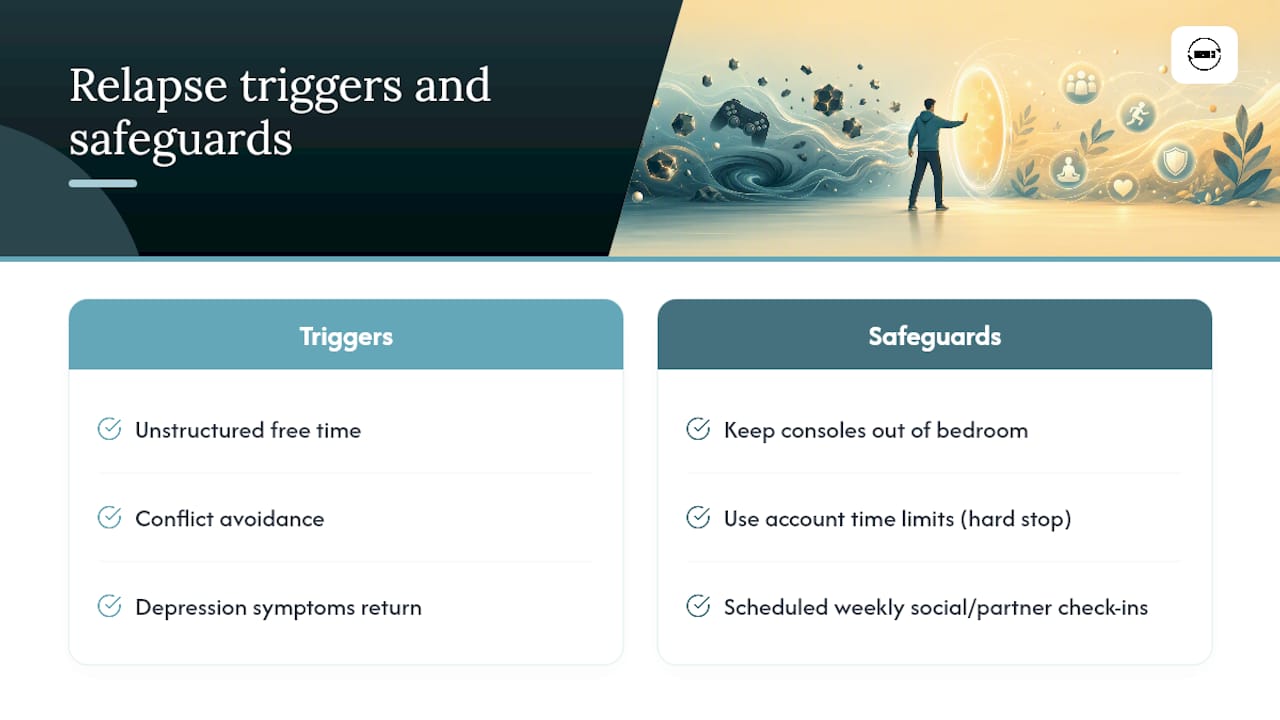
Build structural safeguards rather than relying on discipline alone. That might mean keeping gaming consoles out of the bedroom permanently, using account time limits as a hard stop rather than a suggestion, or scheduling a recurring weekly check-in with a partner or peer group specifically to name any close calls before they become full relapses.
Recovery also needs replacement, not just restriction. The reward gaming once supplied (achievement, competition, social belonging) has to go somewhere. Adults who maintain recovery over years typically report finding at least one substitute activity that delivers a similar payoff, whether that's a recreational sports league, a structured hobby with visible progress markers, or a genuinely engaged social circle.
Finally, expect setbacks without treating them as failure. A single lapse after months of progress is common and doesn't erase the work already done. What matters is returning to the plan quickly, with a therapist involved, rather than letting shame turn one bad week into a full return to old patterns.
Deciding Whether It's Time to Seek Help
You don't need to hit rock bottom before booking an appointment. If there's any risk to safety, suicidal thoughts, severe self-neglect, or a health crisis, treat that as urgent and seek care immediately.
Short of that, book a standard assessment if you've lost work, strained a relationship past repair attempts, or tried and failed to cut back more than once. Bring a one-month timeline of gaming patterns, specific examples of what it's cost you, and notes on mood or substance use. That detail alone can cut weeks off the assessment process.
— Wayne Dewhurst
Get Support for Gaming Addiction at Dewy Counselling
Dewy Counselling offers something a self-help app or a support forum can't: a licensed therapist who screens for the comorbid conditions, like depression or ADHD, that generic gaming trackers never catch, and builds a treatment plan around your actual life rather than a generic protocol.

Whether you're the one struggling or a partner trying to figure out how to raise it, our psychotherapy services start with a full clinical assessment covering gaming patterns alongside mood, sleep, and relationship functioning. If the strain has affected a partnership specifically, couples counselling addresses the relationship damage directly rather than treating it as a side effect. Book an assessment through Dewy Counselling and bring your timeline; the first session is where the real plan starts taking shape.
Sources
- Video Game Addiction: What It Is, Symptoms & Treatment — Cleveland Clinic
- Effective interventions for gaming disorder: A systematic review (PMC)
- Young and adult patients with gaming disorder: Psychiatric co‑morbidities and progression of problematic gaming — Frontiers
- Psychiatry
- The health effects of too much gaming — Harvard Health Blog