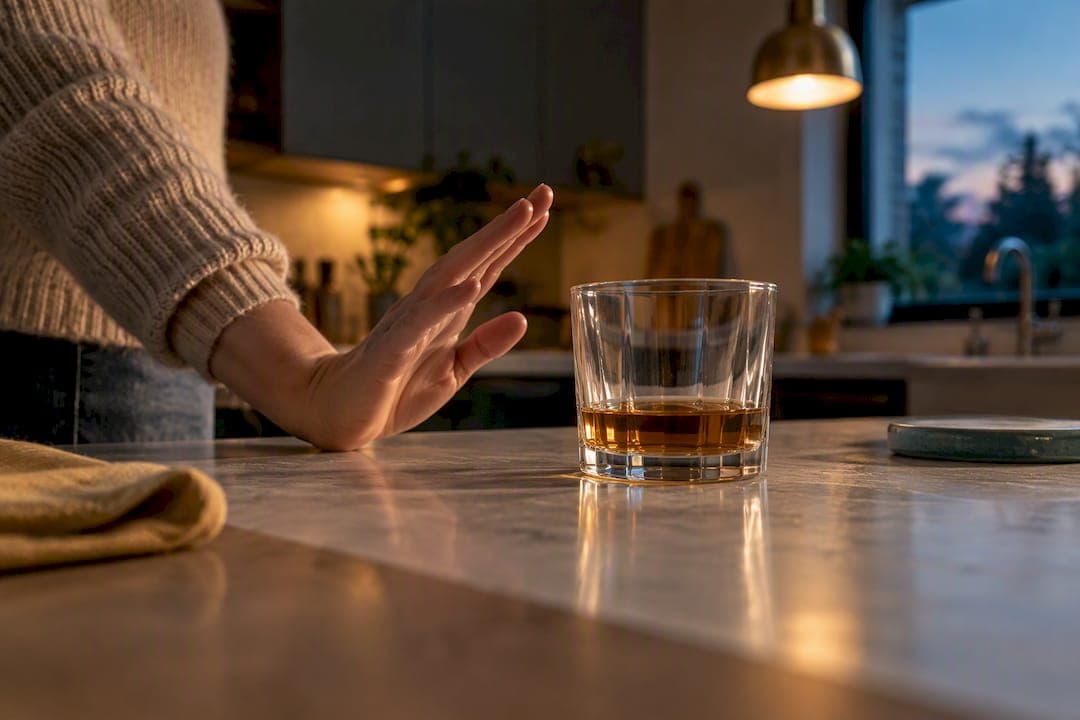
The most reliable way through an evening urge is a short survival plan: delay 20 minutes, disrupt the cue, then replace the ritual. Most cravings peak and fade within that window if you don't act on them. If you notice tremors, confusion, or a pattern of drinking to avoid feeling sick, that's a different situation, and one NIAAA and Dewycounselling both treat as a signal to bring in professional support.
TL;DR:
- Spending 20 minutes delaying or disrupting evening cravings typically reduces urge intensity, as cravings peak between late afternoon and early evening due to biological rhythms.
- Altering environmental cues such as glassware, seating, or route home can weaken the habit loop that triggers nightly alcohol urges.
- Building a personalized replacement ritual and planning it ahead helps fill the mental gap left by removing alcohol, easing the transition from work to rest.
- Stabilizing sleep schedules and practicing circadian-friendly habits can shift or flatten the craving peak over months, reducing overall craving frequency.
- Recognizing signs of dependence, such as waking to drink or rising tolerance, and seeking medical supervision is crucial for safety during reduction efforts.
Why Do I Crave Alcohol at Night?
Your body isn't betraying you. It's running on a schedule, and that schedule points straight at the evening.
A 2022 study tracking daily craving patterns found something worth knowing: urges climb through the afternoon and hit their highest point in the early evening, following a 24-hour rhythm much like hunger or alertness. People who had been drinking more frequently recently showed both higher average craving and bigger daily swings. This isn't random willpower failure. It's biology on a timer.
Separate research using smartphone check-ins and sleep tracking confirmed the same pattern, with one twist: sleep and circadian timing shift the peak. Night owls tend to feel the strongest pull later than early sleepers. Layer habit learning on top of this biological curve and the picture gets clearer. Evening is when the workday ends, decision fatigue peaks, and the brain looks for its usual reward cue. If that cue has meant a drink for months or years, the craving shows up right on schedule.
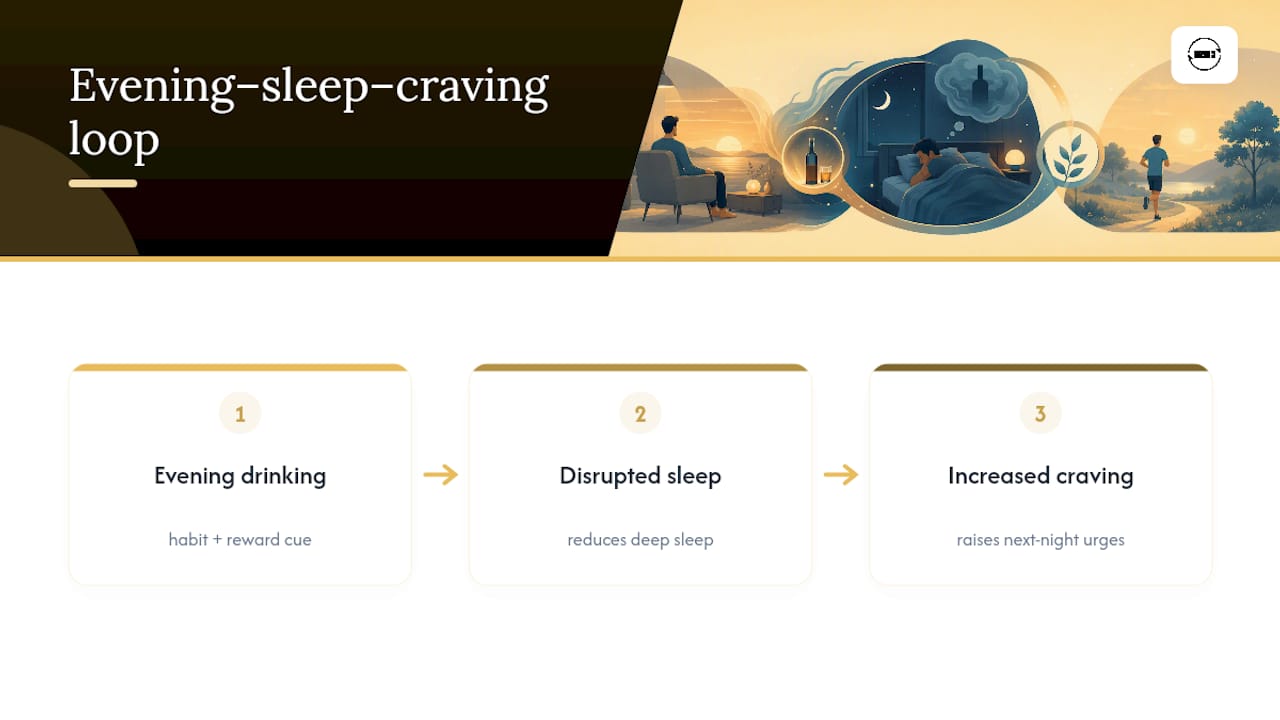
Then there's the feedback loop nobody warns you about: alcohol disrupts deep sleep, poor sleep raises craving sensitivity the next evening, and the cycle tightens each night it repeats.
How Do You Ride Out a Craving in the Moment?
Cravings are time-limited events, not permanent states. The goal isn't to win a battle of willpower. It's to outlast the wave.
- Delay 20 minutes. Set a visible timer. Cravings that peak on a biological curve also decline on one, and most people report a real drop in urge intensity within this window.
- Disrupt the cue. Leave the room, chair, or environment tied to your usual drink. A short walk around the block breaks the automatic cue-to-routine link that habit learning built.
- Replace the ritual. Swap in something preselected: sparkling water in your usual glass, herbal tea, a hot shower, a call to a friend. The ritual matters more than the removal.
- Check in and name it. Say the feeling out loud: "I'm anxious and tired, and I want a drink to feel different." Naming an emotion measurably calms the brain's alarm response, which makes the urge easier to sit with.
Pair this with something physical. Drink a full glass of water, eat a small snack with protein and carbohydrates, and try paced breathing: four seconds in, six seconds out, repeated ten times. NIAAA's guidance on urge management backs this same sequence: recognize the trigger, avoid the tempting situation when possible, and lean on a coping step you've already rehearsed.
Pro Tip: Pick your replacement ritual in the morning, not at 8 p.m. Decision fatigue is exactly why cravings win at night, so don't ask tired you to invent a plan on the spot.
What Evening Habits Help Prevent Nightly Urges?
Fixing this at the root means looking at the hour before the craving starts, not just the craving itself.
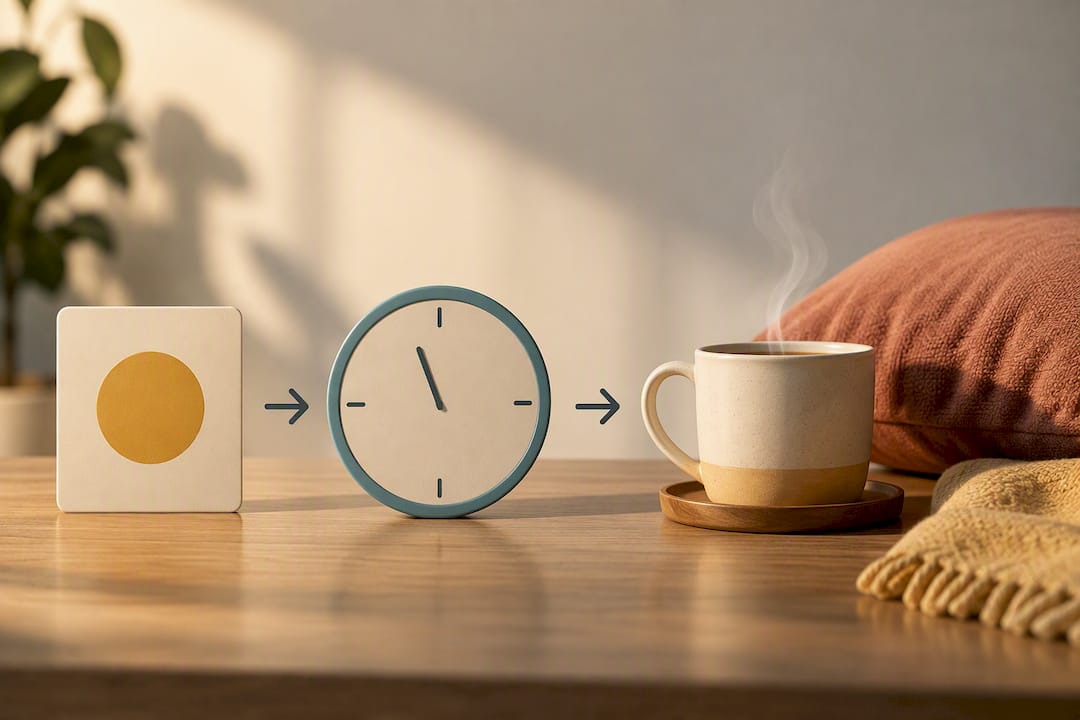
Start by mapping your actual cues. Is it the glass you use, the chair you sit in, the route home that passes the liquor store, or the specific time you finish work? Each one is a lever you can change without a single conversation about willpower.
- Swap your usual glassware for something you'd never use for alcohol, so the visual cue breaks.
- Change your seating spot or evening route home for a week and notice if the pull shifts.
- Preselect a nonalcoholic drink and a snack before 5 p.m., so nothing needs deciding later.
- Pre-schedule one evening activity, a call, a show, a walk, so the transition hour has something to fill it.
- Log your cravings for a week: time, intensity, trigger. Patterns show up fast once they're on paper.
Replacement rituals work because they serve the same psychological function drinking did: marking the shift from work mode to rest mode. Removing alcohol without replacing that transition just leaves a gap the brain keeps trying to fill.
What Long-Term Strategies Actually Reduce Cravings?
Surviving one evening is a skill. Reducing craving frequency over months is a different project, and it usually takes more than willpower alone.
Behavioral tools do a lot of the heavy lifting here. Techniques drawn from cognitive behavioral therapy, like affect labeling and stimulus control, teach you to notice a trigger, name the feeling, and respond with something other than a drink. Practicing this consistently is one of the more effective ways to lower evening relapse risk over time.
Sleep matters just as much as any behavioral technique. Since circadian timing shapes when craving peaks, stabilizing your sleep schedule, keeping consistent wake times, and getting morning light exposure can shift the craving curve later or flatten it.
- Behavioral: CBT-based stimulus control, urge surfing, and affect labeling.
- Circadian: consistent sleep and wake times, morning sunlight, limiting screens before bed.
- Medical: naltrexone, sometimes used through the Sinclair Method, taken before drinking to blunt the reward response and gradually reduce craving intensity.
Naltrexone requires a prescriber and ongoing supervision. It's not a standalone fix, and NIAAA's own treatment guidance frames medication as most effective when paired with therapy, not instead of it. Combining a prescriber's oversight with a therapist's behavioral toolkit tends to hold up better over months than either approach alone.
Is It a Craving or Alcohol Withdrawal at Night?
A craving is uncomfortable. Withdrawal can be dangerous. Knowing the difference matters more than almost anything else in this article.
Seizures, severe confusion, hallucinations, or a racing heart alongside heavy sweating are medical emergencies, not cravings to ride out at home. Harvard Health is direct about this: these symptoms need urgent medical attention, not a breathing exercise.
Dependence looks different from an occasional urge. Watch for rising tolerance, drinking to avoid feeling sick rather than to feel good, waking at night specifically to drink, or repeated failed attempts to cut back.
- If you notice any red-flag symptom above, call your doctor or go to urgent care immediately.
- If you suspect dependence without acute symptoms, ask your doctor about supervised detox before stopping on your own.
- Track your patterns, timing, amount, and triggers, for a week so a clinician has real data to work from.
How Does Therapy Address Evening Alcohol Cravings?
A craving that shows up every night at the same hour is rarely just about alcohol. It's usually about what that hour represents, stress coming off, loneliness setting in, or a nervous system that never learned another way to downshift.
Therapy at Dewycounselling works directly with that pattern. Sessions typically focus on emotion regulation, habit reversal, and building a personalized set of coping strategies that hold up under real evening stress, not just in a calm office conversation. Over a course of work, clients usually move from reacting to the urge to anticipating it, which is a meaningfully different skill.
Pro Tip: Before your first session, write down the last five times you craved a drink at night. What time was it, and what had just happened? That list becomes real material for the work.
Booking a first session is the practical first step, whether that's an in-person or online consultation.
A Therapist's Honest Note on Nighttime Urges
Evening cravings aren't a character flaw. They're predictable, biologically timed, and genuinely manageable with the right plan and, when needed, real support.
— Wayne Dewhurst
Get Support for Managing Alcohol Cravings
Professional psychotherapy offers a structured alternative to fighting nightly urges alone with willpower and self-help materials. With extensive experience across therapy modalities and flexible pricing options, sessions are designed to work with your actual evening patterns, not a generic template.
If you're recognizing the patterns described here, cue-driven urges, poor sleep feeding the next day's craving, or a sense that willpower alone isn't holding, psychotherapy sessions start at $175 per hour, available in person or online. For a lower-commitment starting point, the self-help modules offer a structured $499 one-off resource you can begin while waiting for your first appointment. Visit the services page to see the full range, including the Prepaid Annual Membership, and book an initial consult when you're ready.
This article is general information, not a substitute for advice from a qualified doctor. Consult a qualified healthcare professional about your own circumstances before acting on anything here.
Sources
- The 24-hour rhythm in alcohol craving and individual differences in sleep characteristics and alcohol use frequency (2022)
- Is there a 24-hour rhythm in alcohol craving and does it vary by sleep/circadian timing? (Chronobiology International, 2020)
- How to Stop Alcohol Cravings | Rethinking Drinking | NIAAA
- Alcohol withdrawal: A to Z (Harvard Health)
FAQ
Why Do I Crave Alcohol in the Evening?
Craving follows a natural 24-hour rhythm that rises through the afternoon and peaks in the early evening, driven by circadian biology, not weak willpower. Habit cues from your evening routine and accumulated decision fatigue add to that biological pull.
How Can I Curb Alcohol Cravings Naturally?
Delay the urge for 20 minutes, disrupt the environment tied to the cue, and replace the ritual with something else, sparkling water, a walk, a call to a friend. Pairing this with steady sleep and hydration, as NIAAA recommends, reduces both frequency and intensity over time.
What Are Common Signs of Alcohol Use Disorder?
Signs include drinking more than intended, failed attempts to cut back, strong cravings, tolerance, withdrawal symptoms, and continuing to drink despite it causing problems at work or in relationships. If several of these apply to you, that's worth raising with a doctor or therapist rather than managing alone.
What Do the Stages of Quitting Alcohol Look Like?
Most people move through recognizing the problem, preparing a plan, actively changing behavior, and then maintaining those changes long term, with occasional setbacks along the way. Dewycounselling's recovery overview breaks down what each stage typically involves and where professional support fits.