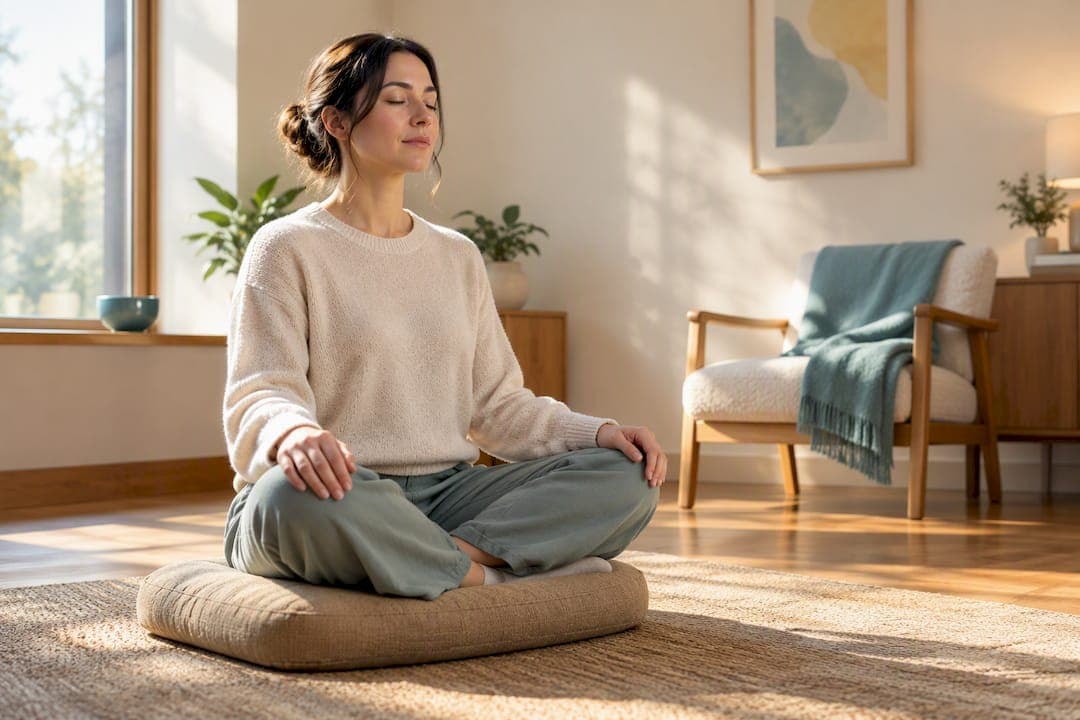
Mindfulness is a quality of present-moment, nonjudgmental attention, while meditation is a formal practice you use to train that attention. If you need a quick way to steady yourself right now, informal mindfulness works in seconds. If you want to build attention like a skill over time, meditation gives you the structure. Neither one outranks the other. Most people benefit from both.
TL;DR:
- Mindfulness can be practiced informally in seconds, helping reduce stress and anxiety during daily activities without formal setup.
- Meditation involves scheduled, intentional sessions that train attention and typically last from five to fifteen minutes, gradually building focus skills.
- Structured mindfulness programs like MBSR and MBCT offer small to moderate psychological benefits, especially in stress, depression, and pain management, but results take time to manifest.
- People with trauma or mental health conditions should start gently, possibly with guidance, as meditation can sometimes trigger adverse effects.
- Combining informal mindfulness with regular meditation, tailored to individual goals and risks, optimizes the chances of benefit and emotional regulation.
What mindfulness and meditation actually mean
Mindfulness, as the American Psychological Association describes it, has two linked parts: paying attention to what is happening right now, and accepting that experience without judging it. It is a state of mind you can access anywhere, whether you are washing dishes or sitting in traffic.
Meditation is different. It is a deliberate, often time-limited practice you sit down to do, and it comes in several forms. Focused-attention meditation trains you to hold your attention on one anchor, usually the breath. Open-monitoring meditation asks you to notice whatever arises without fixing on anything. Loving-kindness meditation directs attention toward compassion, and body scan meditation moves attention slowly through physical sensation.

When meditation is used specifically to build the skills of present-moment, nonjudgmental awareness, it is called mindfulness meditation. That overlap is where most structured programs, including MBCT, live.
How the two overlap and where they split
The clearest split is formal versus informal. Mindfulness is a way of attending that you can drop into during ordinary life. Meditation is a scheduled session with a beginning and an end, usually done sitting, lying down, or walking with intention.
Their goals differ slightly too. Mindfulness aims at acceptance: noticing a feeling without trying to change it. Meditation more often aims at training attention itself, teaching you to notice when your mind wanders and bring it back.
- Informal mindfulness: noticing the tightness in your chest during a tense meeting and naming it without reacting.
- Formal meditation: sitting for ten minutes with your eyes closed, returning attention to your breath each time it drifts.
- Mindfulness meditation: a guided session where you meditate specifically to practice nonjudgmental awareness, the format most therapy programs use.
What the research says about benefits
Mindfulness-based programs such as MBSR and MBCT generally produce small-to-moderate reductions in psychological distress compared with passive controls, according to an individual participant data meta-analysis pooling results across studies. That advantage becomes less consistent when these programs are compared against active controls, like exercise or other structured therapies, and individual responses vary widely.
One of the more reliable findings in mindfulness research is that structured programs outperform passive controls more reliably than they outperform active ones, which matters if you are choosing between mindfulness and another coping strategy you already use.
Practically, this means stress, anxiety, depressive symptoms, and pain are the domains where people tend to notice the most change. It does not mean meditation will outperform every other tool you try, and it does not mean results arrive quickly. Expect gradual shifts, not a single breakthrough session.
Simple ways to practice both starting today
Try these informal mindfulness moments first, since they need no setup:
- Breath check-in: pause for three breaths and notice where you feel them in your body.
- Mindful bite: eat one bite of food slowly, paying attention only to taste and texture.
- 60-second grounding: name five things you can see, four you can hear, and three you can feel.
For formal meditation, start small and build gradually:
- Five to ten minutes of focused-breath meditation, sitting quietly and returning attention to your breath each time it wanders.
- Ten to fifteen minutes of body scan meditation, moving attention slowly from your feet to your head.
- A guided loving-kindness session, directing warm wishes first toward yourself, then toward others.
Pro Tip: Keep a simple practice log, just a date and a one-word feeling, so you can see patterns over weeks rather than judging each session on its own.
Johns Hopkins Medicine notes that mind-wandering is expected during meditation. Progress looks like noticing distraction and returning, not staying perfectly focused.
When to pause and when to seek professional support
Meditation is not risk-free; for those experiencing anxiety, helpful strategies to calm nerves and improve focus are outlined in maths anxiety and GCSE: how to calm it and boost your grade. A systematic review of adverse events in meditation practices found that unwanted effects, including anxiety, low mood, and unusual cognitive experiences, are reported often enough to take seriously, with higher rates showing up in observational studies than in controlled trials.
People with a serious psychiatric history or significant trauma may be more vulnerable to these effects and often benefit from adapting the intensity or length of practice rather than avoiding it entirely. If a practice consistently worsens your mood, anxiety, or sense of reality, stop and speak with a qualified clinician. Shorter, guided sessions led by a trained instructor are usually a gentler starting point than unguided, extended sitting.
How to choose and build a simple routine
Start by asking yourself a few questions:
- What is your goal? Quick stress relief points toward mindfulness moments; building focus over time points toward meditation.
- How much time do you have? A few seconds is enough for mindfulness; meditation needs a set block, even a short one.
- What is your risk profile? A history of trauma or serious mental illness means starting gently and possibly with guidance.
- Do you want structure? If self-directed practice feels vague, a program like MBCT offers a clear syllabus.
A simple four-week plan: in week one, practice one informal mindfulness moment daily. In week two, add three five-minute focused-breath sessions weekly. In week three, extend sessions to ten minutes and try a body scan. In week four, notice whether distress has eased or plateaued, and adjust from there. If symptoms persist or worsen, an emotional regulation routine or a structured MBSR or MBCT course led by a clinician is a reasonable next step, particularly for anyone managing ongoing anxiety or depression.
A clinician's view on bringing mindfulness into therapy
Therapists often draw on MBCT and MBSR elements inside individual treatment rather than asking clients to complete a full standalone program, especially when depression relapse prevention or emotional regulation is the goal. Short, guided mindfulness moments tend to feel safer for clients with a trauma history than long unguided sits, and pacing matters more than duration. When distress during practice does not ease with adjustment, that is usually a sign the work belongs in a therapy session rather than a self-guided routine, which is where Dewy Counselling's self-help modules and guided resources can offer a starting structure.
— Wayne Dewhurst
Bring mindfulness into a plan built around you
Reading about mindfulness and meditation gets you part of the way. What often makes the difference is having someone help you apply either one to your specific stress, relationship strain, or history, since a technique that works well for one person can fall flat for another without that adjustment. At Dewy Counselling, psychotherapy sessions often integrate mindfulness-based techniques directly into treatment for anxiety, depression, or relationship conflict, drawing on more than 20 years of experience across therapy modalities. If you would rather start with guided structure on your own schedule, the Self-Help Modules at $499 one-off per module give you a built-in framework, and the Prepaid Annual Membership at $1,750 per year offers a lower-friction way to access ongoing sessions. If workplace stress is the driver, our Corporate Team Building seminars build these skills across a whole team. Book a session to find the format that fits where you are right now.
This article is general information, not a substitute for advice from a qualified doctor. Consult a qualified healthcare professional about your own circumstances before acting on anything here.

Sources
For clinical definitions and framing, the APA's mindfulness overview is a dependable starting point. For everyday practice guidance, Johns Hopkins Medicine offers grounded, realistic advice. For evidence on outcomes and safety, the PMC meta-analysis and the adverse events review summarize benefits and limits across studies.
- Mindfulness meditation — American Psychological Association
- Mindfulness meditation — Johns Hopkins Medicine
- Individual participant data meta-analysis of mindfulness-based programs — PMC
- Adverse events in meditation practices and meditation-based therapies: a systematic review
FAQ
What are the three C's of mindfulness?
Definitions vary across programs, but a common version describes curiosity, compassion, and openness as core attitudes practitioners bring to present-moment awareness. These qualities support the acceptance component the APA identifies as central to mindfulness, alongside attention itself.
What are the five basics of mindfulness?
Most teaching frameworks emphasize present-moment attention, nonjudgmental observation, acceptance of experience, a beginner's mind toward each moment, and consistent practice over time. These elements echo the attention-plus-acceptance model described by the APA.
Is there a downside to mindfulness or meditation?
Yes. A systematic review found that meditation practices can produce adverse effects including anxiety, low mood, and unusual cognitive experiences, particularly in observational studies. People with a serious psychiatric history should consider adapting practice intensity and consulting a clinician before starting.
What are the four types of mindfulness meditation?
Common categories include focused-attention meditation, open-monitoring meditation, loving-kindness meditation, and body scan meditation, each training attention or acceptance differently. Programs like MBSR and MBCT often combine several of these within one structured course.
Should I choose mindfulness or meditation first?
Start with informal mindfulness moments if you want something usable immediately with no setup, then add formal meditation once you want to build attention as a skill. Many people find combining both, as described in Johns Hopkins Medicine's guidance, gives the most consistent results.