
Use this practical, behavior-focused checklist to see where your relationship stands and what to strengthen next. It works whether you're taking stock on your own or sitting down together over coffee. The core categories to track are:
- Communication and active listening
- Trust and reliability
- Boundaries and mutual respect
- Fair conflict resolution and repair
- Physical affection and intimacy
- Quality time together
- Individuality and personal growth
- Shared wellness habits
Pick a quiet evening, grab this checklist for relationship health, and start scoring honestly, alone first, then together if you're both willing.
Key Takeaways
Healthy relationships depend on small, repeatable behaviors across communication, trust, boundaries, affection, and shared wellness, tracked consistently and adjusted together.
| Point | Details |
|---|---|
| Score honestly, separately first | Rate each checklist item 0 to 2, then compare notes together to spot real patterns. |
| Start with one or two habits | Habit stacking works better than overhauling all 14 items at once. |
| Physical touch matters daily | Consistent non-sexual affection is linked to higher relationship satisfaction. |
| Revisit during transitions | Moving in, new jobs, and parenting changes are when routines drift most. |
| Know the red flags | Abuse, repeated contempt, and repair failures call for professional therapy, not more self-help. |
The Healthy Relationship Habits Checklist: 14 Items to Score
This is the working list. Score each item honestly (more on scoring in the next section), and treat every line as an observable behavior, not a character judgment. Nobody hits a perfect score, and that's not the point.
- Daily check-in conversation. You ask "How was your day?" and actually wait for the answer instead of reaching for your phone.
- Active listening without fixing. When your partner vents, you reflect back what you heard before offering a solution.
- Follows through on small promises. Picking up milk, texting when running late, showing up when they said they would.
- Names a boundary without apologizing for it. "I need an hour alone after work" gets said plainly, not hedged.
- Decisions get made together, not dictated. Big purchases, weekend plans, and family visits involve both voices.
- Fights have rules. No name-calling, no bringing up old wounds mid-argument, no walking out without a plan to return.
- Repairs happen within 24 hours. Someone initiates a conversation to mend things rather than letting resentment sit.
- Non-sexual touch happens daily. A hand on the back, a hug at the door, a kiss before work.
- Sexual and reproductive needs get discussed openly. Preferences, concerns, and changes get voiced rather than assumed.
- Quality time is scheduled, not leftover. A weekly date or activity gets calendar priority, not whatever's left after chores.
- Gratitude gets said out loud. "Thank you for handling that" happens at least a few times a week.
- Each person protects solo time. Hobbies, friendships, or quiet time exist outside the relationship.
- Shared wellness habits exist. A walk, a meal cooked together, or a wind-down routine you both stick to.
- Finances are transparent. Spending, debt, and savings goals are discussed instead of hidden or assumed.
One more worth naming honestly: you'd consider outside help if needed, without treating that as failure. Wanting support isn't a red flag. It's a sign you're paying attention.
Pro Tip: Don't try to fix all 14 items at once. Circle the three lowest scores, then pick just one to work on this month. Trying to overhaul everything simultaneously usually backfires within a week.
How to Score and Discuss the Checklist Together
Rate each item 0 to 2: 0 means never, 1 means sometimes, 2 means usually. Add up your score, but pay more attention to the pattern than the total. A low score clustered around conflict items points to a different problem than a low score clustered around quality time.
Once you've both scored independently, compare notes during a 15 to 20 minute weekly check-in. Try these prompts:
- What felt good in our relationship this week?
- What felt off, even if it was small?
- What's one change that would help next week?
For cadence, aim for:
- A brief weekly check-in to catch small drift early.
- A deeper monthly review to look at scoring trends over time.
- A full revisit during major transitions, like moving in together, a new job, or becoming parents, since routines tend to unravel exactly when life gets busier.
Turning Checklist Items Into Daily Habits
Pick one or two items, not all fourteen. Trying to overhaul your whole relationship at once is how good intentions die by Wednesday. Habit stacking works better: attach a new behavior to something you already do every day.
- Attach a gratitude comment to your existing bedtime routine.
- Turn your commute call into the daily check-in question.
- Use dinner prep time for a five-minute "how can I support you?" exchange.
That phrasing matters more than it sounds. The American Heart Association found couples stick with shared goals longer when they use flexible, supportive language instead of imposing a rigid shared schedule. Starting small beats an ambitious plan neither of you can sustain.
Non-sexual physical affection deserves its own spotlight here. Research from the Kinsey Institute links consistent touch, handholding, hugs, daily kisses, to higher reported relationship happiness, with a notable effect on men's perceived satisfaction. It costs nothing and takes seconds, which makes it one of the easiest checklist items to actually stick to.

Shared reminders on your phone, a recurring calendar block labeled simply "us," or a sticky note by the coffee maker all work. The tool matters less than the consistency.

Shared Wellness: Where Health Habits and Relationship Habits Overlap
Sleep, movement, stress management, nutrition, and mindfulness aren't just individual wellness goals. When couples treat them as shared priorities, adherence improves and relationship satisfaction tends to rise alongside it.
You don't need a joint gym membership. Small, low-effort pairings work just as well:
- A 15-minute evening walk after dinner, phones left inside.
- A shared wind-down routine before bed, like dimming lights and talking through the day.
- Cooking one healthy meal together each week, even if it's just Sunday.
- A five-minute mindfulness pause before sleep, done side by side.
If your schedules genuinely clash, negotiate rather than force a match. One partner's ideal bedtime doesn't have to become a rule; a shared fifteen minutes of overlap often does more good than a forced identical routine. Couples who treat wellness as a team sport tend to report higher satisfaction than those chasing separate, uncoordinated goals.
When the Checklist Isn't Enough: Signs to Seek Professional Help
A checklist helps you spot patterns, but it isn't built to handle everything. Certain signs point past self-help and toward professional support:
- Any form of abuse, physical, emotional, or coercive control.
- Repeated contempt or disrespect that shows up regardless of the topic.
- An inability to repair after conflict, even weeks or months later.
- Safety concerns of any kind, for you or anyone else in the household.
Couples therapy commonly offers structure your weekly check-ins can't replicate: communication tools, repair rituals, and skill-building tailored to your specific dynamic rather than generic advice. At Dewy Counselling, psychotherapist Wayne Dewhurst works with couples to translate exactly this kind of checklist insight into lasting change, bridging the gap between noticing a problem and knowing how to fix it.
Pro Tip: If you've scored the same item low for three months straight despite genuine effort, that's usually a sign the issue needs outside support, not more willpower.
What This Checklist Gets Right, and Where It Falls Short
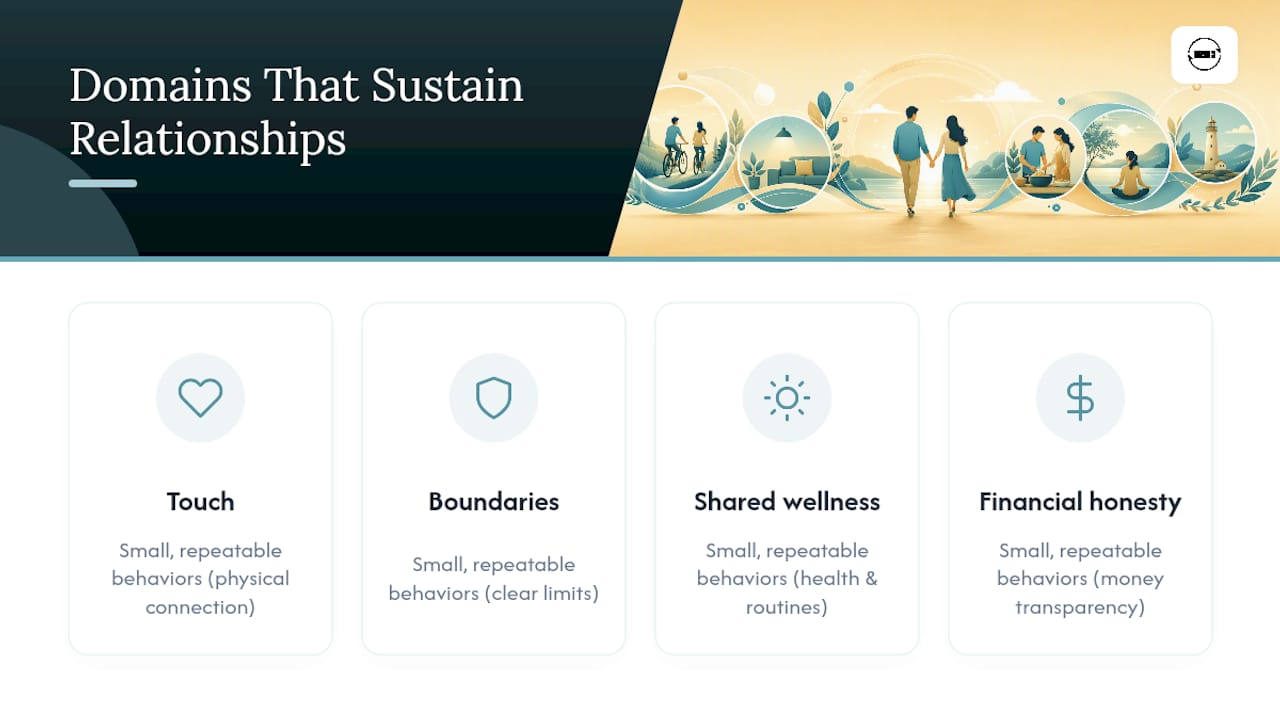
Most relationship advice treats communication as the whole ballgame. It isn't. The research behind this checklist points somewhere more specific: relationships hold together through small, repeatable behaviors across multiple domains at once, touch, boundaries, shared wellness, financial honesty, not through one grand gesture or a single skill mastered.
Where conventional advice falls short is cadence. People are told to "communicate more" with no sense of how often or in what format, so it never becomes a habit. A weekly 15-minute check-in does more than a single deep conversation every few months, because it catches drift while it's still small.
If you take one thing from this checklist, let it be this: pick the lowest-scoring item and work on it for thirty days before touching anything else. Don't wait for a crisis to revisit your habits, and don't treat wanting professional support as a sign you've failed. It usually means you're paying closer attention than most couples ever do.
— Wayne Dewhurst