
Interpersonal therapy (IPT) is a time-limited, evidence-based psychotherapy designed specifically to treat depression by improving how you relate to the people around you. Unlike approaches that dig into childhood history or challenge internal thought patterns, IPT works on the premise that depression is deeply connected to what is happening in your relationships right now. The therapy typically runs 12–16 weekly sessions, structured across three clear phases. Major health authorities worldwide recognize IPT as a first-line treatment for depression, placing it alongside other well-established therapies.
What is interpersonal therapy for depression, and what does it target?
IPT is built on a straightforward clinical observation: depression rarely exists in a vacuum. It almost always connects to a disruption in your social world, whether that is a loss, a conflict, a major life change, or a feeling of profound isolation. Identifying which of these disruptions is driving your symptoms is the first real task of therapy.
IPT targets four interpersonal problem areas that research consistently links to the onset and persistence of depression:
- Grief and loss. This goes beyond bereavement. It includes any significant loss, such as the end of a relationship, a miscarriage, or the loss of a role you valued deeply. Unprocessed grief is one of the most common triggers for a depressive episode.
- Role disputes. These are conflicts with a partner, family member, colleague, or close friend where you and the other person have different expectations. The conflict does not have to be dramatic. Quiet, chronic misalignment in a relationship can sustain depression just as effectively as open conflict.
- Role transitions. Major life changes, including becoming a parent, retiring, moving to a new city, or losing a job, require you to rebuild your sense of identity and your social network. When that process stalls, depression often follows.
- Interpersonal deficits. This area addresses people who feel chronically isolated or who struggle to form and maintain meaningful relationships. It is the most complex of the four areas and typically requires the most careful therapeutic attention.
Therapists use two primary techniques to work through these areas. Communication analysis involves reviewing a specific conversation or interaction in detail to identify where things went wrong and why. Role-playing lets you practice a difficult conversation or a new way of responding before you face it in real life. Both techniques are practical and grounded in your actual relationships, not abstract theory.
Pro Tip: Before your first IPT session, think about one relationship in your life that feels stuck or painful. Being able to name it clearly will help your therapist identify your primary problem area faster.

How does interpersonal therapy work to relieve depressive symptoms?
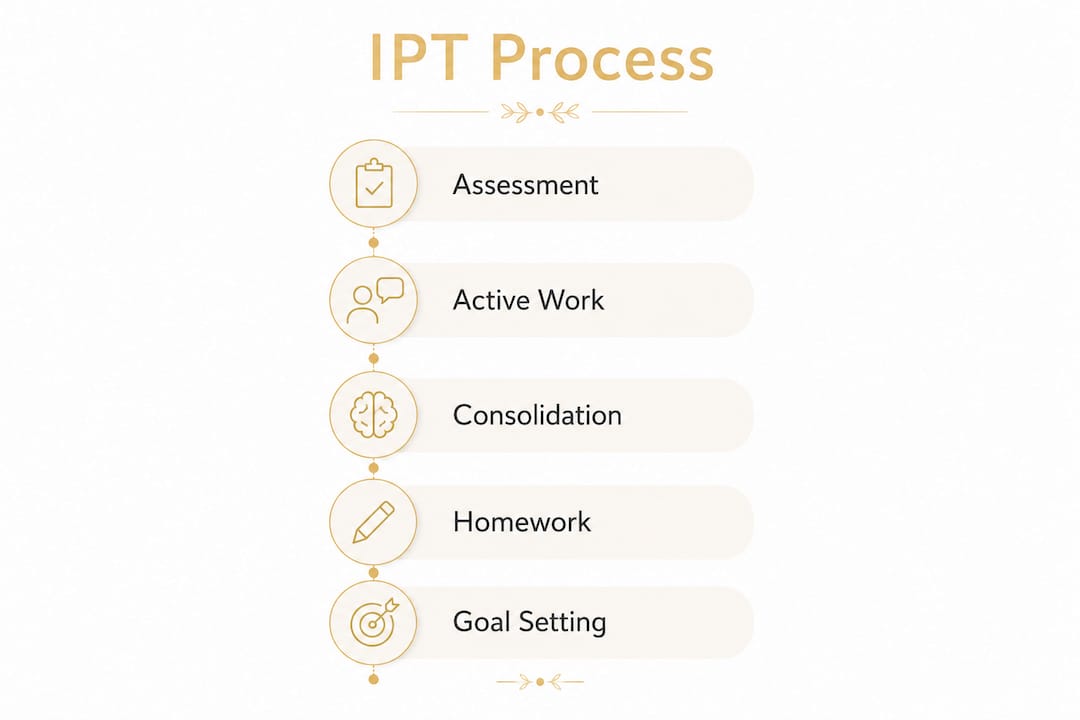
IPT moves through three distinct phases, each with a specific purpose. Understanding the structure helps you get more from the process.
- Assessment phase (sessions 1–3). Your therapist takes a full picture of your depression and your current relationships. You complete what is called an "interpersonal inventory," a detailed review of your key relationships, their quality, and how they connect to your mood. By the end of this phase, you and your therapist agree on one primary problem area to focus on.
- Active work phase (sessions 4–13). This is the core of the therapy. You and your therapist work directly on the chosen problem area using communication analysis, role-playing, and emotion exploration. Sessions feel practical. You leave with specific things to try in your relationships before the next appointment.
- Consolidation phase (final 2–3 sessions). The focus shifts to what you have learned and how to apply it independently. Your therapist helps you recognize early warning signs of depression and reinforces the interpersonal skills you have built.
IPT differs from cognitive therapies in one fundamental way. Cognitive approaches target the thoughts inside your head. IPT targets what is happening between you and other people. This distinction matters because some people find it far easier to work on a concrete relationship problem than to identify and restructure internal thought patterns.
One of the most underappreciated parts of IPT is what happens between sessions. Interpersonal homework is not optional busywork. Practicing a new communication strategy with your partner or initiating a conversation you have been avoiding accelerates symptom relief in ways that in-session work alone cannot achieve. The therapy is designed to be applied in real life, not just discussed in a room.
The time-limited structure of IPT also serves a clinical purpose. Knowing that therapy has a defined endpoint keeps both you and your therapist focused on what matters most. It prevents the drift that can happen in open-ended therapy, where sessions gradually lose their urgency. For many people, that focus is itself therapeutic.
Pro Tip: After each session, write down one specific interpersonal goal for the week. Concrete goals, like "I will tell my sister how her comment affected me," produce better outcomes than vague intentions.
What evidence supports IPT as a depression treatment?
The research base for IPT is strong and continues to grow. IPT produces moderate to large reductions in depression symptoms across multiple meta-analyses. That is not a marginal effect. It places IPT among the most effective psychological treatments available for depression.
The most striking finding comes from a 2026 systematic review. IPT matched antidepressant medication in effectiveness across 1,536 participants in randomized trials, with no significant difference in post-treatment depression severity between the two groups. For people who prefer not to use medication, or who cannot tolerate it, this finding is clinically significant.
| Treatment approach | Mechanism | Evidence level |
|---|---|---|
| Interpersonal therapy (IPT) | Targets relationship disruptions linked to depression | Strong: multiple meta-analyses, WHO-endorsed |
| Antidepressant medication | Adjusts neurochemical balance | Strong: comparable outcomes to IPT in 2026 review |
| Cognitive behavioral therapy (CBT) | Restructures internal thought patterns | Strong: WHO first-line recommendation alongside IPT |
| Combined IPT and medication | Addresses both relational and neurochemical factors | Strong: often recommended for severe depression |
The World Health Organization recommends IPT alongside CBT as a first-line psychological treatment for depression. That dual endorsement reflects the breadth of evidence behind both approaches. Researchers are now focusing on cultural adaptations of IPT to extend its effectiveness across diverse populations and maintain treatment gains over the long term.
"IPT reframes depressive symptoms as social signals rather than personal defects, helping clients regain agency by improving their social support network."
This reframing is one of IPT's most powerful contributions. When you stop seeing your depression as a character flaw and start seeing it as information about your relationships, you gain a clear direction for change.
Who is a good candidate for IPT, and what conditions does it address?
IPT is a diagnosis-targeted treatment effective for major depression across the full lifespan, from adolescents to older adults. It is not a general wellness approach. It was designed for people experiencing clinically significant depression, and the research reflects that specificity.
You are likely a strong candidate for IPT if you recognize yourself in any of these situations:
- You are grieving a significant loss and your mood has not lifted after months of trying to cope on your own.
- You are locked in a chronic conflict with someone important to you, and the tension is affecting your sleep, motivation, and ability to function.
- You are going through a major life transition, such as a divorce, a new diagnosis, or a career change, and you feel lost in the process.
- You feel socially isolated and find it genuinely difficult to connect with others, even when you want to.
- You are experiencing perinatal depression, either during pregnancy or after childbirth, and need a therapy that does not require medication.
IPT also has adaptations for bipolar disorder and perinatal depression, making it more versatile than many people realize. For people who are already on antidepressants, IPT works well as an adjunct, addressing the relational dimension that medication alone cannot touch.
One clarification worth making: IPT is individual therapy. It focuses on your interpersonal relationships, but it is not couples therapy. Your partner, family member, or colleague is not in the room. The work is about helping you communicate and relate more effectively, which then changes the dynamic in those relationships from the outside in. If you are looking for support with a partner through depression, that is a related but distinct conversation worth having with a therapist.
Key Takeaways
Interpersonal therapy is a structured, evidence-based treatment that reduces depression by targeting the relationship disruptions, including grief, conflict, isolation, and life transitions, that sustain low mood.
| Point | Details |
|---|---|
| IPT is time-limited by design | The 12–16 week structure keeps therapy focused and prevents sessions from losing direction. |
| Four problem areas drive the work | Grief, role disputes, role transitions, and interpersonal deficits are the core targets of IPT. |
| IPT matches medication in effectiveness | A 2026 review of 1,536 participants found no significant difference between IPT and antidepressants. |
| Homework accelerates recovery | Practicing communication skills between sessions is critical to IPT's success. |
| IPT suits a wide range of people | It works for adolescents through older adults and adapts to conditions like perinatal and bipolar depression. |
Why I think IPT deserves more attention than it gets
Most people who come to me asking about depression treatment options have heard of medication and CBT. Very few have heard of IPT, and that gap frustrates me, because in my experience, IPT reaches people that other approaches miss.
The relational reframe is the key. When a client stops asking "What is wrong with me?" and starts asking "What is happening in my relationships?" the whole therapeutic conversation shifts. Depression stops feeling like a life sentence and starts feeling like a signal worth decoding. That shift in perspective alone can reduce the shame that keeps so many people stuck.
What I also appreciate about IPT's structure is its honesty. Twelve to sixteen sessions is a real commitment, but it is a finite one. Clients know what they are signing up for. That clarity builds trust and keeps the work purposeful. I have seen people make more progress in a focused 14-week course of IPT than in years of open-ended therapy that never quite landed on the right problem.
The piece that most articles skip is this: IPT only works if you do the work between sessions. The therapy room is where you learn the skill. Your actual life is where you practice it. Clients who treat interpersonal homework as optional tend to plateau. Clients who bring a real conversation back to the next session, even a messy one, tend to move. That distinction is worth knowing before you start.
— Wayne Dewhurst
Therapy that meets you where you are
Depression does not wait for the perfect moment to ask for help. If what you have read here resonates, the next step is finding a therapist who understands how relationships and mood connect.

At Dewycounselling, we offer individual therapy, including structured, evidence-based approaches like IPT, delivered both online and in person. Our therapists work with you to identify the interpersonal patterns that are keeping you stuck and build the skills to change them. Whether you are navigating grief, a difficult relationship, or a major life transition, we provide a supportive space to do that work. Visit Dewycounselling's therapy services to learn more, or explore our psychotherapy options to find the right fit for where you are right now.
FAQ
What is IPT therapy used for?
IPT is used primarily to treat major depression in adults and adolescents. Adaptations also exist for bipolar disorder, perinatal depression, and other conditions where interpersonal disruptions play a central role.
How does interpersonal therapy differ from CBT?
IPT focuses on current relationship functioning and treats depressive symptoms as social signals, while CBT targets internal thought patterns and cognitive distortions. Both are WHO-endorsed first-line treatments for depression.
How long does interpersonal therapy take?
IPT typically runs 12–16 weekly sessions, divided into three phases: assessment, active work, and consolidation. The time-limited format is intentional and keeps therapy focused on practical outcomes.
Is interpersonal therapy as effective as antidepressants?
A 2026 systematic review of 1,536 participants found IPT comparable to antidepressants in reducing depression severity, with no significant difference in post-treatment outcomes between the two approaches.
Can IPT help if I am already on medication?
Yes. IPT works well alongside antidepressant medication, addressing the relational dimension of depression that medication alone does not treat. Many clinicians recommend the combination for moderate to severe depression.