
Light therapy, cognitive behavioral therapy adapted for SAD (CBT-SAD), and antidepressant medication are the three evidence-backed first-line treatments for winter-pattern seasonal affective disorder, often used alone or in combination. Light therapy tends to ease symptoms fastest, sometimes within days, while CBT-SAD has shown more durable protection against relapse over time. Before starting either, anyone with a history of bipolar disorder, eye disease, or photosensitizing medications needs a clinician's input first.
TL;DR:
- Light therapy provides rapid symptom relief by resetting circadian rhythms but requires daily morning use with a 10,000 lux device for 15 to 45 minutes.
- CBT-SAD offers durable benefits by teaching skills to manage seasonal triggers, with a typical course involving six to eight weekly sessions focused on activity scheduling and relapse prevention.
- Antidepressant medication, especially preventive use of bupropion XR, can reduce onset severity and recurrence, but requires early initiation before symptoms appear.
- Supplements like vitamin D have limited and inconsistent evidence for effectiveness and should only serve as adjuncts, not primary treatments.
- Combining treatments and starting preventive strategies early, alongside behavioral routines, maximizes the chance of managing seasonal depression effectively.
What Determines the Right SAD Treatment for You
Winter-pattern SAD, the far more common presentation, responds to targeted tools like light therapy and vitamin D that summer-pattern SAD generally does not, according to the National Institute of Mental Health. That distinction shapes almost everything a clinician recommends next.
Treatment generally falls into four buckets, and most people end up combining more than one:
- Light therapy for fast symptom relief tied to circadian timing
- Psychotherapy, especially CBT-SAD, for skill building and relapse prevention
- Antidepressant medication, including preventive strategies, for moderate to severe cases
- Vitamin D or other supplements, used cautiously as adjuncts rather than primary treatment
Several variables decide which combination makes sense for a given person. Symptom severity matters. So does prior treatment response. A clinician will also screen for bipolar disorder history, since both light therapy and antidepressants carry a risk of triggering a manic episode in someone with unrecognized bipolar illness. Eye disease, certain medications that increase light sensitivity, morning schedule constraints, and plain personal preference all factor into the final plan. A treatment that's clinically sound but incompatible with someone's actual routine rarely gets used consistently.
How Does Light Therapy for SAD Work?
A light box floods the eyes with brightness far beyond typical indoor lighting, and that signal appears to reset a delayed circadian rhythm, which many researchers believe drives winter depressive symptoms. Mayo Clinic identifies light therapy as a first-line treatment for fall-onset SAD, often producing noticeable improvement within days to a few weeks.
Getting the dose right matters more than people expect. Clinical guidance generally points to:
- A device delivering 10,000 lux, filtered to block UV rays
- 15 to 45 minutes of daily exposure, with lower lux devices requiring longer sessions
- Use in the morning, shortly after waking, since evening exposure can disrupt sleep
- Positioning 16 to 24 inches from the face, angled slightly downward rather than stared into directly
Morning timing isn't arbitrary. It mimics the natural light exposure that a darker winter morning denies you, which is the mechanism thought to correct the circadian delay in the first place.
Side effects are usually mild: headache, eye strain, or a wired, agitated feeling. The more serious concern is a manic switch in people with undiagnosed bipolar disorder, which is why that screening question comes up before anyone hands you a light box. People with certain retinal conditions or those taking photosensitizing drugs, including some antibiotics and acne medications, should clear light therapy with a doctor first.
Pro Tip: Keep the light box at your breakfast table or desk instead of treating it as a separate task. Adherence drops fast when a treatment feels like one more chore squeezed into a rushed morning.
What Is CBT-SAD and Why Does It Last Longer?
CBT-SAD adapts standard cognitive behavioral therapy to target the specific thought patterns and behaviors that winter triggers, including hibernation urges, social withdrawal, and the loss of pleasure in normally enjoyable activities. A core piece of the work is behavioral activation, which helps you deliberately schedule engaging activities even when motivation has cratered, countering the seasonal pull toward isolation.
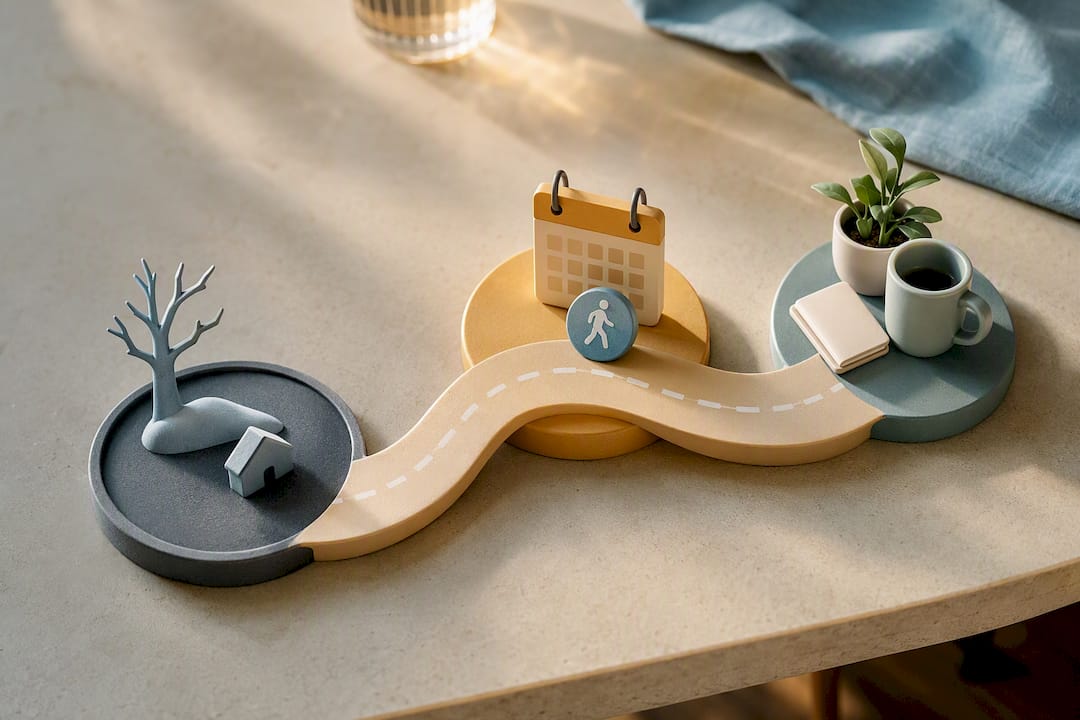
The most compelling evidence for CBT-SAD isn't about speed. It's about what happens after treatment ends. A randomized controlled trial published in 2016 followed 177 participants across two winters and found CBT-SAD produced more durable benefits than light therapy once acute treatment stopped. Light therapy can work quickly, but its effects tend to fade once you stop using the box; CBT-SAD appears to leave people with skills that keep protecting them season after season.
A typical course involves:
- Weekly sessions, often six to eight, sometimes extending through a full winter
- Structured homework tracking mood, activity, and thought patterns
- Explicit relapse-prevention planning for the following winter
Finding a therapist trained specifically in CBT-SAD can be harder than finding a general CBT provider, since it's a fairly specialized adaptation. Ask directly whether a prospective therapist has experience with seasonal patterns, or look into CBT-informed programs that explain the underlying techniques if you're weighing your options before committing.
Pro Tip: If a full CBT-SAD course isn't accessible right now, even informal behavioral activation, deliberately planning one enjoyable activity a day, can blunt the worst of the withdrawal pattern while you look for a trained provider.
Do Antidepressants Help With Seasonal Depression?
SSRIs are commonly prescribed for moderate to severe SAD, working the same way they do for nonseasonal depression by adjusting serotonin activity. Extended-release bupropion occupies a different role: it's frequently used as a preventive strategy, started before symptoms typically emerge and continued through the risk season, according to MedlinePlus.
That preventive framing changes the whole timeline. Rather than waiting for symptoms to appear and then treating them, someone with a predictable pattern of fall or winter episodes might start bupropion XR in early autumn and continue through spring. Antidepressants generally take several weeks to reach full effect, similar to timelines seen in other forms of depression treatment, which is exactly why starting early matters when prevention is the goal rather than acute relief.
Before starting any antidepressant for SAD, a prescriber should walk through:
- Ruling out bipolar disorder, since antidepressant monotherapy can trigger a manic episode in someone with unrecognized bipolar illness
- Reviewing current medications for interaction risk
- Discussing common side effects specific to the chosen drug class
- Setting a monitoring schedule and a plan for tapering off when the season passes
Worth asking your prescriber directly: how will we know it's working, what side effects should prompt a call, and is this a seasonal, stop-in-spring medication or a year-round one?
Do Vitamin D and Supplements Actually Help SAD?
The evidence here is genuinely mixed, not just under-studied. The NCCIH's evidence summary reports inconsistent results for vitamin D and limited evidence supporting melatonin or herbal remedies like St. John's wort for SAD specifically.
Evidence Snapshot: NIMH lists vitamin D among recognized treatment categories for winter-pattern SAD, yet independent evidence reviews describe its actual research support as mixed rather than conclusive.
That gap between "on the list" and "proven" matters. High-dose vitamin D isn't harmless. It can cause toxicity with prolonged overuse, and St. John's wort interacts with a long list of medications, including some antidepressants, in ways that can be dangerous. Melatonin, meanwhile, can cause grogginess or shift sleep timing in the wrong direction if used incorrectly.
- Treat supplements as adjuncts, not replacements for light therapy, CBT-SAD, or medication
- Get vitamin D levels tested before supplementing at high doses
- Always check with a clinician or pharmacist before adding St. John's wort or melatonin to an existing regimen
Can You Combine Treatments to Prevent SAD Recurrence?
Combining approaches is standard practice, not a fallback for people who "failed" a single treatment. Cleveland Clinic notes that light therapy, CBT, and antidepressants are often layered together, and that starting treatment before the season typically begins can reduce recurrence.
Common pairings include light therapy with CBT-SAD for people who want fast relief plus long-term skills, or medication with CBT for more severe presentations where therapy alone isn't enough initially. For someone with a reliably predictable pattern, say, symptoms every November like clockwork, starting light therapy or preventive bupropion in October rather than waiting for the crash is a widely used strategy.
Maintaining any regimen through winter takes some structure:
- Set a calendar reminder to start preventive treatment a few weeks before your usual onset
- Track mood and sleep weekly using a simple log or app
- Flag early warning signs (oversleeping, carb cravings, withdrawal) to your clinician before they escalate
- Schedule a follow-up appointment partway through the season, not just at the start
How Do I Choose a Therapist for SAD Treatment?
The right questions upfront save months of trial and error. Ask a prospective therapist or clinician whether they have specific experience treating SAD or delivering CBT-SAD, and whether they track outcomes over time rather than just checking in informally. If medication is part of the plan, ask how they coordinate with a prescriber.
Useful credentials to look for include licensure in psychotherapy with training in cognitive behavioral approaches, and an intake process that includes a genuine mental health history, not just a symptom checklist. A thorough assessment should ask about mood patterns across past winters and screen explicitly for bipolar disorder.
Red flags are usually easy to spot once you know to look:
- A provider who skips bipolar screening entirely before recommending light therapy or antidepressants
- Anyone promising a guaranteed cure or a fixed timeline for full resolution
- Recommendations for high-dose supplements without any baseline testing
Pro Tip: A good first session should feel like an assessment, not a sales pitch. If a provider is proposing a treatment plan before understanding your history, that's worth questioning.
Resources like a depression subtypes guide can help you understand how seasonal patterns differ from other depressive presentations before your first appointment, and reviewing therapy best practices gives a sense of what a well-run course of treatment should actually look like.
A Clinician's View on Treating Seasonal Depression
SAD gets treated too often as a mood you wait out rather than a condition with real treatment options. Dewycounselling works with clients through both online and in-person psychotherapy, using CBT-informed approaches alongside self-help modules for people who want structured support between sessions. A typical pathway starts with an honest assessment of symptom pattern and history, moves into a plan built around what a person's actual schedule and preferences can sustain, and includes follow-up before the next season starts, not after symptoms have already returned.
— Wayne Dewhurst
Get Support Before Winter Symptoms Take Hold
Dewycounselling offers something the light box and the supplement aisle can't: a licensed clinician who adjusts your plan as your winter actually unfolds, not a fixed protocol you're left to interpret alone.

Dewycounselling builds a plan around your specific pattern of seasonal symptoms rather than a one-size-fits-all checklist. In-person and online sessions run $175 per hour, and clients who want ongoing seasonal planning without booking each visit separately can consider the Prepaid Annual Membership at $1,750 per year. If therapy for depression or anxiety fits your situation better, the psychotherapy services page outlines what a course of treatment looks like. Book a consultation now and ask specifically about CBT-informed care for seasonal depression before the next dark stretch of the year sets in.
This article is general information, not a substitute for advice from a qualified doctor. Consult a qualified healthcare professional about your own circumstances before acting on anything here.
Sources
- A randomized trial comparing cognitive-behavioral therapy and light therapy for seasonal affective disorder (2016)
- Seasonal Affective Disorder – National Institute of Mental Health
- Seasonal affective disorder (SAD) - Diagnosis & treatment — Mayo Clinic
- Seasonal affective disorder and complementary health approaches: What the science says — NCCIH
- Seasonal depression (seasonal affective disorder) — Cleveland Clinic
FAQ
What Is the Most Effective Treatment for Seasonal Affective Disorder?
Light therapy, CBT-SAD, and antidepressant medication all have solid evidence behind them, and no single one is universally "best." Light therapy often works fastest, while CBT-SAD shows the strongest evidence for lasting benefit after treatment ends, per the 2016 randomized trial.
How Do You Cope With SAD During the Winter?
Combining a consistent morning light therapy routine with behavioral activation, deliberately scheduling activities you enjoy even when motivation is low, addresses both the biological and behavioral sides of winter depression. Tracking sleep and mood weekly also helps catch a downward slide early.
Does Seasonal Affective Disorder Ever Fully Go Away?
Symptoms typically resolve with the change of season, but SAD tends to recur each year without ongoing management. Preventive strategies, like starting light therapy or bupropion XR before your usual onset, are specifically designed to reduce or shorten that recurrence, according to Cleveland Clinic.
What Are Effective Coping Skills for Seasonal Depression?
Behavioral activation, keeping a consistent morning light and sleep schedule, and staying connected socially rather than withdrawing all directly counter the core symptoms of SAD. Working with a therapist trained in CBT-SAD helps turn these into a structured, sustainable routine rather than something you have to figure out alone.
Is Vitamin D a Reliable Treatment for SAD?
Not on its own. Evidence for vitamin D in treating SAD is mixed, according to the NCCIH's review, so it's best used as a possible adjunct alongside light therapy, CBT-SAD, or medication rather than a standalone fix.