
If you're searching for rootedinresilience.ca alternatives that center trauma-informed, culturally sensitive care, several strong options exist across clinical, somatic, and integrative approaches. Each one addresses mental health through a different lens, so the right fit depends on your history, preferences, and what hasn't worked before.
Here are the leading alternatives worth knowing:
- Transcranial Magnetic Stimulation (TMS): A non-invasive, FDA-approved clinical treatment for treatment-resistant depression, using magnetic pulses to stimulate mood-regulating brain regions.
- Forest therapy: A guided, nature-based intervention associated with medium-to-large short-term reductions in stress, anxiety, and depressive symptoms across multi-session programs.
- Tai Chi: A somatic, non-verbal mind-body practice that complements talk therapy by addressing physiological symptoms of anxiety and depression without drug-related side effects.
- Dewy Counselling: Trauma-informed, culturally sensitive psychotherapy offered online and in-person, integrating traditional talk therapy with evidence-based adjuncts for individuals and couples.
What are the best rootedinresilience.ca alternatives for trauma-informed therapy?
Mental health treatment is not one-size-fits-all. Individualized therapeutic approaches consistently show better engagement and outcomes because they meet people where they actually are, not where a standard protocol assumes them to be.
The alternatives below span clinical, somatic, and integrative categories. Each has a distinct mechanism and a specific type of person it serves best.
-
Transcranial Magnetic Stimulation (TMS): TMS is indicated for people who have tried at least two antidepressant medications without adequate relief. A magnetic coil positioned over the head delivers electrical pulses to the dorsolateral prefrontal cortex, a region consistently underactive in depression. Sessions typically occur daily for several weeks, with duration and frequency tailored to the individual. The FDA approved TMS for major depression and OCD as treatment options in the 2000s. Eligibility requires documented failure of two prior antidepressant regimens, so it's a clinical pathway rather than a first-line option.
-
Forest therapy: Unlike a walk in the park, forest therapy involves guided sensory immersion in woodland environments, deliberately structured to activate physiological relaxation. A meta-analysis of 25 studies found meaningful short-term reductions in stress, anxiety, and depressive symptoms, with the strongest results from sustained, multi-session programs. Methodological cautions apply, particularly around self-report measures, but the evidence tentatively supports it as a complementary wellness option.
-
Tai Chi: For people who struggle with verbal expression or carry trauma in the body, Tai Chi offers a non-verbal entry point into healing. Research suggests it improves autonomic nervous system balance and reduces physiological symptoms of anxiety and depression. It works best as an adjunct alongside talk therapy or medication, not as a standalone replacement for acute or severe conditions.
-
Integrative and somatic therapy: Clinicians increasingly combine talk therapy with somatic exercises, mindfulness, and lifestyle changes to address both cognitive and physical dimensions of trauma. Environmental and social factors like racism and economic precarity critically shape mental health outcomes, which is why culturally sensitive providers who account for these realities tend to produce more meaningful results. Body-based approaches like EMDR, available through providers such as trauma-informed therapists in clinical settings, extend this integrative model further.
Pro Tip: When evaluating any alternative therapy, ask the provider which specific modalities they use and how they adapt their approach for your cultural background. A therapist who can answer that question concretely is already practicing cultural sensitivity, not just claiming it.
Therapy duration varies widely. Short-term approaches like TMS run five to six weeks. Forest therapy programs typically span multiple sessions over weeks to months. Talk therapy timelines depend on presenting concerns, but many trauma-focused approaches run six months to two years for meaningful, lasting change.

How do costs compare among these therapy alternatives?
Pricing across these alternatives varies considerably, and understanding the range helps you plan realistically.
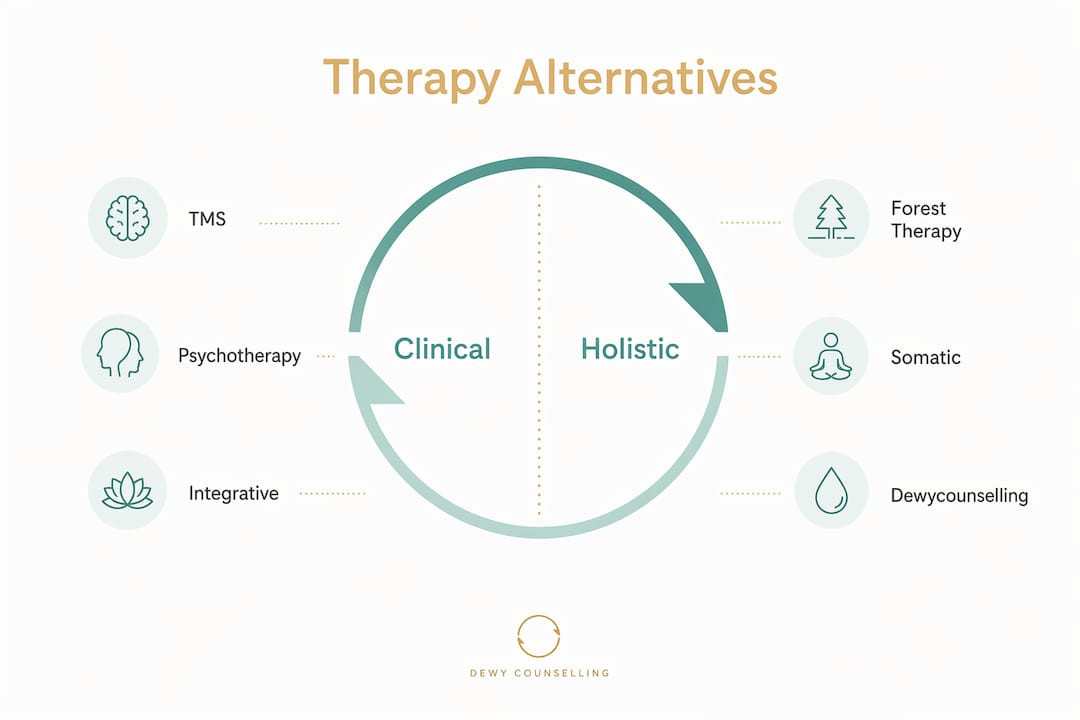
TMS is often covered by insurance for treatment-resistant depression, though out-of-pocket costs without coverage can reach several thousand dollars for a full course. Forest therapy programs vary by provider and region; structured multi-session programs through wellness centers typically cost less than clinical therapy but are rarely covered by insurance. Tai Chi classes are among the most accessible options financially, with community programs and group classes available at low or no cost through parks, community centers, and libraries.
For traditional and integrative psychotherapy, individual session rates in the US typically range from $100 to $300 per session depending on provider credentials, location, and whether they accept insurance. Telehealth options often sit at the lower end of that range. Dewy Counselling offers online and in-person psychotherapy with flexible formats designed to reduce access barriers.
How should you interpret client reviews when choosing a provider?
Reviews tell part of the story, but only part. A high rating with few reviews carries less weight than a consistent pattern across many clients over time. What matters more is what clients describe: Did the therapist adapt to their cultural background? Did they feel heard without judgment? Did the approach shift when something wasn't working?
The 5 C's of therapy offer a useful evaluation framework: Competence, Confidentiality, Communication, Consent, and Cultural sensitivity. When reading reviews, look for language that reflects these qualities rather than generic praise. A review that says "she understood my experience as an immigrant without me having to explain everything" tells you far more than "great therapist, highly recommend."
Verify credentials independently through your state's licensing board rather than relying on a platform's vetting alone. Therapist directories like Psychology Today and TherapyDen allow filtering by specialty, cultural background, and modality, which helps narrow the field before you read a single review.
Dewycounselling offers a different path to the same goal

If the clinical and somatic options above feel like a lot to navigate alone, Dewycounselling offers a grounded alternative: trauma-informed psychotherapy for individuals, couples, and families, delivered with genuine cultural sensitivity and available both online and in-person. Rather than a single-modality approach, Dewycounselling integrates evidence-based methods tailored to each person's history and needs. For anyone who has felt unseen or misunderstood in therapy before, that kind of personalized, affirming care can make a real difference in whether healing actually takes hold.
Key Takeaways
The strongest alternatives to Rooted In Resilience combine clinical rigor with cultural sensitivity, and the right choice depends on your specific needs and treatment history.
| Point | Details |
|---|---|
| TMS for resistant depression | Requires prior failure of two antidepressants; FDA-approved since 2008 for major depression. |
| Forest therapy evidence | Meta-analysis of 25 studies shows medium-to-large short-term stress and anxiety reductions. |
| Tai Chi as adjunct | Improves autonomic balance and somatic symptoms; works best alongside talk therapy, not alone. |
| Evaluate reviews carefully | Use the 5 C's framework and verify credentials through your state licensing board independently. |
| Dewycounselling | Offers integrative, trauma-informed psychotherapy online and in-person for individuals and couples. |