
Emotionally focused therapy (EFT) for couples is defined as a structured, evidence-based approach that helps partners identify and reshape the negative emotional cycles driving disconnection in their relationship. Developed by Dr. Sue Johnson in the 1980s, EFT is grounded in attachment theory, the scientific framework that explains how humans are wired to seek secure emotional bonds with those they love. The formal clinical term is Emotionally Focused Couples Therapy, often abbreviated as EFCT, though EFT is widely used in practice. Understanding what emotionally focused therapy for couples actually involves, step by step, gives you a realistic picture of what to expect and why it works.
What is emotionally focused therapy for couples?
EFT treats the relationship itself as the client, not the individual partners. Rather than coaching couples on communication scripts or assigning homework checklists, EFT focuses on the emotional experience underneath the conflict. The goal is to transform negative interaction cycles into patterns of secure, responsive connection.
The theoretical foundation comes directly from attachment theory, which holds that emotional connection to a primary partner is a core human need, not a luxury. When that connection feels threatened, partners experience something close to emotional survival distress. EFT views disconnection as the problem, not the individual character flaws of either partner. That reframe alone changes everything about how couples approach their conflict.

Meta-analyses show that 70–75% of couples experience significant improvement through EFT, with benefits maintained at follow-up. That outcome rate is the strongest evidence base of any couples therapy model currently available. For couples dealing with recurring arguments, emotional distance, or attachment wounds like betrayal, EFT offers a clinically grounded path forward.
What are the main stages and steps of EFT couples therapy?
EFT follows a structured three-stage model. Each stage builds on the last, and therapists use a nine-step framework to guide the process from assessment through lasting change.
Stage 1: Stabilization and cycle identification
The first stage focuses on identifying the negative interaction cycle that keeps couples stuck. A therapist conducts a broad assessment, often covering nine dimensions of the relationship, to understand each partner's history, attachment style, and emotional triggers. The couple learns to see their recurring pattern, such as the pursue-withdraw cycle, as a shared problem rather than proof that one partner is broken or bad.
Stage 2: Deepening emotional engagement
The second stage is the most emotionally intensive. Partners begin to access and express the primary emotions, such as fear, grief, and longing, that sit beneath their defensive reactions. Attachment injuries like betrayal or abandonment are processed carefully here using the Attachment Injury Resolution Model (AIRM). Healing happens through what researchers call "antidote bonding events," moments where one partner expresses vulnerability and the other responds with genuine empathy.
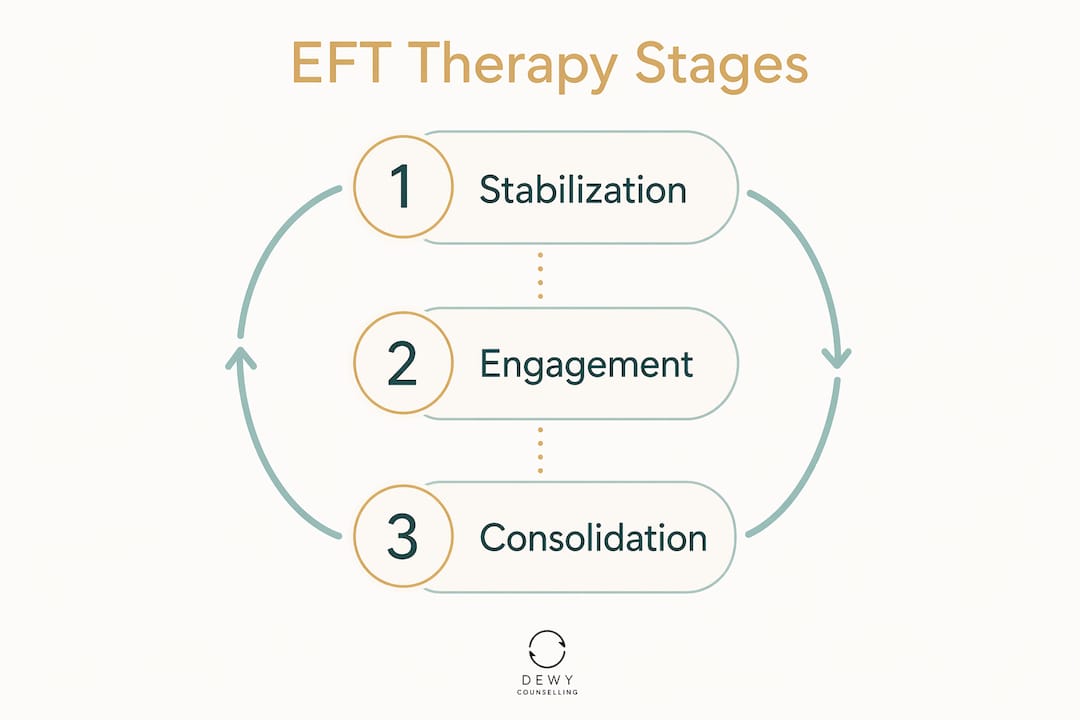
Stage 3: Consolidation
The third stage cements new patterns of interaction. Couples practice reaching for each other in moments of stress rather than retreating into old defensive cycles. The therapist helps partners narrate their growth and build confidence in the new emotional equilibrium they have created together.
The table below summarizes the three stages and their primary focus:
| Stage | Name | Primary Focus |
|---|---|---|
| 1 | Stabilization | Identify and externalize the negative cycle |
| 2 | Deepening engagement | Process attachment injuries and primary emotions |
| 3 | Consolidation | Build and reinforce new secure interaction patterns |
How does EFT address emotional patterns and attachment needs?
EFT targets the emotional architecture of a relationship, not just its surface behaviors. The model distinguishes between primary and secondary emotions, and that distinction is central to how therapy works. Differentiating primary from secondary emotions allows therapists to guide couples beneath surface conflict to the underlying fears and attachment needs driving it. Secondary emotions like anger or contempt are visible and reactive. Primary emotions like fear of abandonment or shame about being unlovable are the real wound.
Understanding the pursue-withdraw pattern is one of the most clarifying moments couples experience in EFT. One partner pursues, criticizing or demanding, because they feel disconnected and afraid. The other withdraws, going silent or shutting down, because they feel overwhelmed or inadequate. Both responses make perfect sense as attachment survival strategies. Neither partner is the villain.
Key attachment needs that EFT helps couples name and express include:
- Fear of abandonment: "I'm terrified you'll leave me."
- Fear of rejection: "I'm afraid I'm not enough for you."
- Need for reassurance: "I need to know you still choose me."
- Need for emotional safety: "I need to know I can be honest without being punished."
- Longing for closeness: "I miss feeling like we're a team."
The bid for connection concept adds another layer of clarity. Emotional bids are invitations for connection that often arrive disguised as complaints, silence, or irritability. A partner who snaps "You never listen to me" is almost always making a bid for closeness, not launching an attack. Turning toward those bids strengthens the bond. Turning away or against them erodes it.
Pro Tip: When you notice yourself getting angry at your partner, pause and ask: "What am I actually afraid of right now?" That question points you toward your primary emotion, which is the feeling your partner can actually respond to.
What techniques and tools are used in EFT to help couples reconnect?
EFT therapists use a specific set of clinical moves to interrupt negative cycles and create new emotional experiences. These are not generic communication tips. They are precise therapeutic tools designed to shift the emotional ground beneath a couple's conflict.
- Externalizing the cycle: The therapist names the negative cycle as the shared enemy. Instead of "you vs. me," the frame becomes "us vs. the cycle." Couples who internalize this shift stop blaming each other and start working together.
- Emotional Descent: A five-step process that guides partners from secondary defensive emotions down to the primary feelings underneath. A therapist might ask, "Beneath that anger, what are you most afraid of?"
- Attachment need naming: Once primary emotions surface, the therapist helps each partner name their attachment need with precision. Vague distress becomes a clear, speakable request.
- Bid Decoder: A tool that helps couples recognize emotional bids hidden inside complaints or withdrawal. Partners learn to ask, "What is my partner actually reaching for right now?"
- Softening and healing apology: One partner, usually the withdrawer, takes an emotional risk by expressing vulnerability. The other responds with empathy. This exchange, when genuine, creates a bonding event that begins to repair the relational wound.
- Building the positive cycle: Vulnerability met with empathy gradually increases trust, making it easier for partners to reconnect after conflict. Each successful exchange reinforces the new cycle.
Pro Tip: Practice naming your feelings in layers. Start with what you show ("I got quiet"), then name what you felt ("I felt hurt"), then name what you feared ("I was afraid you didn't care"). That three-layer structure is the emotional descent in everyday life.
Who benefits most from EFT, and what can couples expect?
EFT is suited for couples facing recurring communication breakdowns, attachment wounds, major life transitions, or chronic emotional distance. It works well for couples navigating infidelity recovery, grief, parenting stress, and long-term disconnection. EFT is a specialized clinical process, not casual counseling. Couples should expect structured sessions, emotional intensity, and a real commitment of time and energy.
Therapy duration varies by therapist and couple complexity, but most couples complete EFT across several months of weekly or biweekly sessions. The signs that therapy is needed often appear long before couples seek help, which means earlier engagement typically produces faster results. Waiting until a relationship is in crisis extends the work required.
EFT is not a quick fix. The emotional endurance required in Stage 2 is real, and many couples find it the hardest stretch of the process. What makes EFT worth that effort is its focus on lasting structural change rather than temporary behavioral adjustments. Couples who complete the process report not just fewer arguments but a fundamentally different emotional experience of their relationship. You can also explore different therapy approaches to understand where EFT fits within the broader clinical landscape.
Key Takeaways
EFT for couples is the most evidence-supported couples therapy model available, with 70–75% of couples showing significant improvement by targeting attachment needs and reshaping negative emotional cycles.
| Point | Details |
|---|---|
| EFT targets emotional cycles | The therapy addresses the negative pursue-withdraw pattern, not individual character flaws. |
| Three structured stages | Stabilization, deepening engagement, and consolidation guide couples from crisis to secure connection. |
| Attachment theory is the foundation | EFT treats emotional disconnection as a survival threat, explaining why relationship pain runs so deep. |
| Primary emotions drive change | Accessing fear and longing beneath anger or withdrawal creates the bonding moments that heal relationships. |
| Strong evidence base | Meta-analyses confirm 70–75% of couples improve significantly, with results that hold over time. |
What I've learned after years of watching couples do this hard work
The most common mistake I see couples make before they reach therapy is treating the negative cycle as proof of who their partner really is. One partner shuts down, and the other concludes: "They don't care." One partner criticizes, and the other concludes: "They're controlling." Both conclusions feel true in the moment. Neither one is accurate. What's actually happening is two frightened people using the only tools they know to manage unbearable disconnection.
EFT asks couples to do something genuinely difficult. It asks them to be vulnerable at the exact moment they feel most unsafe. That is not a small request. The couples I've seen make the most progress are not the ones with the least conflict. They are the ones willing to stay in the room when the emotional temperature rises, to say "I'm scared" instead of "You always do this."
The other thing worth saying plainly: emotional vulnerability is not weakness. Every couple I've worked with has arrived believing that showing need will make things worse. The research, and the clinical reality, says the opposite. When vulnerability is met with empathy, trust grows. That growth is not theoretical. You feel it in the room. The communication shifts that follow are not techniques couples are performing. They are the natural result of two people who finally feel safe enough to reach for each other.
If you are in the middle of a painful cycle right now, that cycle is not your relationship's final verdict. It is a pattern. Patterns can change.
— Wayne Dewhurst
Dewycounselling offers specialized EFT support for couples
Dewycounselling works with couples who are ready to move beyond surface-level conflict and address the emotional patterns keeping them stuck. The therapists at Dewycounselling are trained in evidence-based approaches including emotionally focused couples counseling, and they offer both online and in-person sessions to fit your schedule and comfort level.

Every couple's situation is different, and therapy plans at Dewycounselling are shaped around your specific attachment history, communication patterns, and relationship goals. Whether you are navigating a recent rupture or years of slow disconnection, the right support makes a measurable difference. Visit Dewycounselling's couples counseling page to learn more about available services or to book a consultation with a therapist who specializes in relationship repair.
FAQ
What is emotionally focused therapy for couples?
Emotionally focused therapy for couples is a structured, evidence-based model developed by Dr. Sue Johnson that uses attachment theory to help partners identify negative emotional cycles and build secure, lasting bonds.
How long does EFT couples therapy typically take?
EFT typically spans several months of weekly or biweekly sessions, depending on the couple's history and the complexity of their attachment injuries.
What is the pursue-withdraw pattern in EFT?
The pursue-withdraw pattern is a negative interaction cycle where one partner seeks connection through criticism or demands while the other responds by going silent or pulling away. EFT helps couples recognize this as a shared cycle, not a character flaw in either partner.
Is EFT effective for couples dealing with infidelity?
EFT addresses attachment injuries like betrayal through the Attachment Injury Resolution Model (AIRM), and research supports its effectiveness for couples recovering from serious relational wounds, including infidelity.
How is EFT different from other couples therapy approaches?
EFT focuses on emotional experience and attachment needs rather than behavioral skills or intellectual problem-solving. That focus on the emotional root of conflict, rather than its surface expression, is what distinguishes it from most other couples therapy models.