
Self-compassion therapy is defined as a psychological approach that trains you to treat yourself with the same kindness, understanding, and care you would offer a close friend during times of pain or failure. The practice rests on three core components: self-kindness, common humanity, and mindfulness. These three elements work together, and practicing them as a unit prevents the shame isolation that often follows personal setbacks. Two evidence-based frameworks anchor this field: Mindful Self-Compassion (MSC), developed by Kristin Neff and Christopher Germer, and Compassion-Focused Therapy (CFT), developed by Paul Gilbert. Both approaches have strong research support and are used by licensed therapists worldwide to address depression, anxiety, and chronic self-criticism.
What is self-compassion therapy and how does it work?
Self-compassion therapy works by changing the internal voice that responds to your pain. Most people default to harsh self-judgment when they struggle. This therapy replaces that reflex with a warmer, more grounded response. The goal is not to feel better by denying reality. It is to acknowledge suffering clearly and respond to it with care rather than criticism.
The three components each play a specific role. Self-kindness means actively soothing yourself rather than attacking yourself when you fail. Common humanity means recognizing that suffering and imperfection are part of the shared human experience, not signs that something is uniquely wrong with you. Mindfulness means holding painful thoughts and feelings in balanced awareness without suppressing them or getting swept away by them. All three components together form a protective structure that keeps any one element from becoming distorted.

CFT adds an evolutionary lens to this framework. It explains that the human brain evolved threat-detection systems that fire quickly and loudly. CFT uses evolutionary principles and cognitive behavioral techniques to calm those threat responses, replacing them with warmth and a felt sense of safety. This is why CFT exercises often involve compassionate imagery and specific language patterns designed to activate the brain's soothing system rather than its alarm system.
What psychological benefits does self-compassion therapy offer?
The mental health benefits of this approach are well documented and span multiple diagnoses. A 2012 study by Neff and Germer found that the MSC program produces significant increases in self-compassion, mindfulness, and wellbeing while reducing depression, stress, and anxiety. Those benefits lasted at least 6 months after the program ended. That kind of durability is rare in short-term interventions and signals that the therapy builds genuine internal skills rather than temporary relief.
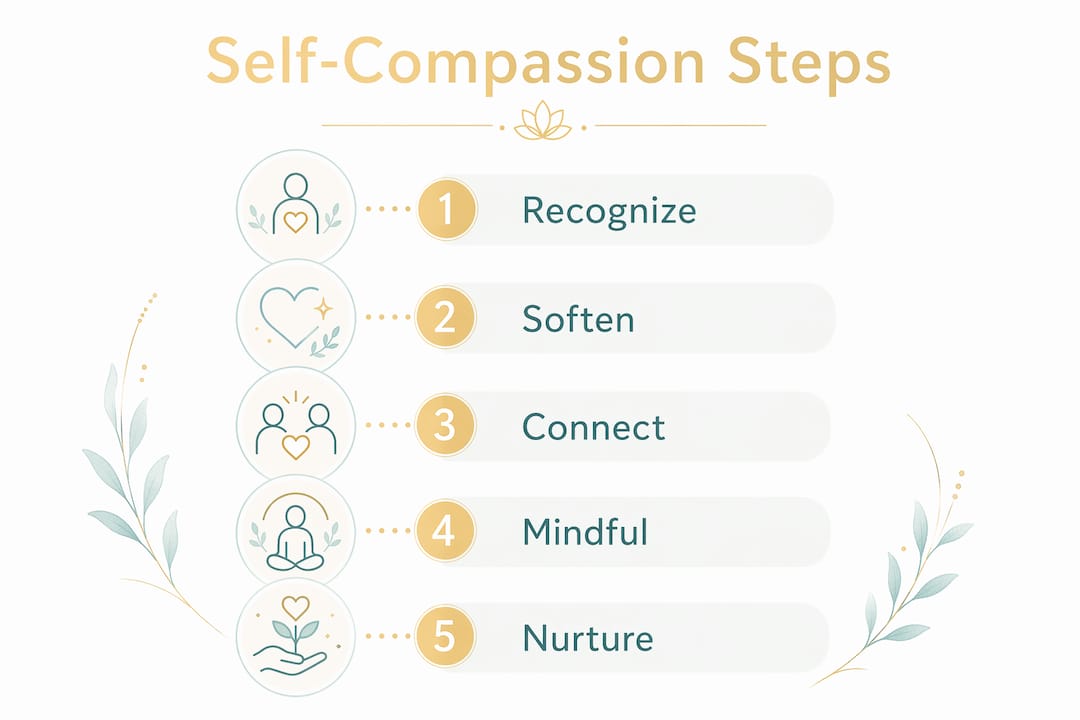
A 2025 study published in Nature Reviews Psychology found that compassion is a transdiagnostic target that reduces symptoms across many mental health disorders. This means self-compassion therapy is not limited to one condition. It benefits people dealing with depression, anxiety disorders, trauma responses, eating disorders, and chronic shame. The breadth of its application makes it one of the more versatile tools in modern psychotherapy.
Research published in PLOS Mental Health in 2026 shows that self-kindness combined with common humanity is the primary driver of improved self-rated mental health over time. That finding matters because it tells therapists and clients where to focus energy. Emotional connectedness to others, even in abstract terms, amplifies the healing effect of treating yourself well.
Key benefits supported by research include:
- Reduced symptoms of depression and anxiety
- Lower levels of chronic stress
- Decreased self-criticism and shame
- Stronger emotional resilience after setbacks
- Greater sense of connectedness and belonging
- Improved overall wellbeing with lasting effects
Pro Tip: When you notice self-critical thoughts, try naming them out loud: "There's that harsh voice again." Naming the thought creates distance from it and is one of the simplest mindfulness techniques you can use right now.
How does self-compassion therapy differ from similar approaches?
Self-compassion therapy is frequently confused with positive affirmations, self-pity, or narcissism. These comparisons misread what the therapy actually does. Positive affirmations bypass difficult emotions by replacing them with upbeat statements, while self-compassion therapy requires you to acknowledge those emotions clearly first. The acknowledgment is the mechanism. Skipping it produces only surface-level relief.
Self-pity is also a different experience. Self-pity narrows your focus onto your own suffering and amplifies the sense that your pain is unique and unfair. Self-compassion does the opposite. It connects your pain to the broader human experience, which reduces isolation rather than deepening it. The common humanity component is what separates the two.
The concern about narcissism is equally misplaced. Self-compassion reduces egocentric over-identification, which is the opposite of narcissistic thinking. Narcissism requires constant self-inflation and comparison. Self-compassion requires honest acknowledgment of your limitations alongside genuine care for yourself. The two cannot coexist in the same psychological space.
CFT differs from standard MSC in its emphasis on the evolutionary origins of self-criticism. Where MSC focuses on cultivating warmth through mindfulness and kind self-talk, CFT targets the threat-detection system directly. It uses visualization exercises, compassionate imagery, and specific vocal tones to activate the brain's soothing system. Both approaches share the same destination but take different routes to get there.
Pro Tip: If positive affirmations have never worked for you, that is not a personal failure. Self-compassion therapy is built on a different mechanism entirely. Try replacing "I am confident" with "This is hard, and I can be kind to myself right now."
What are common methods and exercises in self-compassion therapy?
Self-compassion therapy methods range from structured programs to informal daily practices. The MSC program is the most widely studied structured format. Formal MSC programs include guided meditations, group discussions, and homework assignments that teach participants to build self-compassion into their daily lives over eight weeks. Therapists trained in MSC guide clients through each stage, adjusting the pace as needed.
CFT exercises take a different form. Common CFT practices include:
- Compassionate imagery: Visualizing a compassionate figure, real or imagined, who offers you warmth and understanding without judgment.
- Soothing rhythm breathing: Slowing the breath to activate the parasympathetic nervous system before engaging in self-compassion work.
- Compassionate letter writing: Writing a letter to yourself from the perspective of a wise, caring friend who understands your struggle.
- Safe place visualization: Creating a detailed mental image of a place where you feel completely safe and at ease.
- Self-compassion break: A brief three-step practice that moves through mindfulness, common humanity, and self-kindness in under two minutes.
Informal practices are equally important. Kind self-talk during everyday frustrations, journaling about difficult emotions with a tone of curiosity rather than judgment, and pausing to place a hand on your heart during stressful moments are all daily self-compassion practices that build the same neural pathways as formal exercises.
One challenge worth knowing about is emotional backdraft. Emotional backdraft occurs when self-compassion practices trigger suppressed emotional pain, particularly in people with trauma histories. The warmth of self-compassion can open doors that have been shut for years. A skilled therapist will recognize this response and slow the pace, using trauma-informed techniques to keep the process safe and productive.
Pro Tip: Start with the self-compassion break if formal meditation feels too intense. Three steps, two minutes, and no special setting required. It is the most accessible entry point into this work.
How can you integrate self-compassion into daily life?
Building self-compassion outside of formal therapy sessions is where lasting change happens. The skills learned in MSC or CFT only stick when they are practiced consistently in real life. The good news is that most of these practices require no equipment and very little time.
Practical ways to build self-compassion into your daily routine include:
- Morning check-in: Spend 60 seconds each morning asking yourself how you are feeling without judging the answer.
- Mindful pause during stress: When a difficult emotion arises, pause and say to yourself, "This is a moment of suffering. Suffering is part of life. May I be kind to myself right now."
- Journaling with compassion: Write about a difficult experience as if you were a caring friend responding to someone you love.
- Body-based soothing: Place a hand on your chest or cheek during moments of distress. Physical touch activates the soothing system quickly.
- Common humanity reminder: When you feel alone in your struggle, recall that millions of people are experiencing something similar at this exact moment.
Dewycounselling offers self-help video modules that guide you through self-compassion techniques at your own pace, which is a practical option if you want structured support between therapy sessions. Workbooks and guided audio programs are also widely available for independent practice.
Seeking professional support is the right step when self-compassion practices consistently trigger intense distress, when trauma is part of your history, or when depression and anxiety are severe. A therapist trained in MSC or CFT can provide psychotherapy services that are paced and adapted to your specific needs.
Pro Tip: Consistency matters more than duration. Five minutes of genuine self-compassion practice every day produces more change than an occasional hour-long session.
Key Takeaways
Self-compassion therapy builds lasting mental health improvements by combining self-kindness, common humanity, and mindfulness into a single, evidence-based practice that reduces depression, anxiety, and shame.
| Point | Details |
|---|---|
| Three core components | Self-kindness, common humanity, and mindfulness work together and must be practiced as a unit. |
| Evidence-based frameworks | MSC and CFT are the two leading structured approaches, each with strong research support. |
| Broad mental health benefits | Research shows self-compassion reduces symptoms across depression, anxiety, trauma, and shame. |
| Not self-pity or narcissism | Self-compassion reduces ego-centric thinking and connects your pain to shared human experience. |
| Daily practice drives change | Short, consistent informal practices build the same neural pathways as formal therapy exercises. |
What I have seen self-compassion therapy actually do
After working with people across a wide range of struggles, I have noticed one pattern that surprises almost everyone: the clients who resist self-compassion the most are often the ones who need it most urgently. They arrive convinced that being hard on themselves is what keeps them productive, responsible, and honest. The idea of treating themselves with kindness feels dangerous, like it might open a floodgate they cannot close.
That fear is real, and it deserves respect. Emotional backdraft is not a metaphor. When someone who has spent decades suppressing grief or shame begins to offer themselves warmth, those old feelings can surface fast. This is not a sign that the therapy is failing. It is a sign that it is working. But it requires a therapist who knows how to pace the process and hold the space safely.
The misconception I push back on most often is the idea that self-compassion is soft or passive. The research says otherwise. People who practice self-compassion consistently take more personal responsibility for their mistakes, not less. They are more willing to try again after failure because they are not terrified of their own internal response to it. That is not weakness. That is the foundation of genuine resilience.
If you are considering this work, I would encourage you to approach it with patience. Self-compassion is a skill, not a feeling you either have or do not have. It builds slowly, and the early stages can feel awkward or even painful. Stay with it. The shift, when it comes, tends to be quiet and permanent.
— Wayne
Dewycounselling's approach to self-compassion therapy
Dewycounselling offers professional counseling and psychotherapy for individuals who want to build self-compassion as part of their mental health care. Whether you are working through anxiety, depression, chronic self-criticism, or the aftermath of trauma, the team at Dewycounselling provides both online and in-person sessions tailored to your specific situation.

The professional counseling services at Dewycounselling are designed to help you thrive, not just cope. For those who prefer flexible, self-directed learning, the self-help video modules offer structured guidance on self-compassion techniques you can practice at your own pace. Reaching out is a sign of strength, and the right support makes all the difference.
FAQ
What is self-compassion therapy in simple terms?
Self-compassion therapy is a structured psychological approach that teaches you to respond to your own pain and failures with kindness, connection, and mindful awareness rather than harsh self-judgment. It is grounded in evidence-based programs like MSC and CFT.
How long does it take to see results from self-compassion therapy?
The MSC program runs for eight weeks, and research shows its benefits last at least 6 months after the program ends. Daily informal practice accelerates progress between formal sessions.
Is self-compassion therapy the same as self-esteem building?
No. Self-esteem depends on evaluating yourself positively, which fluctuates with performance. Self-compassion does not require positive self-evaluation. It offers care regardless of how well you are doing, making it more stable and less conditional.
Can self-compassion therapy help with anxiety and depression?
Yes. Research confirms that self-compassion practices significantly reduce depression, anxiety, and stress, and these benefits apply across multiple mental health conditions, not just one diagnosis.
Do I need a therapist to practice self-compassion?
Informal practices like kind self-talk and journaling can be done independently. However, a trained therapist is strongly recommended if you have a trauma history, since self-compassion work can trigger emotional backdraft that requires professional guidance to navigate safely.
Recommended
- Professional Counselling Services | Online & In-Person Therapy
- Mobile Psychotherapy Services - Counselling Burlington Ontario — DEWY COUNSELLING
- Self-help Modules with High-Quality Video Classes - Self-Discovery Journey — DEWY COUNSELLING
- Counselling & Therapy Services | Dewy Counselling Burlington — DEWY COUNSELLING